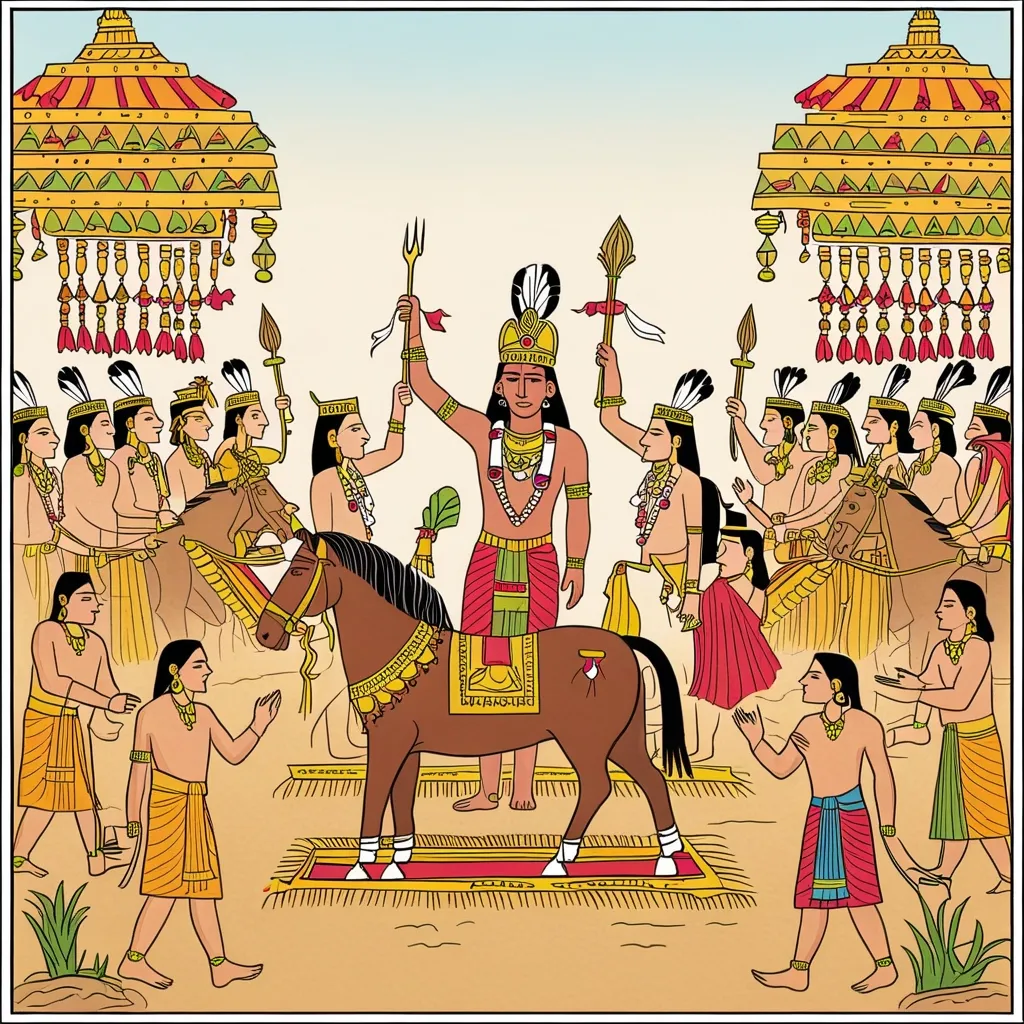
Hinduism is filled with countless scriptures, each more fascinating than the last. But among them, the Yajurveda holds a special place, primarily because it provides such detailed accounts of ancient rituals and ceremonies. One of the most famous, and often misunderstood, of these is the Ashvamedha Yajna – the horse sacrifice ritual. It’s not just a random tradition; this ritual is jam-packed with symbolic meaning and was a big deal in showcasing the sovereignty of ancient Indian kings.
So, what’s the Ashvamedha Yajna all about? Think of it as a kind of royal display of power. A king would let loose a stallion, which roamed freely for a whole year, all the while accompanied by the king’s warriors. It’s like the horse is the king’s envoy, wandering far and wide, untouched by any mares (which the soldiers made sure of). If anything happened to the horse, like if it got sick or hurt, special prayers and offerings were made to various gods to ensure its well-being and the success of the ritual.
When the horse finally made its way back, a series of intense ceremonies kicked off. These started with the dīkṣā rites. Here, the king would undergo a sort of purification – fasting, bathing, and sitting in silence. Next up was the upasad, which went on for several days and involved bringing in and celebrating Soma, a sacred beverage. There were also numerous other rituals, including the sacrifice of a goat, and the construction feats needed to set up the sacrificial spot.
The grand finale was, of course, the sacrifice of the horse. But that was not the end. A particularly contentious and much-debated part of the ritual followed this – the chief queen, along with other royal consorts, participated in a ritual involving the deceased horse. The queen would engage in symbolic actions and recite mantras, aiming to ensure the kingdom’s fertility and prosperity. Over time, this part of the ritual sparked many misconceptions, leading critics to accuse the ceremony of obscenity. The key here is symbolism—the rituals weren’t meant to be taken literally.
Dig a bit deeper, and you’ll find the Ashvamedha Yajna isn’t something that just dropped out of the sky. It’s part of a broader cultural trend seen across different Indo-European traditions. Similar horse sacrifices were prevalent among the Celts and Romans. The Celts had a ritual that symbolized the marriage between the king and a sacrificed horse, while the Romans had a special sacrifice they called the October Horse. Clearly, horse sacrifices had a common root in the ancient Indo-European psyche.
Back in ancient India, the Ashvamedha Yajna was more than just pomp and show. It symbolized royal consecration, where the king received divine charisma. Think of it as the ultimate endorsement from the gods, asserting the king’s divine right to rule. This, along with other rituals like the rajasuya, was pivotal in maintaining the king’s authority and legitimacy.
The Yajurveda, the holy text that talks about these rituals, is primarily a collection of prose mantras intended for various ceremonies. It’s structured into chapters that cover different rituals, spell out specific mantras, and explain the procedures in detail. These detailed rituals highlight the significant role such ceremonies played in the religious and social lives of people back then.
The ceremonial structure was pretty elaborate, requiring the presence of various priests like the hota, adhwaryu, and udgaata, each playing critical roles in the ritual’s performance. The king, his consorts, and other royal members were also key participants. Their involvement wasn’t just for show; it symbolized their roles within the kingdom and their divine connections.
Modern takes on the Ashvamedha Yajna have been all over the place. Some folks look at it with a critical eye, skeptical about the seemingly obscene parts of the ritual. While it’s right to question and seek understanding, one must approach these ancient rites with a sense of their symbolic nature rather than taking them at face value.
Now, if you zoom out and look at it all, the Ashvamedha Yajna isn’t just some ancient ritual you read about in history books. It’s a window into ancient India’s spiritual, social, and political landscape. It shows how deeply embedded symbolism was in their religious practices and highlights the intricate dance between royalty, spirituality, and fertility that defined their culture.
In the end, what makes the Ashvamedha Yajna truly fascinating is its layered complexity—it’s like peeling an onion of ancient traditions and beliefs, each layer revealing something profound about human nature and society. Understanding it in the right context gives you a glimpse into the world of ancient Indian kings and priests, their ceremonies, their beliefs, and most importantly, their unshakeable connection to the divine.
So yeah, the Ashvamedha Yajna—it’s not just a ritual, but a rich, intricate story from our past that still holds lessons and insights for us today. It’s a testament to the richness of Hindu scriptures and the timeless value they bring to the table. While it may face scrutiny and misinterpretation, a deeper, contextual insight can help us appreciate its place in history and its enduring relevance.