Rajasuya Yajna: The Ultimate Ceremony of Kingship
Imagine a ritual so grand, it cements a king’s claim to the throne and signifies his dominion over all other rulers. That’s what the Rajasuya Yajna is all about. Dive into the ancient Vedic world where this ceremony unfolds, rooted in rich Hindu traditions and narrated vividly in classics like the Mahabharata and the Shatapatha Brahmana.
Let’s cut through the jargon and paint a picture of what this extraordinary ritual entails. It’s like the ultimate celebration of a king’s power, status, and right to rule. It’s not just a grand event but a series of elaborate and symbolic acts that together proclaim, “Here’s the king, and he’s got the universe backing him up!”
A king cannot just wake up one day and decide to perform the Rajasuya Yajna. It’s essentially the equivalent of saying, “Look, I’ve conquered all these lands, and now I’m the king of kings.” The monarch, often dubbed as a Chakravarti (universal ruler), must have triumphed over rival rulers, establishing his supremacy.
Intricate planning and meticulous execution define the Rajasuya Yajna. Picture a year jam-packed with preliminary sacrifices, known as iṣṭis, which purify and prep the king for the main event. Think of it as a spiritual boot camp. Seasonal offerings are part of this phase, like the Cāturmāsya, spreading over a whole year.
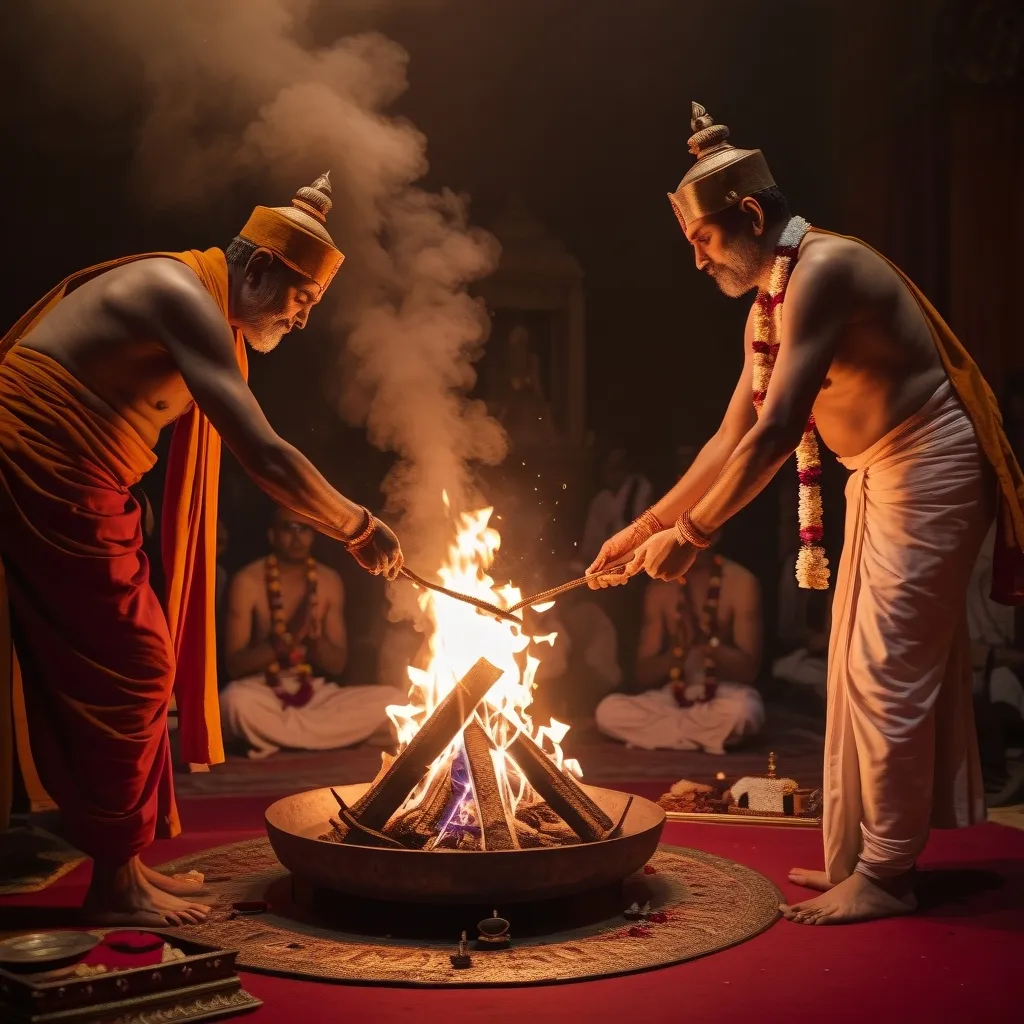
Then comes the crescendo: the Abhiṣeka or Mahābhiṣeka. This is the main consecration ceremony packed into five intense days. It kicks off with the Diksā (initiation), followed by three upaṣad days, and finally the sutyā or soma-day. Each day, different gods get their due offerings, each repping a chunk of the king’s duties.
Take, for example, Savitā, called upon for divine inspiration and righteous power. Agni, sought after for household mastery as Gṛhapati. Soma is summoned as Vanaṣpati for forest and agricultural guardianship, while Bṛhaspati, addressed as Vāk, symbolizes the power of speech. Every name, every offering, relates directly to the responsibilities and virtues the king must embody to rule effectively.
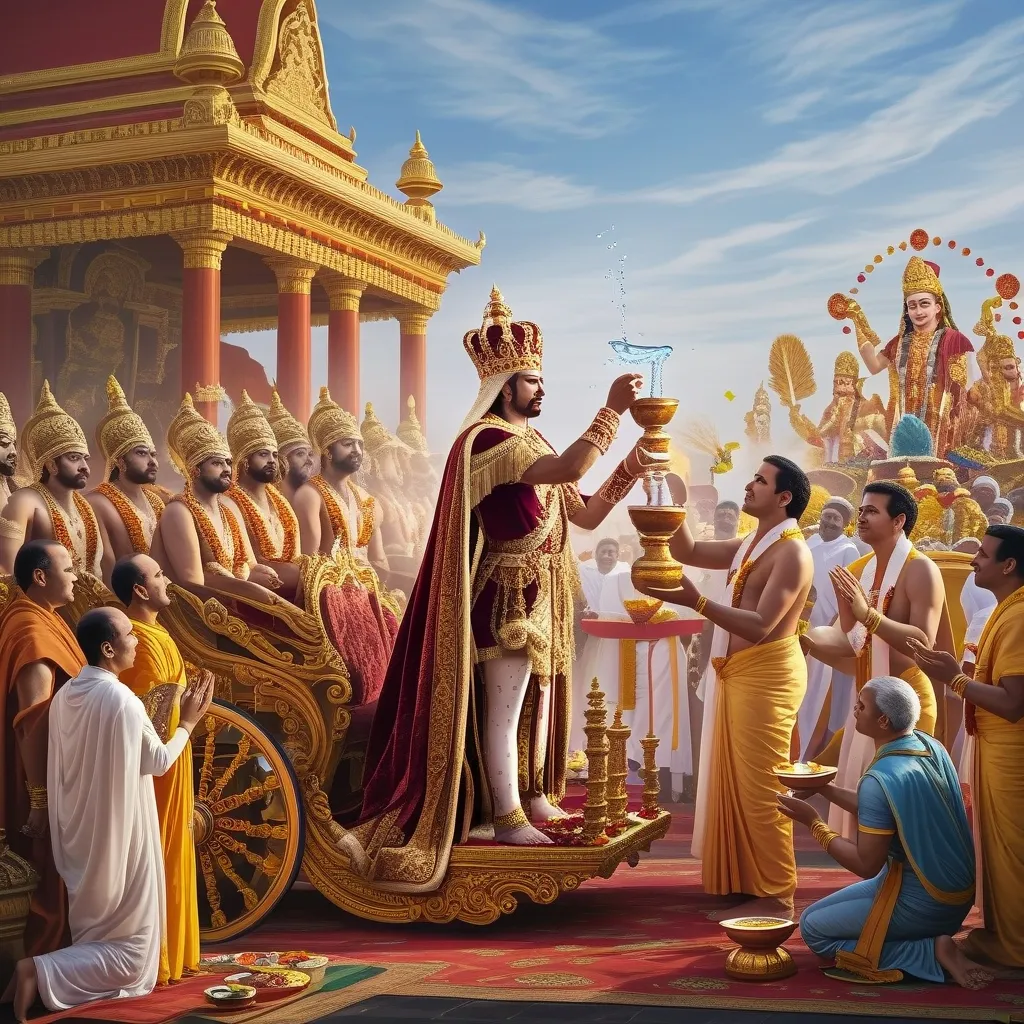
The consecration is dramatic. Imagine the king being drenched in holy waters from rivers and sacred wells — seventeen different types, each representing unique duties! It’s like an intense spa day, but with cosmic significance. Next, the king takes a symbolic chariot ride, shoots arrows, and partakes in a staged cattle raid to demonstrate his authority and generous spirit. Sprinkled with elements of sport, he even plays a dice game with the Adhvaryu priest. Winning is essential — it’s like the final test before he officially dons the crown.
A king isn’t king without his trusted squad. Enter the Ratnins — his loyal ministers and counselors. These guys aren’t just accessories; they play vital roles in the coronation. The king shows his gratitude by visiting their homes and offering oblations. Kingship, hence, isn’t a one-man show but a team effort, sanctioned by wise advisors and nobles.
And let’s not forget the priests — the unsung heroes conducting these rituals. They get their fair share of the royal pie. Lavish gifts like gold-coated mirrors, golden chains, white horses, and healthy cows are showered upon them as tokens of appreciation. Each priest, depending on their role, receives specific treasures. For instance, the Adhvaryu priest gets two gold-coated mirrors while the Udgatha priest walks away with a golden chain. It’s like the king saying thank you for making my big day perfect.
Historically, the Rajasuya Yajna wasn’t just a Vedic Instagrammable event. Numerous Indo-Aryan kings expanded their territories through it during the Iron Age. From regions like Tamilakam to Kalinga, kings celebrated this ritual, transcending religious and cultural barriers. Even Jain rulers like Kharavela partook in this grandiosity, showcasing its widespread acceptance.
The Rajasuya Yajna wasn’t just about flexing one’s muscles. It was a transformative journey that elevated the king to the status of Rajadhiraja — king of kings. After successfully performing the yajna, the ruler earned immense respect and honor from both terrestrial and celestial realms. But if he failed to subdue all other kings, the ritual was deemed incomplete, leading to significant spiritual setbacks.
Although it might seem like a relic of the past, the essence of the Rajasuya Yajna remains relevant even today. It’s all about leadership, collaboration, and the responsibilities that come with power. Translate those principles into our modern world, and you see its relevance in various leadership roles. It emphasizes vision, integrity, and the importance of community support.
In essence, the Rajasuya Yajna encapsulates the very spirit of ancient Hindu kingship. It’s not just a grandiose ceremony but a meticulously detailed, symbolic event involving numerous stakeholders. The ritual, its historical significance, and its detailed procedures inspire and educate us about the ideals of leadership and governance to this day. It’s a testament to the enduring legacy of ancient traditions and their relevance in understanding power and responsibility in modern times.