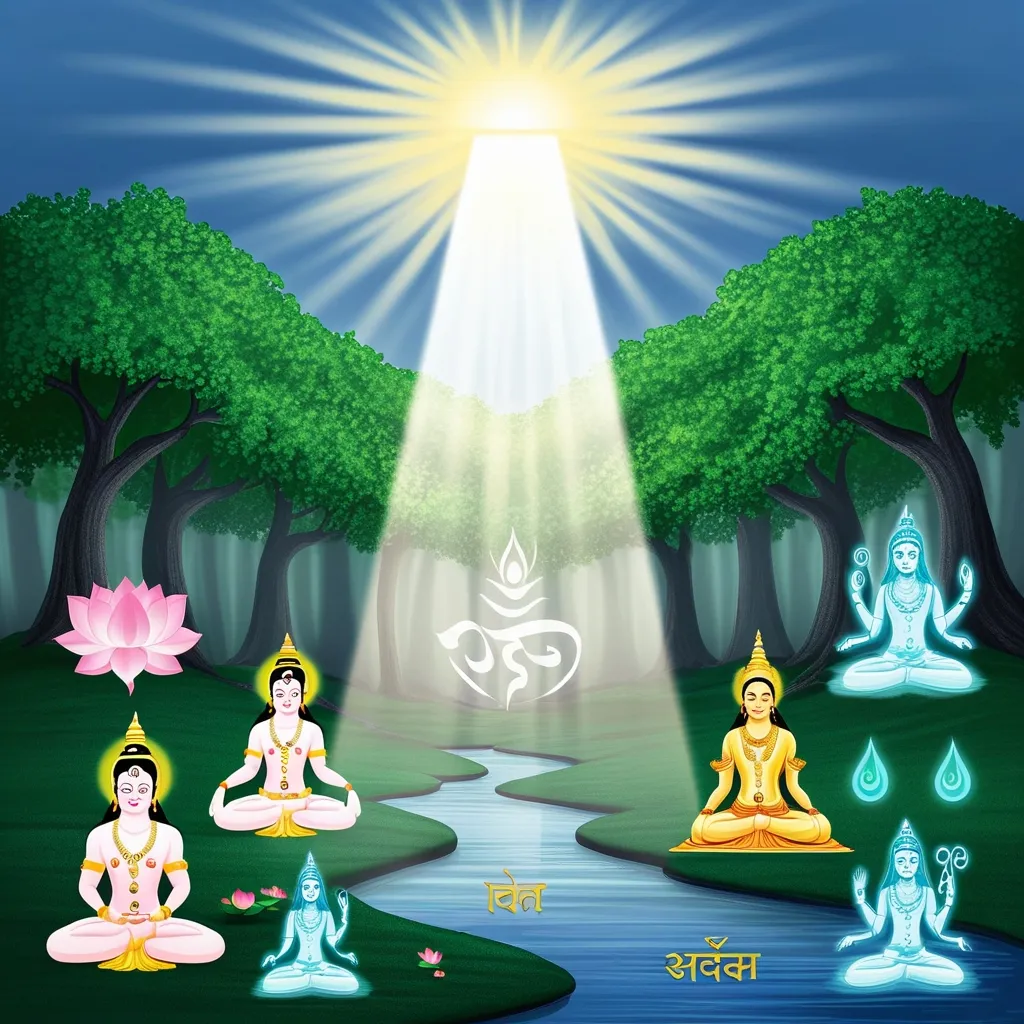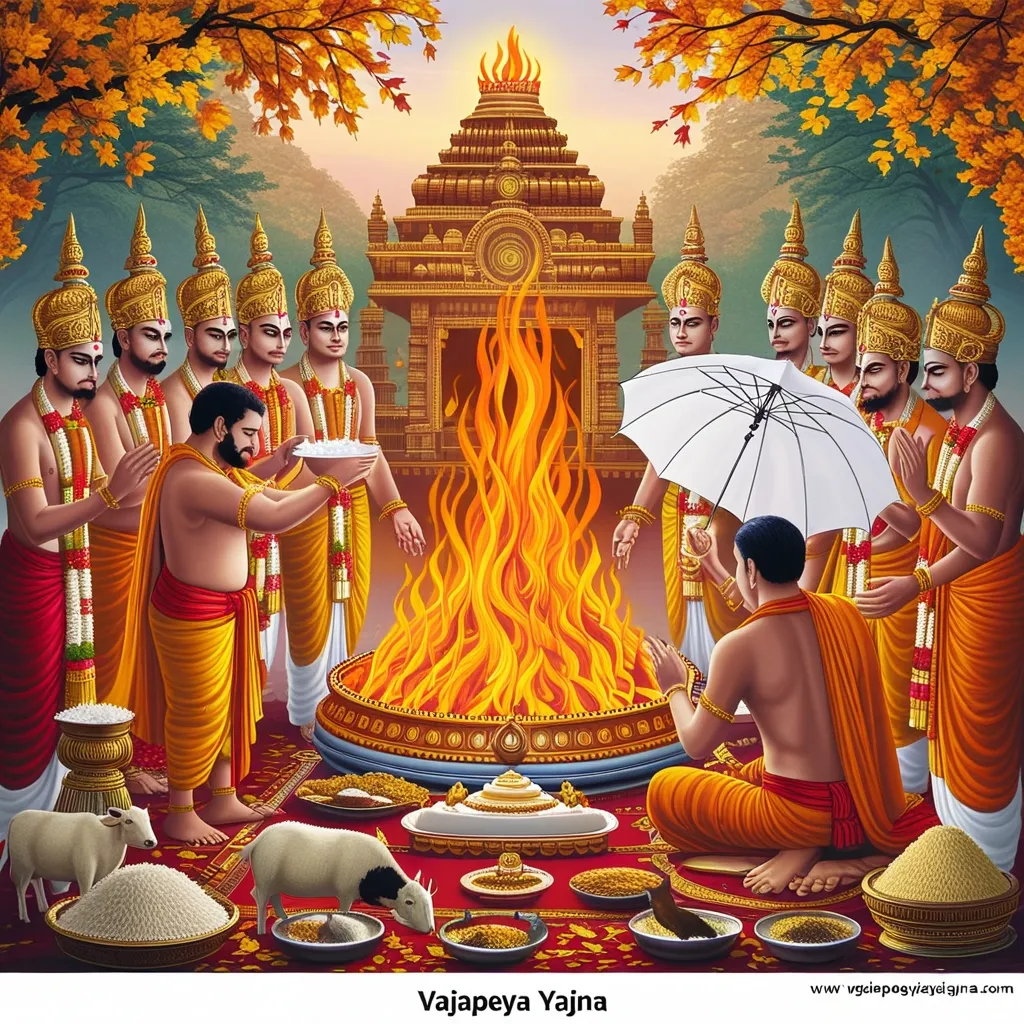
Hindu rituals are like a treasure chest, filled with rich traditions and deep meanings. Among these, the Vajapeya Yajna stands out, thanks to its grandeur and spiritual significance. Rooted in the Vedic tradition, especially the Yajur Veda, it’s a testament to the ancient Indians’ deep understanding of spirituality and community.
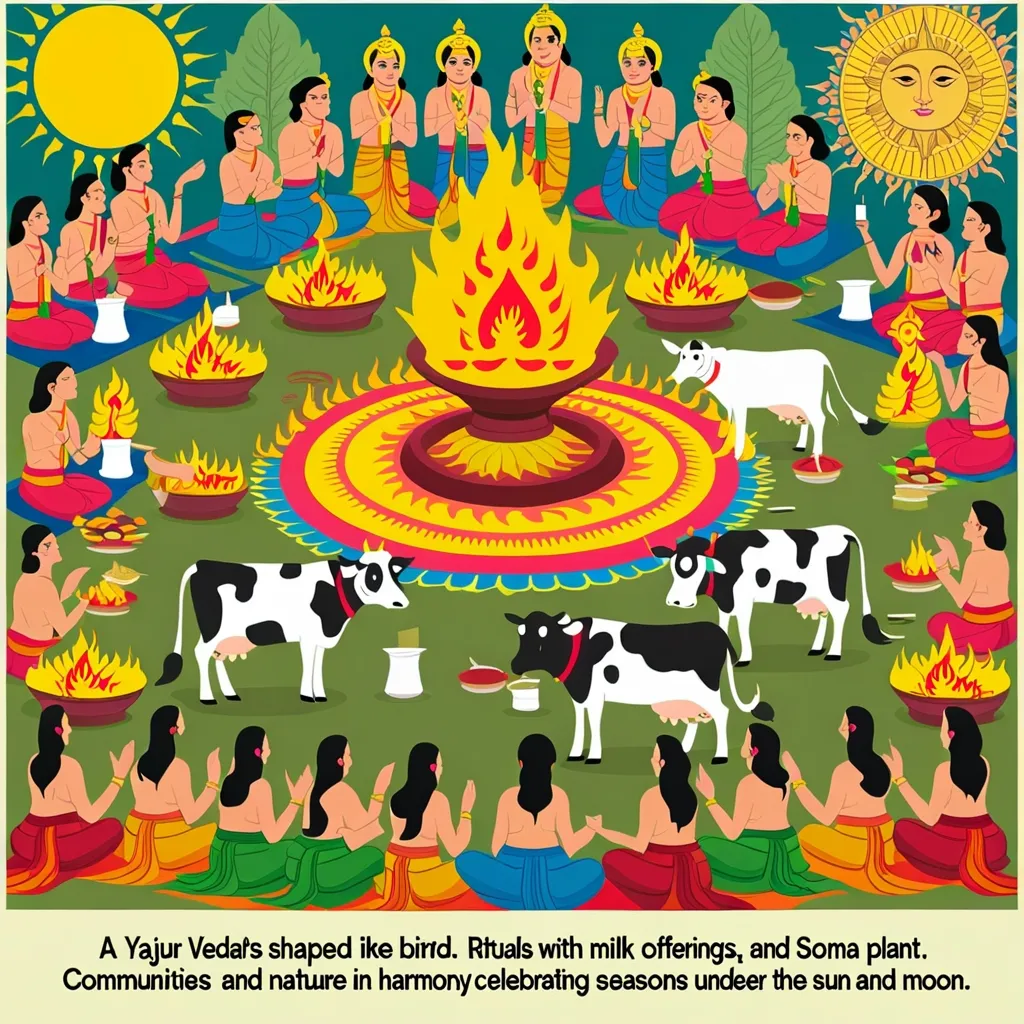
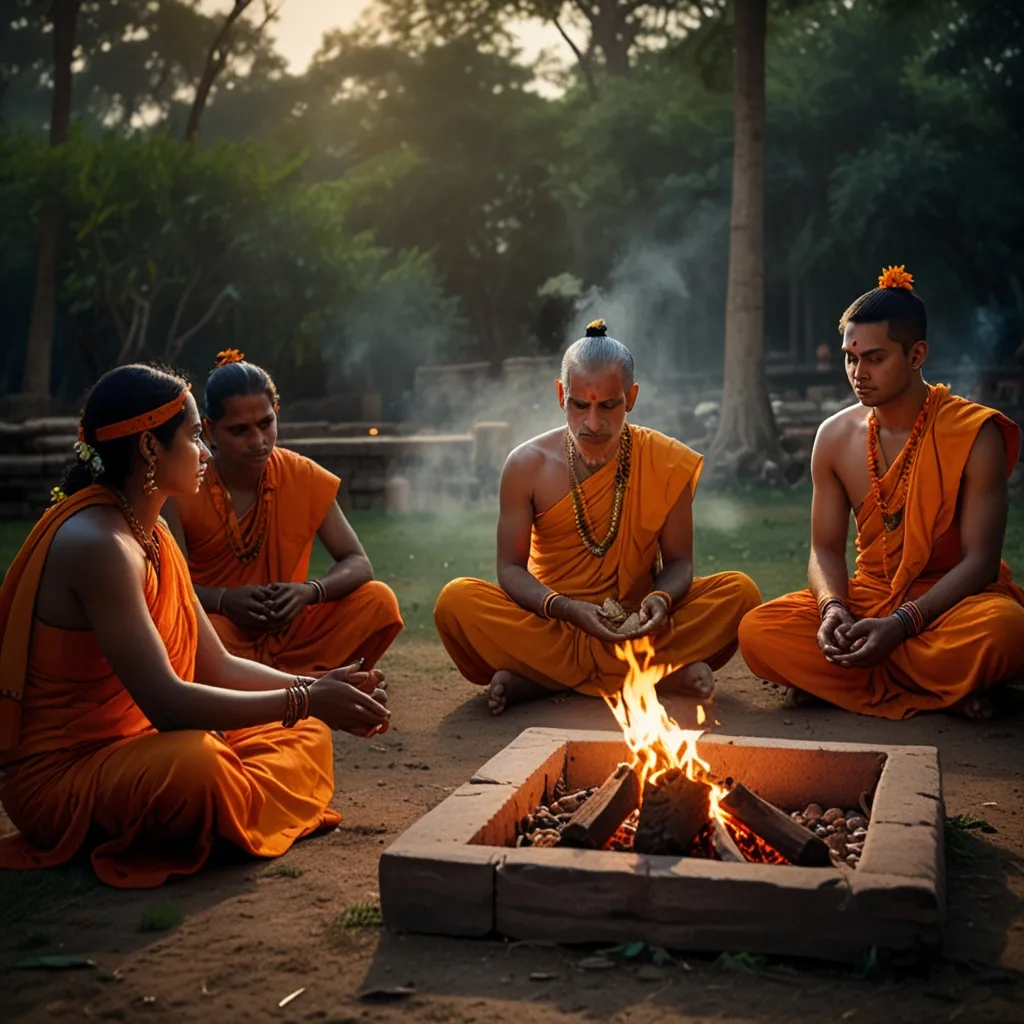
Yajna, which means sacrifice, is a cornerstone ritual in Vedic traditions. It involves surrendering something to the gods, typically performed in front of a sacred fire while chanting mantras and offering oblations. Fire, personified as Agni, acts as a messenger between humans and the divine, carrying offerings to the gods and bringing blessings back in return. This is not just a physical act; it’s a spiritual exchange that strengthens the connection between humans and the divine.
Considered one of the highest forms of soma sacrifices, the Vajapeya Yajna is performed in the autumn season. It’s as revered as the Rajasuya Yajna, a sacrifice associated with imperial rulers. The Vajapeya Yajna aims at securing wealth, authority, and spiritual elevation for the sacrificer, making it a ritual of immense importance.
The yajna involves several intricate rituals, including soma-rasa homa, pasu-homa (sacrifice of 23 animals), and anna-homa (offering of rice). The name “Vajapeya” speaks for itself: “vaja” means rice or food, and “peya” means drink. The sacrifice is believed to ensure a bountiful harvest and abundant water, fulfilling essential material needs. One notable moment in the ritual is the sacrificer’s ritual bath (avabhrtha snana) at the conclusion. After this purification ritual, the sacrificer is honored, sometimes even with the king holding up a white umbrella—a significant mark of high status.
Priests play a crucial role in the Vajapeya Yajna. It requires a total of 16 priests, including the hota, adhvaryu, udgata, and brahma, each assisted by three others. This setup highlights the complexity and importance of the ritual.
While the Vajapeya Yajna appears as an outward ritual, it also has an inner dimension. The concept of inner yajna, involving spiritual ascent through subtle body actions, is a key theme in the Yajur Veda. This inner yajna aims to elevate humans to higher levels of consciousness through collaboration between cosmic powers and humans. However, it was limited to a few individuals, like seers and their disciples, due to the required level of concentration and interest.
Yajnas, including the Vajapeya, were not just for individuals but were community events. They united people, creating a sense of shared spiritual experience. The outward yajna, with its melodious chants and visible rites, made Vedic traditions accessible to everyone, regardless of social status. Participating in these yajnas was believed to ensure material well-being like wealth, children, long life, and health.
In Vedic tradition, some rites are obligatory and others optional. The Vajapeya Yajna falls under optional rites, known as “kamya-karma,” performed to fulfill specific wishes. However, there are also obligatory rites, called “nitya-karma,” considered essential for individual and world well-being. Among these, 21 sacrifices are mandatory, with Vajapeya being one of the significant ones.
Despite time’s passage, the Vajapeya Yajna remains significant in Hindu tradition. It symbolizes the enduring connection between humans and the divine, as well as the pursuit of material and spiritual goals. Though it may not be as widely practiced now as it was in ancient times, its importance is still recognized, particularly among orthodox Brahmins who continue these traditions.
The Vajapeya Yajna is a profound example of the richness and depth of the Vedic tradition. It embodies spiritual, social, and material aspirations, continuing to inspire those who seek to understand and practice these rituals today. Through its intricate rituals and deep symbolism, the Vajapeya Yajna remains a powerful expression of the human quest for meaning, connection, and fulfillment.