The concept of sacrifice in Hinduism, especially as laid out in the Yajur Veda, is way deeper than just rituals and ceremonies. It’s a symbolic act that weaves together physical actions with the cosmic order, showing a beautiful relationship between humans and the divine.
The Essence of Yajña
Yajña, which comes from the Sanskrit root yaj, means to worship or offer prayers to the gods. It’s more than just a simple act or a ritual; it’s a bridge connecting us with the divine. Sacrifices are not just about asking the gods for favors or fulfilling our desires. They play a crucial role in our spiritual journey and in finding unity with the supreme self.
Rituals and Their Importance
Back in the Vedic era, sacrifices were at the heart of both religious and social life. Celebrations like Rajasuya, Vajapeya, and Ashvamedha were not just grand displays by kings but carried deep spiritual and cosmic meanings. Take the Ashvamedha, for example. It involved letting a horse roam freely for a year before it was sacrificed. This wasn’t just a sign of the king’s power but also his connection with the gods.
Animal Sacrifices
Now, animal sacrifices can be a touchy subject today. But in those Vedic times, they were a big part of religious rituals. The Yajur Veda talks about several sacrifices involving animals, like the Agnisomiya, where a goat was offered to Agni and Soma, or the Savaniya, with offerings to Agni throughout the day. These sacrifices weren’t just about killing animals. They symbolized the cycle of life and death and the interconnectedness of every living being.
The Cosmic Order
Vedic seers believed sacrifices were crucial for keeping the cosmic order in check. Sacrifices were a way to settle our debts to the gods, keeping the universe in balance and harmony. The Śatapatha Brāhmaṇa talks about these rituals as essential duties, saying we owe a debt to the divine right from birth and must perform these rites to pay it off.
Fire and Its Symbolism
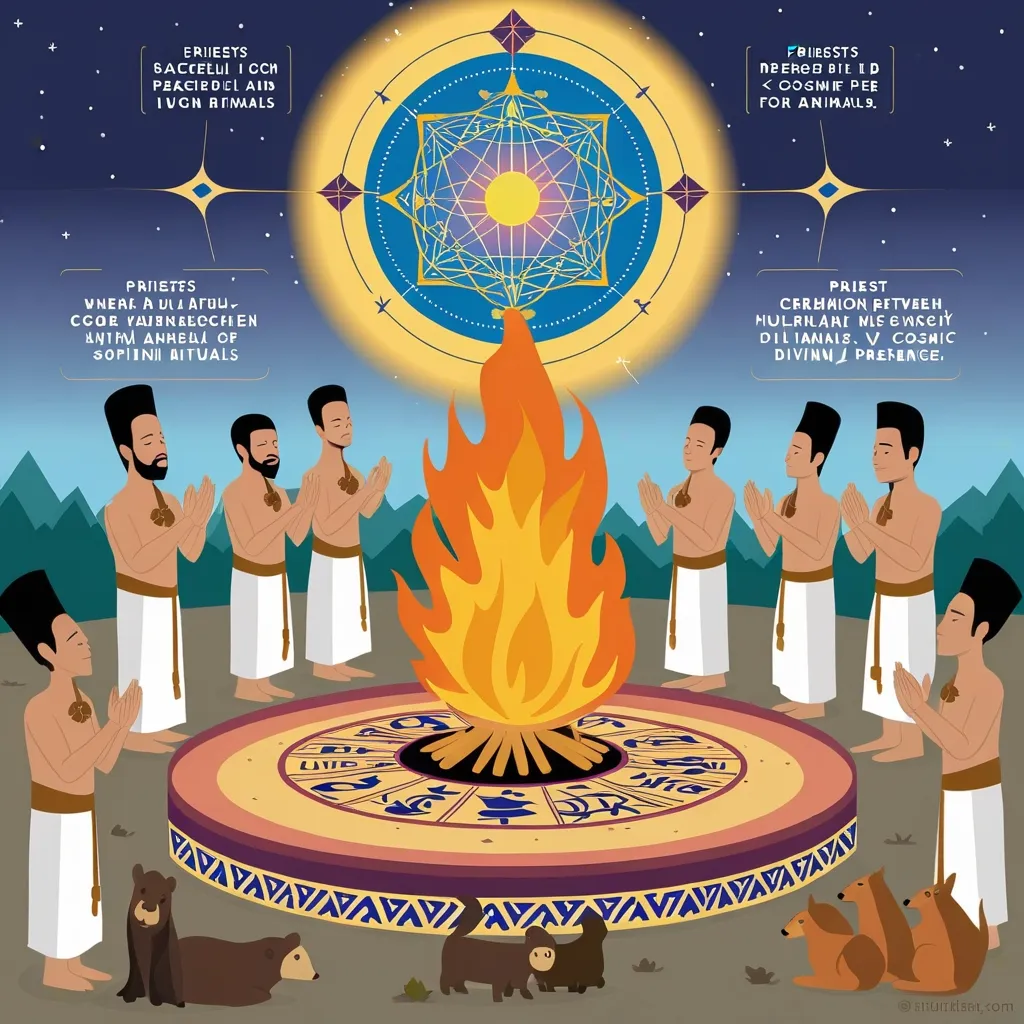
Fire, represented by the god Agni, had a key role in these sacrifices. The ritual fire was seen as a divine messenger, carrying our offerings to the gods. When we offered something into the fire, it represented giving up our ego and desires to reach spiritual growth and enlightenment.
Personal Devotion
Over time, the idea of Yajña shifted from just ritual sacrifices to a more personal level, emphasizing devotion and dedication. The Upanishads, like the Chandogya Upanishad, view Yajña as living a chaste and disciplined life focused on sacred knowledge.
Community and Social Life
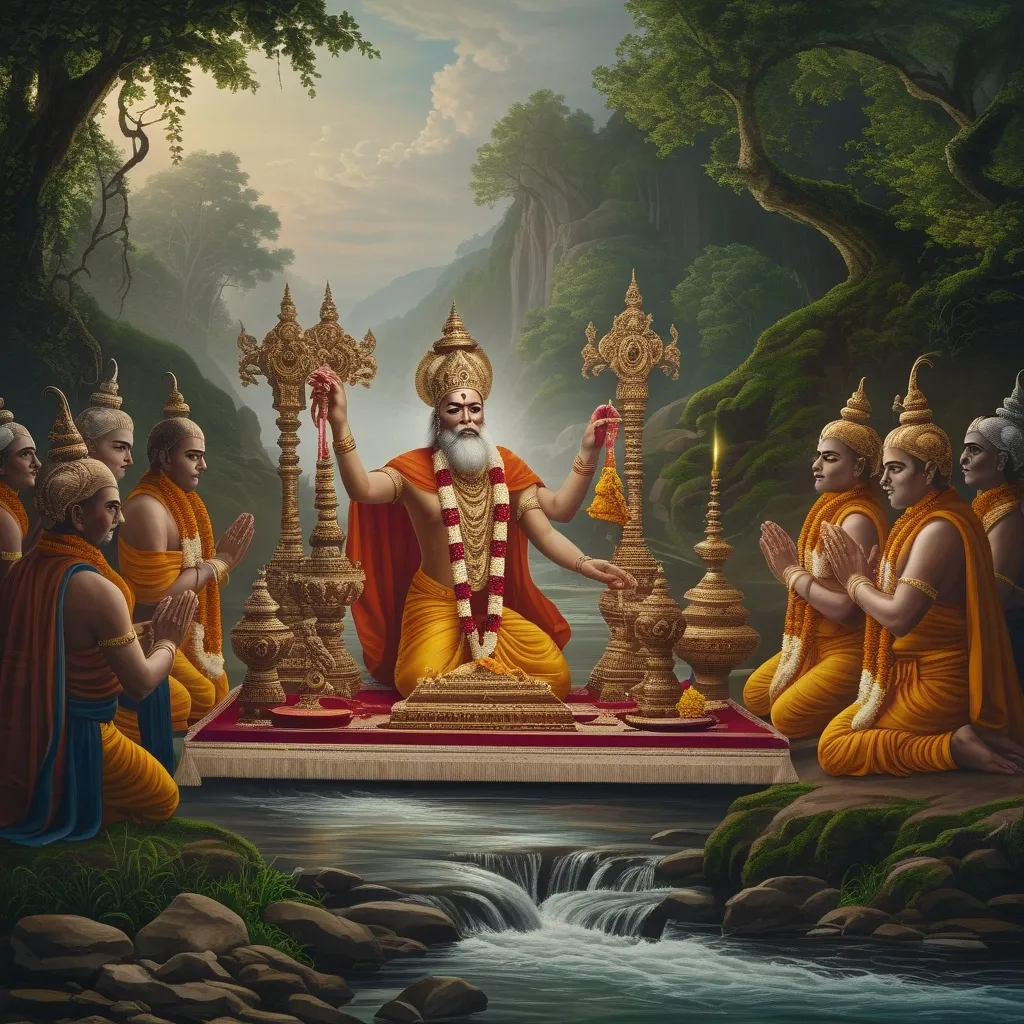
These sacrifices weren’t solo performances. They were community events. The rituals were carried out on elaborate altars built with mathematical precision, often in geometric shapes. Known as Vedi, these altars were set up in a mandapa or mandala, with multiple priests participating, each taking turns to enact spiritual themes in a elaborate way.
Modern Days
Nowadays, the idea of animal sacrifices has mostly faded away, especially in the current age, known as the Kali Yuga. Various texts and Puranas have moved away from these practices. Instead, the focus has turned to more symbolic and vegetarian offerings, reflecting a broader respect for every living creature.
Divine Connection
The end goal of these sacrifices was to connect with the divine. The rituals were meant to appease the gods, seeking their blessings. But it wasn’t just about what we could get from them. It was a spiritual exchange aimed at raising our consciousness and finding unity with the supreme self.
The Legacy
The essence of Vedic sacrifices still influences modern Hindu practices. Even though the rituals have evolved, the core principles of devotion, discipline, and spiritual growth remain the same. These ancient practices remind us of the complex web of life and our place in the cosmic order. They encourage us to live in harmony with nature and the divine.
In short, the sacrifices described in the Yajur Veda go well beyond physical actions. They are symbolic gestures of our deep desire to connect with the divine and keep the universe in balance. They reflect an intricate understanding of the unity of all living beings and the cosmos, guiding us on a path toward spiritual enlightenment and harmony.