Ancient Vedic Sound Healing: How Sanskrit Mantras Can Rewire Your Brain Waves
Discover how ancient Vedic sound healing uses specific frequencies and mantras to synchronize brain waves, reduce stress, and promote wellness. Learn the science behind sacred sounds.
Let’s start with a question: have you ever sat perfectly still and noticed the hum in your own silence? It’s not just your mind playing tricks. The ancients who gave us the Vedas believed that everything begins with nothing but sound. But not just any sound—something called Nada Brahman, meaning, roughly, “the universe as vibration.” Doesn’t it make you wonder what’s lurking underneath the noise of everyday life?
Think about this: to the rishis, the universe wasn’t built out of solid blocks. It’s a symphony of tiny, ongoing vibrations. The unstruck sound—something you can’t even hear in your usual way—was seen as more real than touch or sight. It’s the idea that before there was light or matter or anything you and I consider “stuff,” there was this pulse, this cosmic rhythm. Strangely enough, physicists today talk about strings vibrating invisibly beneath the surface of particles. Is it a coincidence, or did someone back then know something we’re still chasing[?]
Let’s get to the juicy part—mantras. If you’ve dismissed them as just religious murmuring in a language you don’t understand, let’s flip the script. The Vedas did not see mantras as prayers. They’re more like surgical tools. Imagine if you could sing a sound so specific, so precise, it changed the air around you, your thoughts, maybe even your cells. Every Sanskrit syllable is more than a sound; it’s a frequency, a burst of energy engineered to do a job. The vowels, believe it or not, were said to stir up consciousness itself, while the consonants carved that energy into a particular shape—like how a sculptor chips away at formless stone.
But here’s something wild: Sanskrit wasn’t chosen randomly. Phonetics matter. If you change how you say a word, you change what it does. It’s like entering a Wi-Fi password—one wrong digit, and nothing works. You have to hit the right pitch, the right length, the right sequence. Imagine if I told you that repeating a sound, with the right intent and clarity, could sync up not just your heartbeats, but the firing of your neurons? What would you use that for?
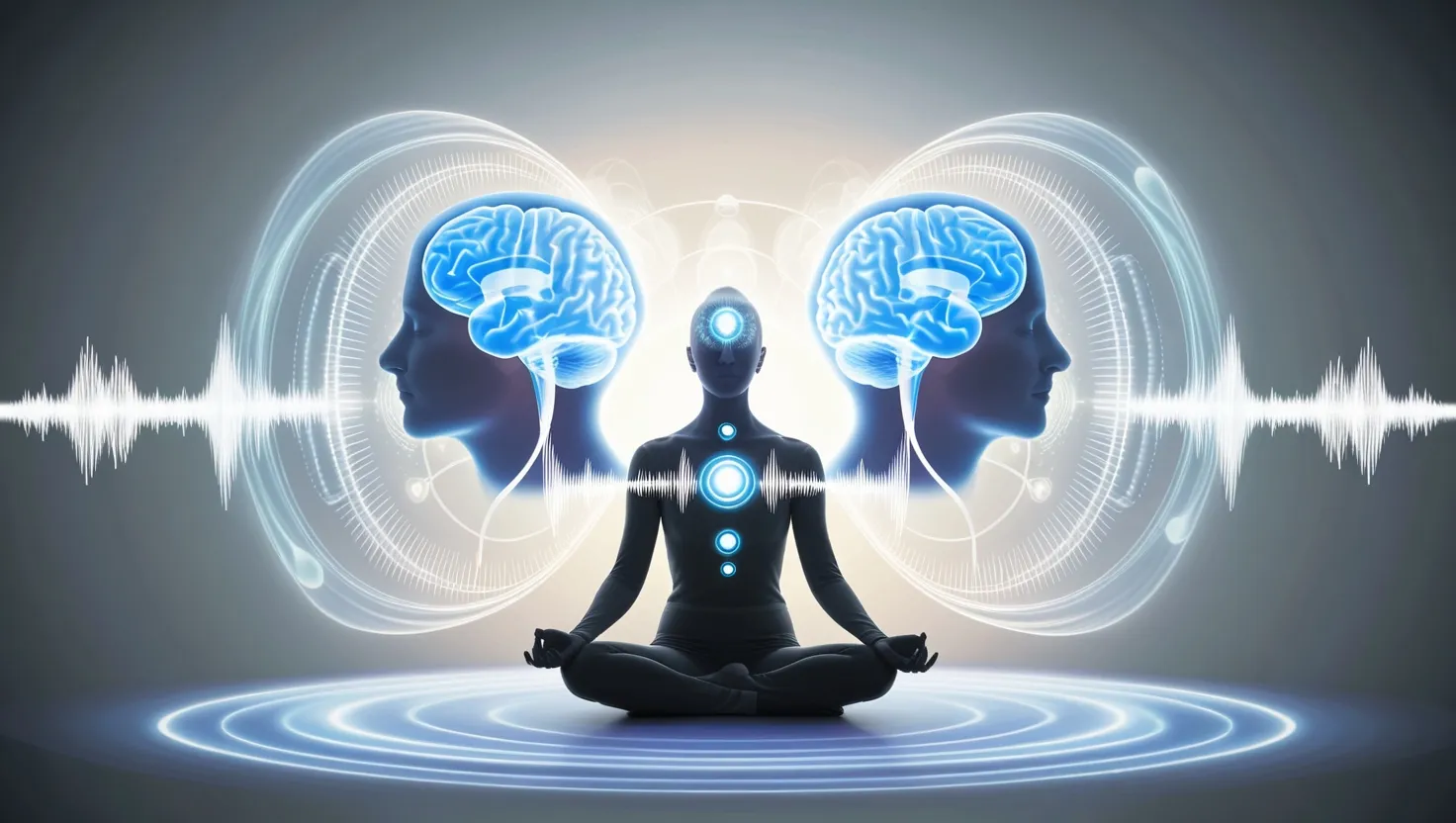
Now, about these brain waves. Modern researchers have stuck EEGs on people chanting the Gayatri Mantra—a potent Vedic verse—and watched as the brain’s left and right hemispheres, usually off doing their own thing, start firing in rhythm. This state, sometimes called “calm alertness,” is not quite sleep, not quite waking—think about those moments when time slows down, and you’re both peaceful and vividly aware. Would you believe that schools in India have started using mantra chanting before class because it helps kids focus? What would happen if work meetings everywhere started with a chant?
It gets crazier. The Vedic texts listed specific sound combos to treat real-world problems, like inflammation or sadness. Rudra mantras—they’re not just for invoking a god; they were considered “anti-inflammatory frequencies.” Sama Veda doesn’t read like a book; it’s more like a Spotify playlist set to your emotions and nervous system. Melodies were designed to tune your body, not just your soul. “Music is the medicine of the mind,” said John A. Logan, and the soma drinkers of old would probably agree.
Let’s talk buildings. Have you ever noticed how singing in a bathroom sounds better than in your bedroom