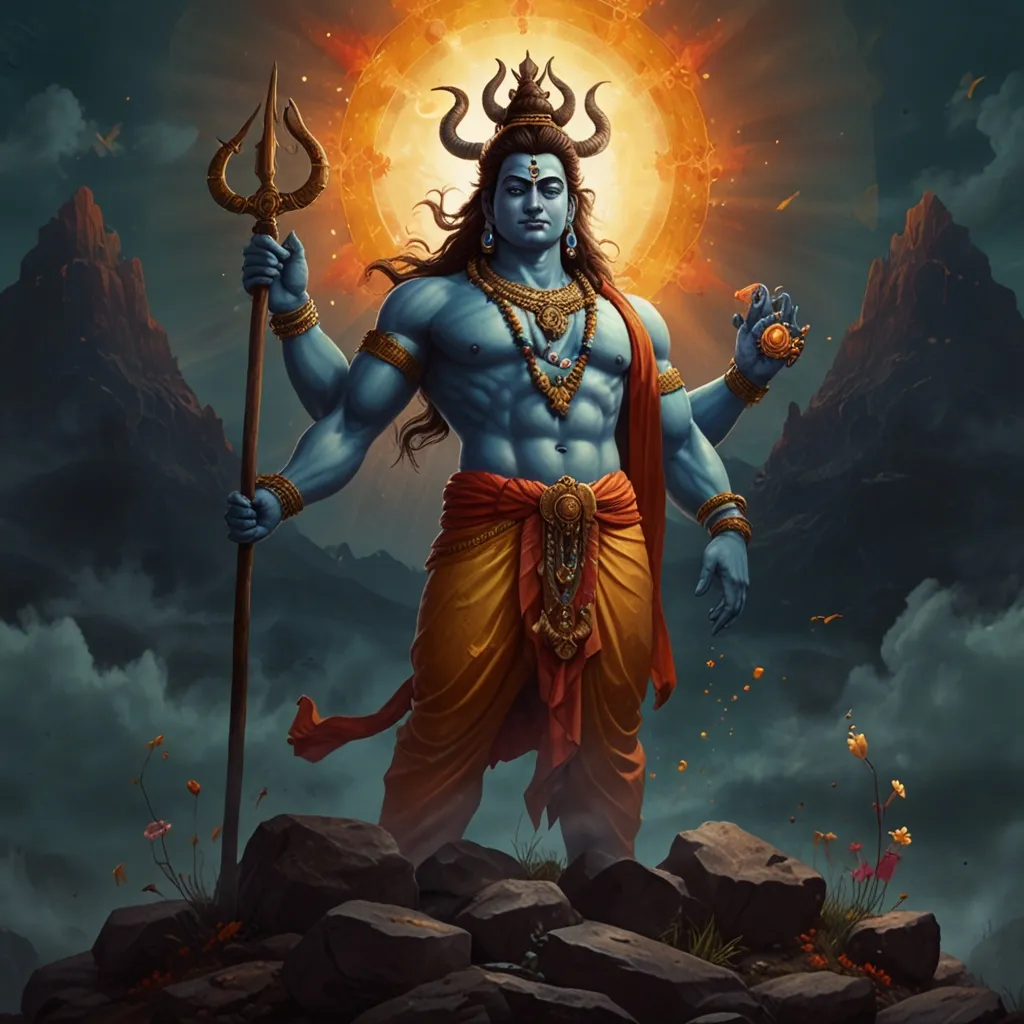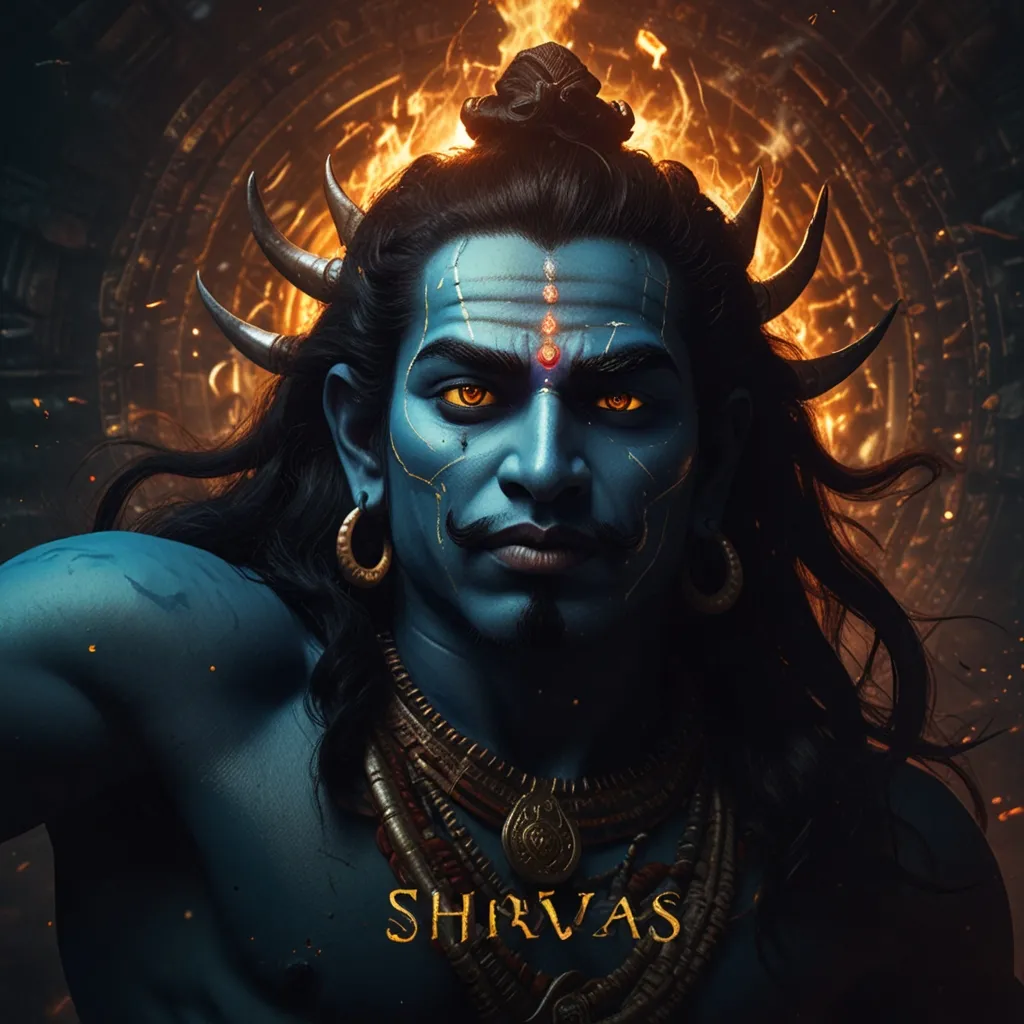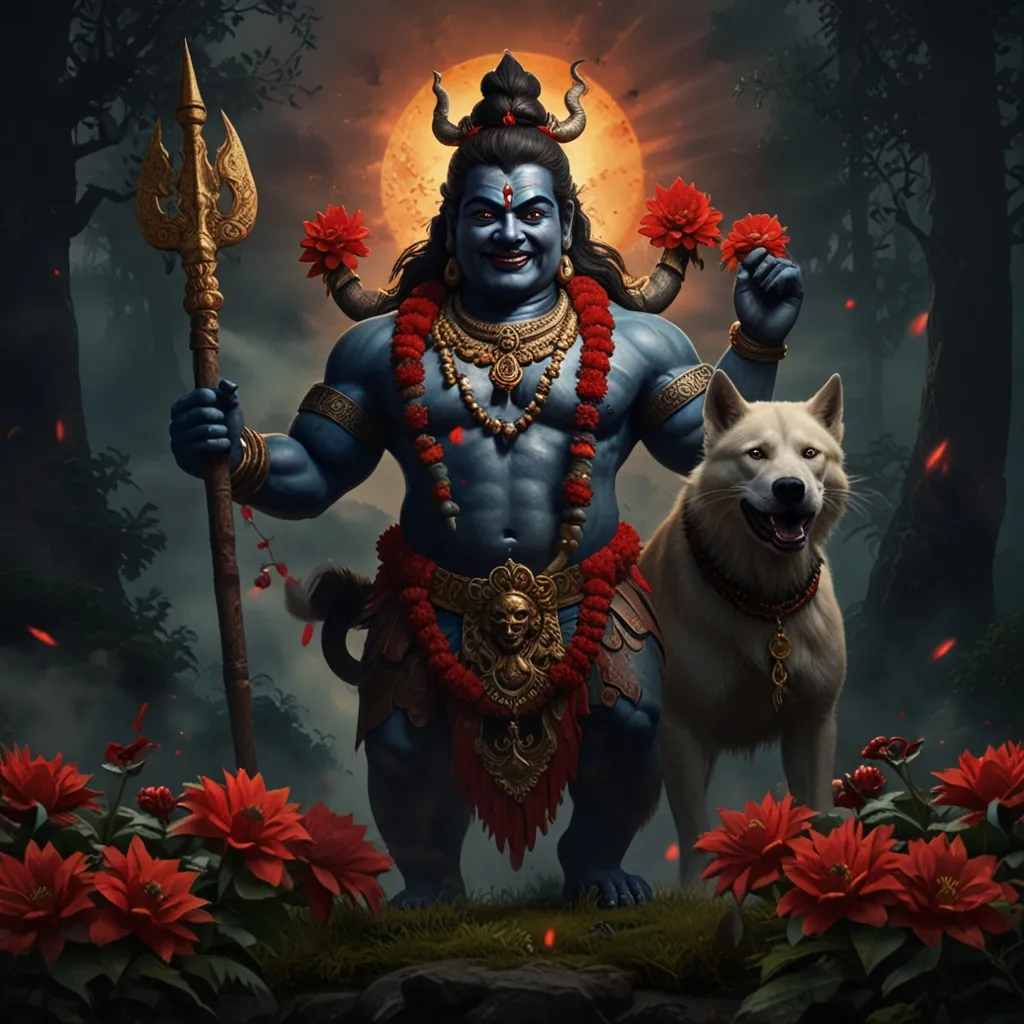
Shiva, the Supreme Being in Hinduism, has many forms, but one of the most intriguing, and honestly fearsome, is Bhairava. This god is revered by both Hindus and Buddhists. Picture this: a formidable deity standing tall with four hands, each holding a different weapon—a drum, a noose, a trident, and a skull. He’s got these protruding teeth, and his fierce look, along with a garland of red flowers, truly makes him an intimidating presence. And to top it off, there’s usually a dog by his side, which amps up his fearsome vibe.
In Shiva temples, Bhairava’s idols have a special spot—they’re placed in the north, facing south. This isn’t random; it’s believed that this placement brings good luck and shields devotees from harm. The rituals involved in worshiping Bhairava are unique too. Think ghee baths, red flowers, ghee lamps, unbroken coconuts, honey, boiled food, and fibrous fruits as offerings. Midnight, especially on Fridays, is considered the prime time for worship, with the belief that Bhairava and his consort Bhairavi make appearances to bless the devotees.
Bhairava’s origins are steeped in Hindu mythology. One of his legendary tales involves him decapitating Brahma’s fifth head as a way of enforcing discipline. This act was, let’s say, frowned upon, resulting in Bhairava being cursed to roam the earth with the severed head in his hand. This story paints Bhairava as a powerful enforcer of order and justice.
Kashmir Shaivism, a philosophical school, views Bhairava as the ultimate manifestation of pure “I” consciousness. They see him as embodying the divine within every person, stressing the importance of self-realization and spiritual awakening. Bhairava’s many forms are considered reflections of different aspects of human consciousness and the lifelong journey to enlightenment.
There are numerous forms of Bhairava with distinct traits. Svarṇākarṣṇa Bhairava, for instance, is depicted with a red or blue complexion, golden attire, and a moon over his head. He is believed to bestow wealth and prosperity. On the other hand, Batuk Bhairava appears youthful and is sought after for protection and blessings.
The worship of Bhairava isn’t confined to India. It has historical roots in Central Asia, influenced by the Hephthalite and Kushan Empires. In places like Sogdia and the Kingdom of Yutian, Bhairava was portrayed in wall paintings and sculptures, often with a sacred halo and a thread. These artworks usually show Bhairava in his Trimurti form with Shakti, his consort, beside him.
Even beyond Hinduism, Bhairava finds mention. In Sikhism, for instance, the Japuji Sahib of the Guru Granth Sahib references Shiva and Bhairava, underlining their significant role in the broader religious context. Guru Gobind Singh, the tenth Sikh Guru, also spoke about avatars of Rudra, closely linked to Bhairava.
All in all, Bhairava is one of Shiva’s most complex and powerful manifestations. His stories and rituals weave into the rich fabric of Hindu philosophy and culture, offering endless fascination for devotees and scholars alike.