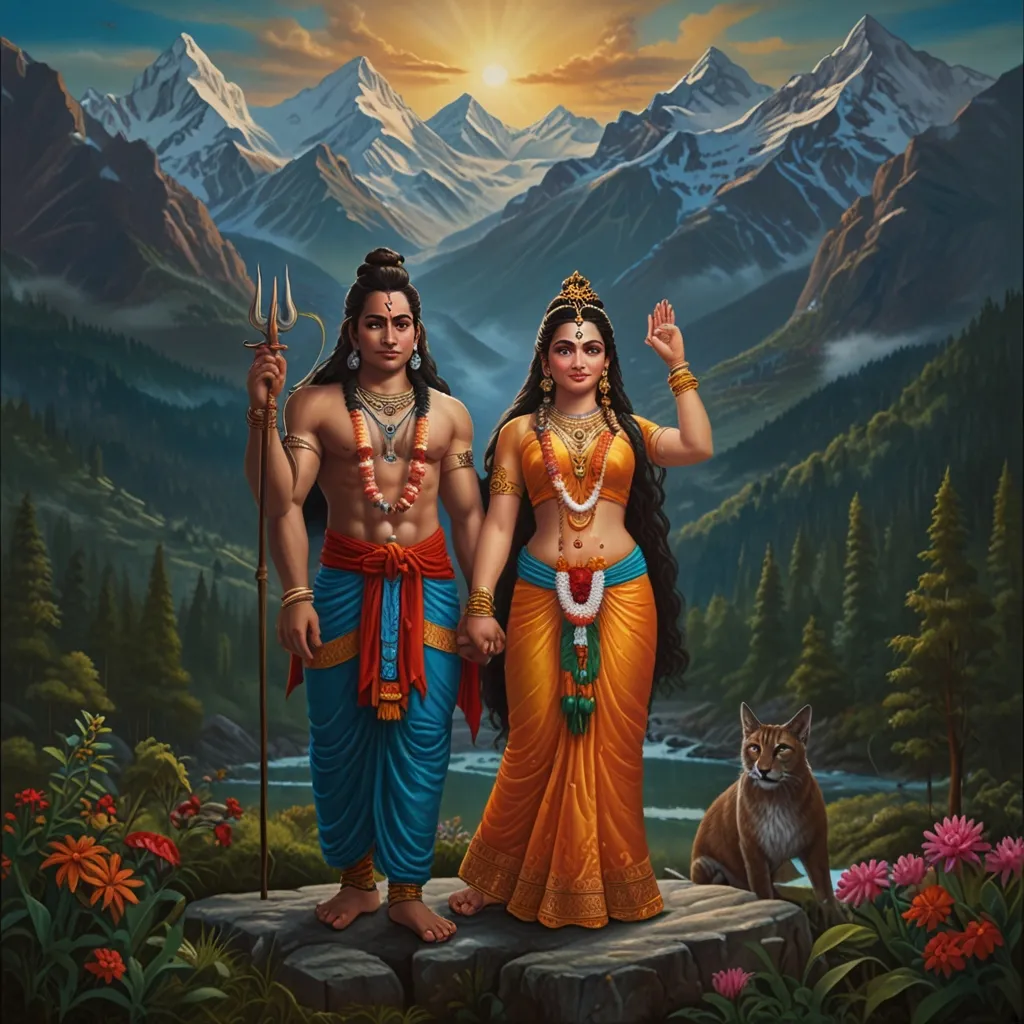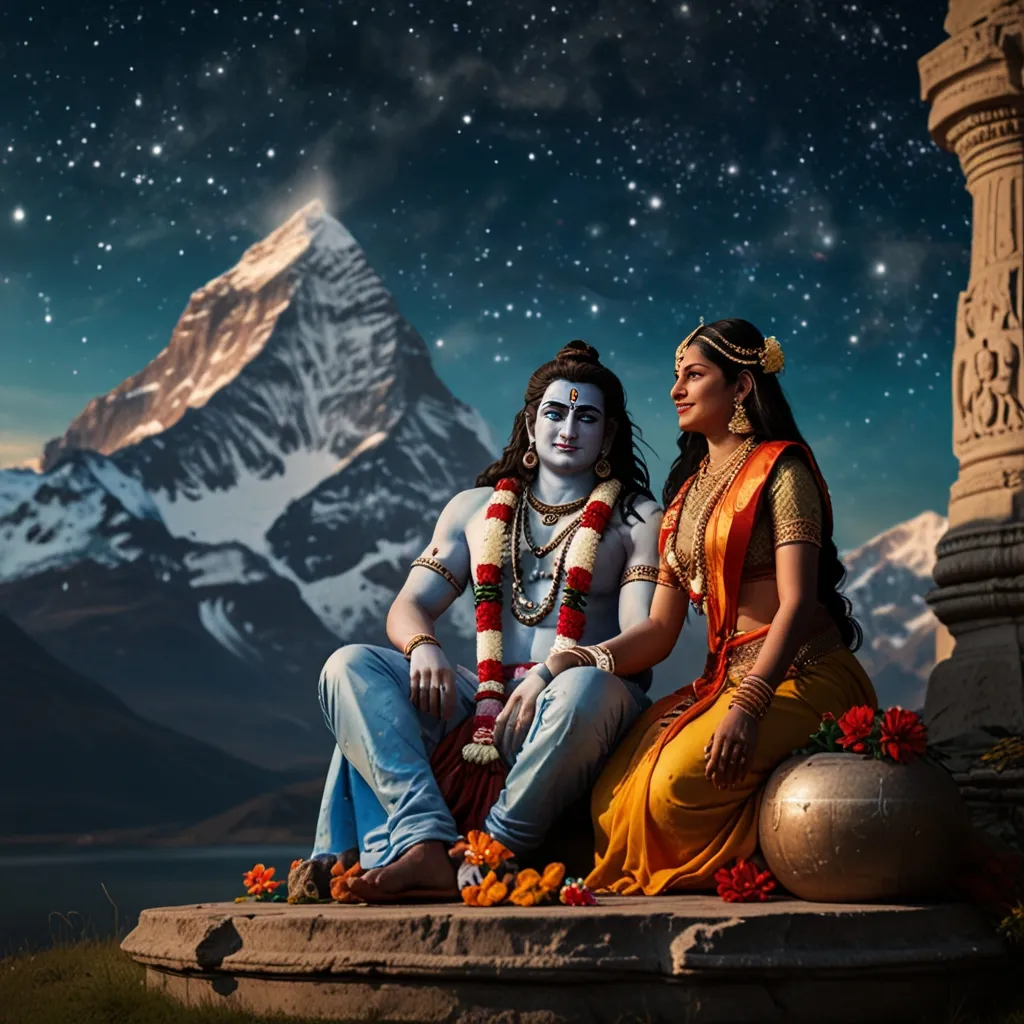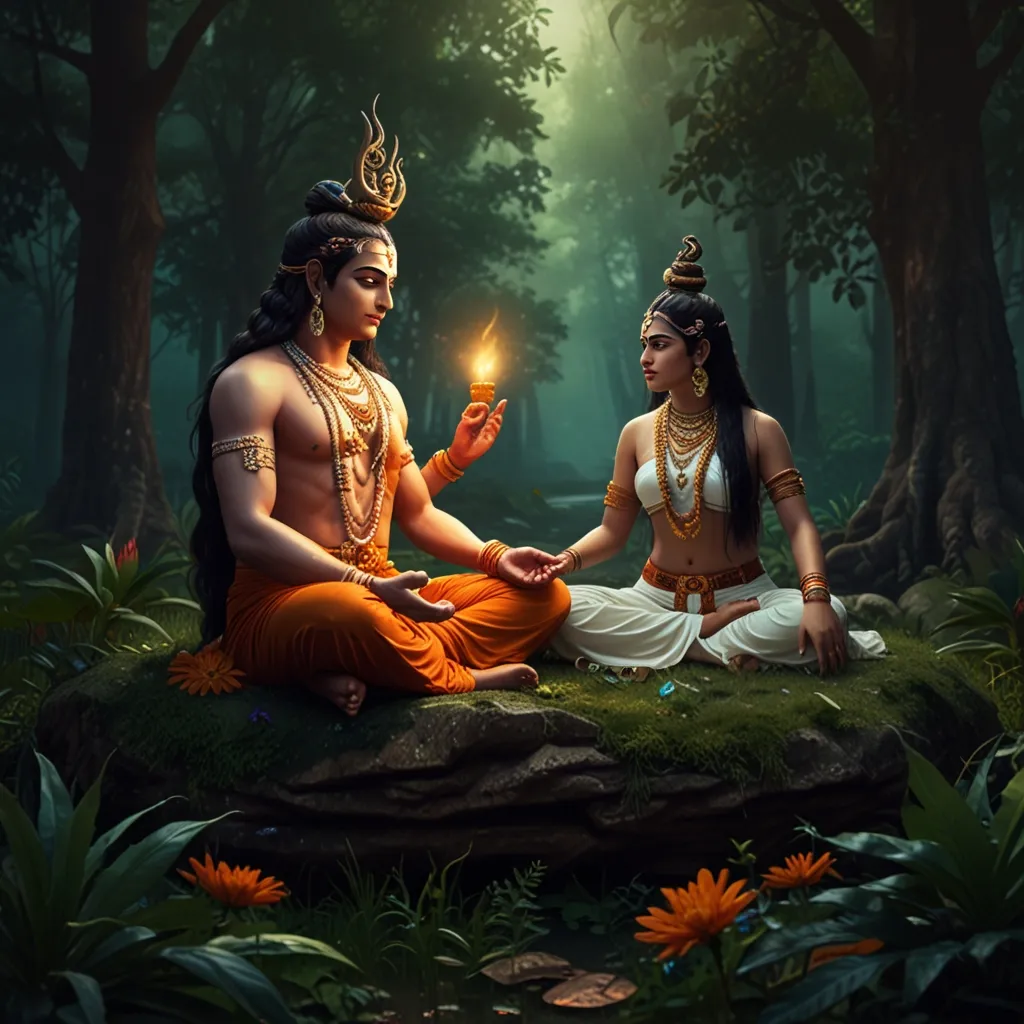
Shiva, the Supreme Yogi, is a colossal figure in Hinduism. His very name means “that which is nothing,” echoing the vast emptiness of the cosmos. Known as the Adi Purush—the first being—and the Adi Yogi—the first yogi—Shiva is where yogic traditions began. It’s believed he shared the secrets of yogic science with his seven disciples, the Sapt Rishis, by the serene glacier lake, Kanti Sarovar, in the Himalayas.
Shiva’s mythology is rich and layered. He appears in many forms, each showcasing different traits. From the gentle Bholenath to the terrifying Kalabhairava, Shiva’s forms are both varied and profound. His most iconic form is probably Nataraja, the Lord of the Dance, where he twirls amidst a circle of fire, symbolizing the unending cycles of creation and destruction.
One gripping tale involves Shiva and the goddess Kali. In a time of chaos when demons ran amok, Kali, in her rage, began dismantling everything around her. The gods, unable to calm her, sought Shiva’s help. In typical Shiva style, he approached calmly, lying down in her path. In her fury, Kali stepped on Shiva before realizing her mistake. Her rage dissolved as she recognized Shiva and sought his forgiveness. This story beautifully illustrates Shiva’s calming influence and his knack for restoring balance.
Shiva is also linked to the Jyotirlingams, sacred symbols of his presence. There are 64 original Jyotirlinga shrines in India, with 12 deemed the most sacred, called Maha Jyotirlingams. These shrines are pilgrimage hotspots for those seeking spiritual growth and enlightenment.
Beyond religious borders, Shiva’s teachings touch on various life aspects. His creation-destruction cycle is often seen as an analogy for the creative process. For every creation, there’s destruction, highlighting life’s cyclic nature. Many artists and writers resonate with this, finding immersion in their craft much like Shiva embraces the cosmos.
Shiva’s influence isn’t confined to Hindu mythology; it spans cultures. In Jewish tradition, “sitting shiva” is a mourning period where families honor the deceased for seven days, inviting visitors to share memories. This practice, although different, shares a deep connection with Shiva’s role in Hinduism—both signal a profound link to the life-death cycle.
Through generations, Shiva’s teachings and stories have inspired art and literature. His mystical nature and diverse forms make him an endlessly intriguing figure. Whether as a yogi, destroyer, or creator, Shiva stands as a powerful emblem of the eternal and the infinite, reminding us of the boundless nothingness from which everything springs and eventually returns.