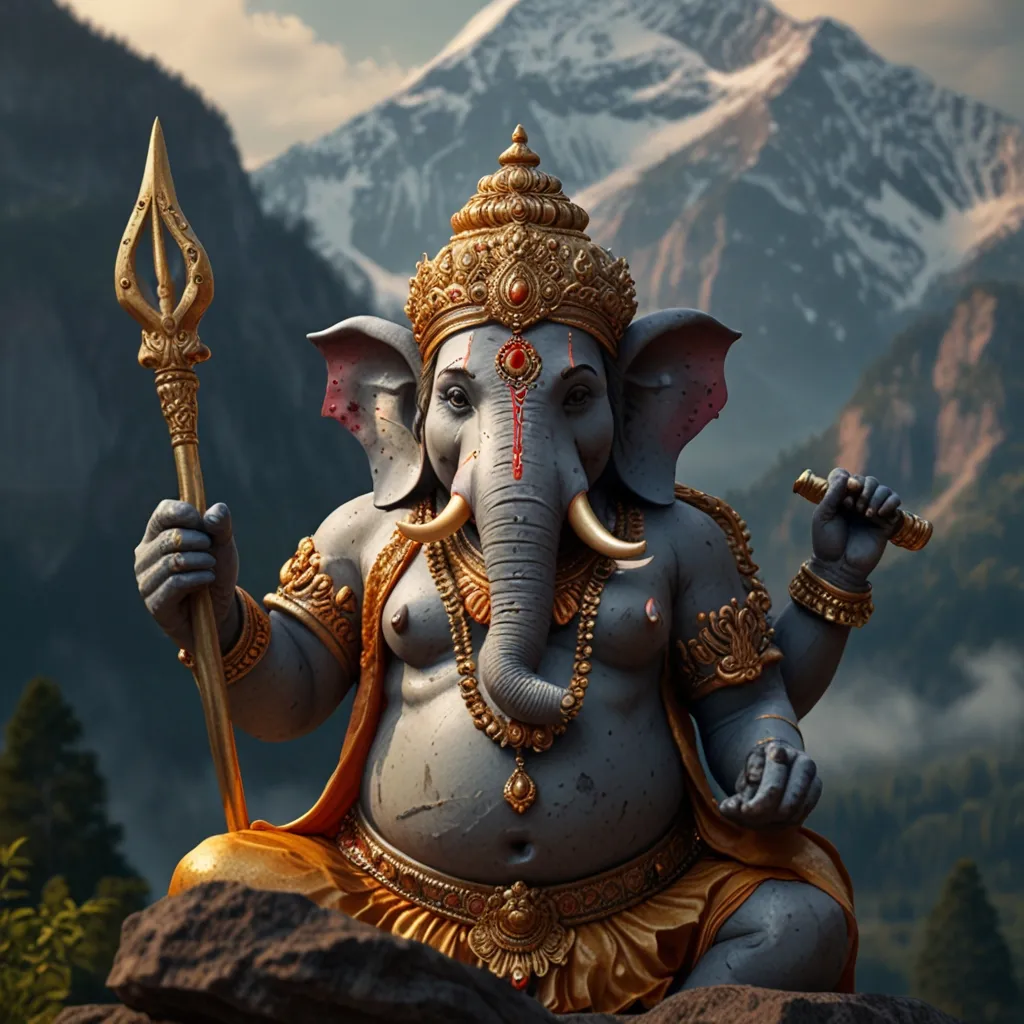
Ganesha, the elephant-headed god of Hinduism, is a figure packed with stories and deep significance. His tale is an enchanting part of Hindu mythology, with various versions that explain his unique birth and the iconic elephant head. Let’s dive into the captivating story of Ganesha.
In the Himalayas on Mount Kailash, Lord Shiva lived with Goddess Parvati. One day, while Shiva was away, Parvati felt pretty lonely and decided she wanted a child. Using her divine powers, she crafted a cute little boy out of clay and ghee. She named him Ganesha and brought him to life by sprinkling holy Ganges water over him.
And just like that, Parvati’s heart was filled with joy. She decided to take a bath and asked Ganesha to guard the door, making sure no one entered. Ganesha, being the obedient son, took his job very seriously. However, Shiva returned home unaware of Ganesha’s existence. Trying to get inside, he found himself blocked by the boy.
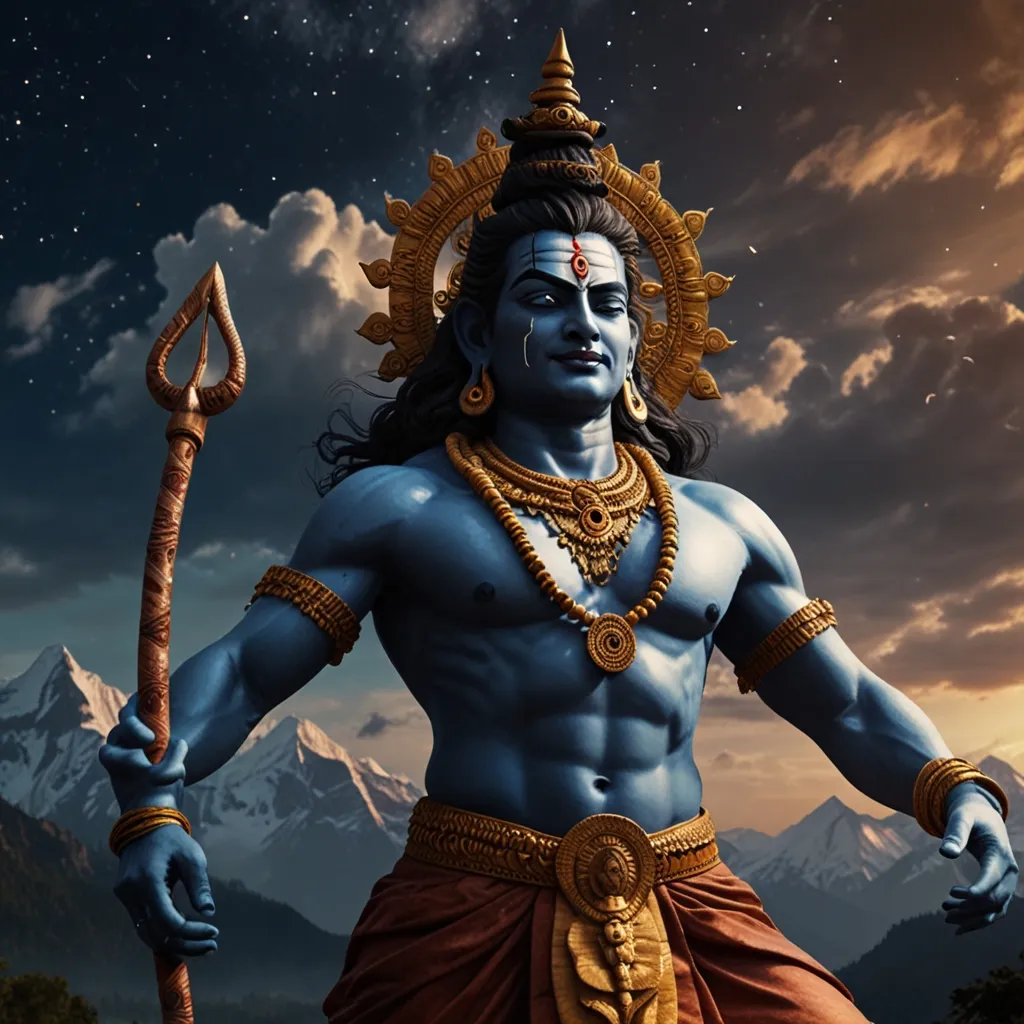
Not one to be disobeyed, Shiva’s anger boiled over, leading him to strike off Ganesha’s head with his mighty trident. The noise echoed through the mountains, bringing Parvati rushing out, only to find her son lifeless. Overcome with grief and anger, she threatened to destroy the universe if Ganesha was not revived.
Realizing the gravity of his mistake, Shiva sought to fix it. He ordered his attendants to bring him the head of the first creature they encountered. They found an elephant and brought its head back to Shiva, who then attached it to Ganesha’s body, restoring him to life. A thrilled Parvati watched as Ganesha came back to life, and Shiva blessed him with prosperity and intelligence.
From that moment on, Ganesha became the remover of obstacles and the lord of beginnings. It was decreed that Ganesha would be worshipped first in any ritual or ceremony, a custom still honored today. Ganesha’s story highlights maternal love, loyalty, and bravery.
Ganesha’s elephant head isn’t just a quirky feature. It represents good luck, power, wisdom, and success. Elephants are symbols of strength, loyalty, and unity—all qualities embodied by Ganesha. His elephant head is a constant reminder of his extraordinary beginnings and his role as both a guardian and protector.
Beyond clearing obstacles, Ganesha is also celebrated as the patron of arts and learning. He has a playful side too, marked by his love for sweets and his association with the bandicoot rat, his vehicle. Art and literature have forever immortalized Ganesha, making him a beloved deity.
The festival of Ganesha Chathurthi marks his birth and is a spectacular event. Starting on the fourth day of the Hindu calendar month Bhadrapada, this celebration can last up to eleven days. It’s a time of vibrant parades, plays, music, and the making of elaborate pandals. People immerse Ganesha idols in rivers on the final day, completing the festivities.
These days, Ganesha Chathurthi has also gone digital. Devotees now use apps, social media, and websites to celebrate. This mix of tradition and technology keeps Ganesha’s spirit alive in our modern world.
Ganesha’s tale is a rich blend of myth, symbolism, and cultural importance. His elephant head shows his unique journey and duty as a guardian. As the lord of beginnings and remover of obstacles, Ganesha remains a central figure in Hindu rituals, inspiring devotion through generations.