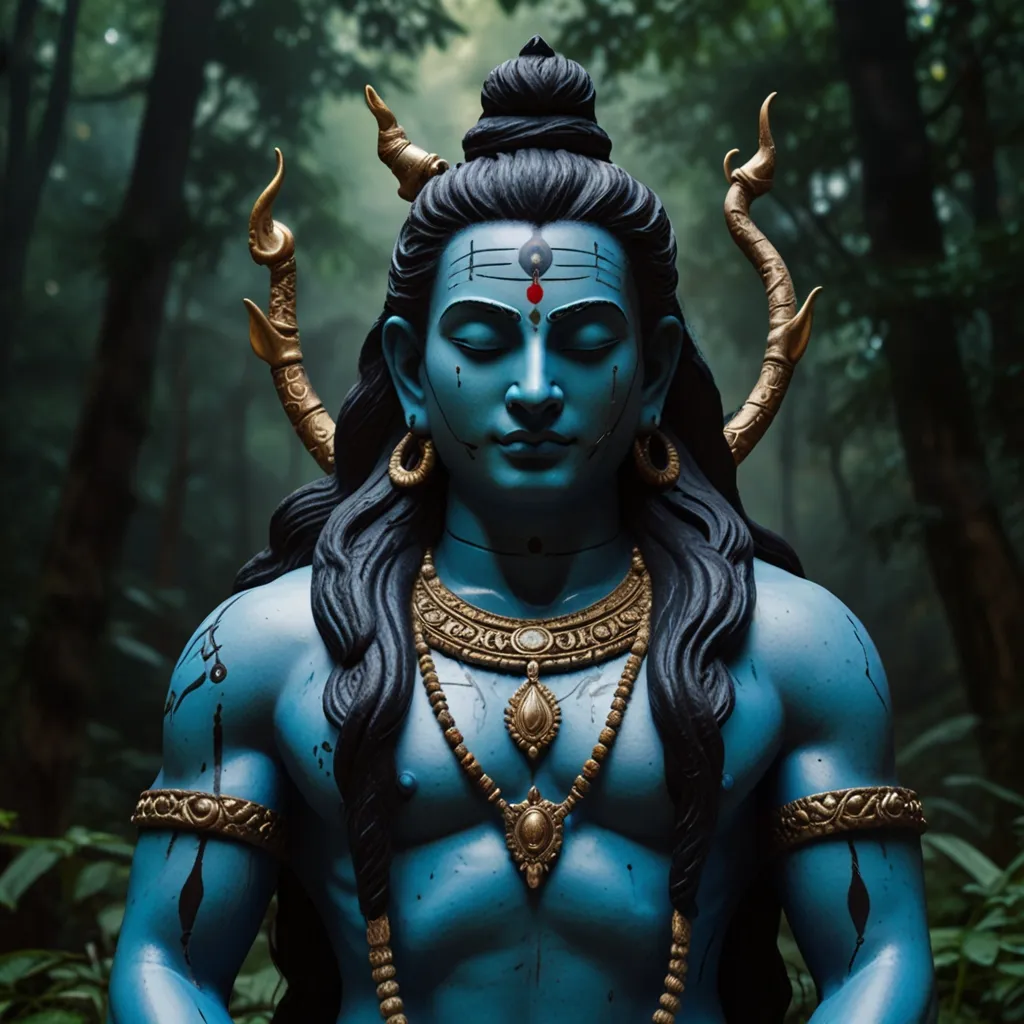
In the fascinating world of Hindu mythology, Shiva emerges as a complex god, embodying both the forces that create and destroy. One of Shiva’s most striking forms is Nataraja, also known as the Lord of Dance. Nataraja’s cosmic dance, the Tandava, is more than just a graceful movement - it’s a powerful emblem of the unending cycle of creation, preservation, and destruction.
Now, the Tandava, especially the Rudra Tandava, isn’t just a show. It’s a high-energy performance that stands for both the end and rebirth of the universe. This dance isn’t just about physicality; it’s a cosmic event that channels Shiva’s fierce anger and transformative power, burning away the old to make way for the new. It’s like a spiritual cleanser that wipes out ignorance and floods the world with sense and bliss.
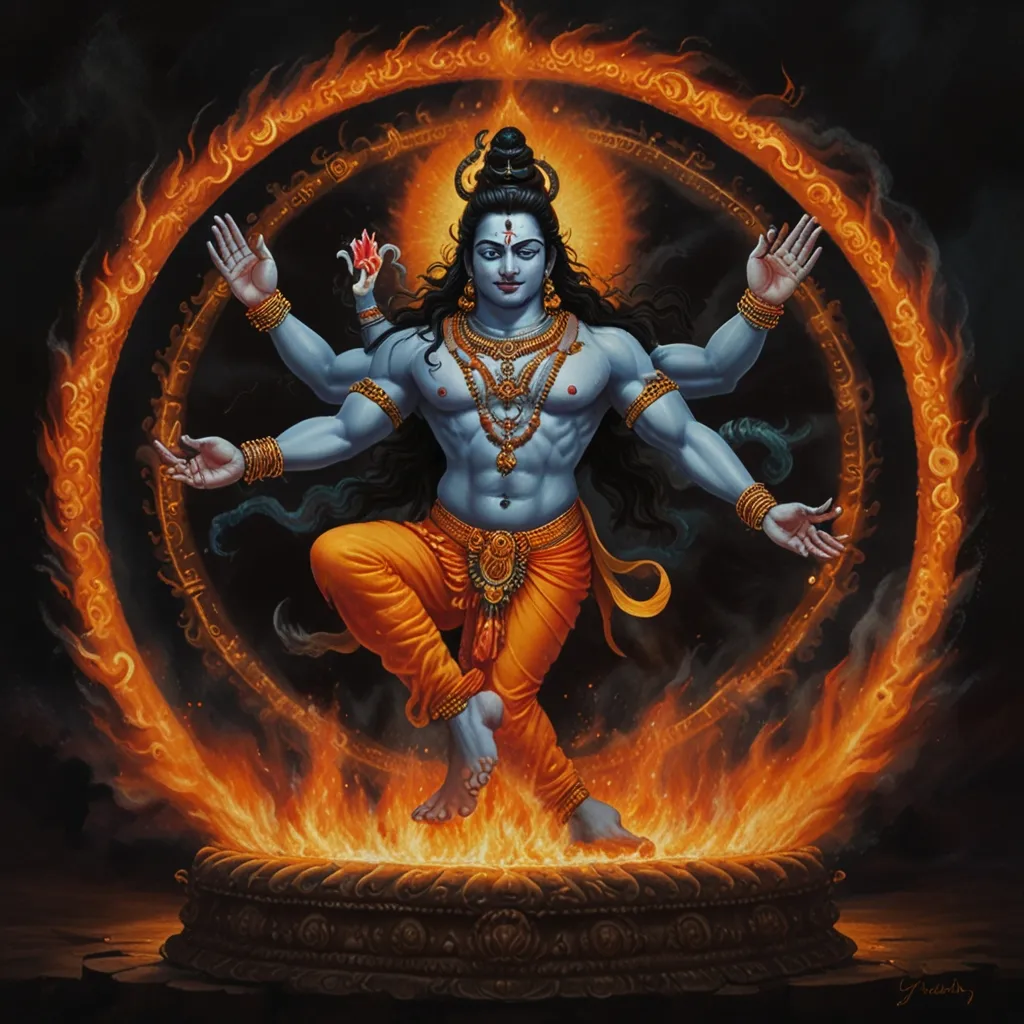
Shiva often dances within a ring of fire, symbolizing the never-ending cosmic cycle. Under his right foot, he crushes the demon Muyalaka, a symbol of ignorance. His left foot lifts off the ground, indicating grace and liberation. In his right hand, Shiva holds a drum, the heartbeat of creation, while his left hand grips fire, the ultimate tool for destruction. This dance is a rich, layered metaphor, capturing the universe’s beat and the eternal dance of life and death.
The Rudra Tandava is done in an aggressive mood, showcasing Shiva’s wild side, Bhairava. This side of Shiva is both scary and mesmerizing, embodying life’s duality. While his dance can annihilate the universe, it also sets the stage for new beginnings. The cycle of creation followed by destruction is vital for the universe’s continuous evolution and renewal.
But don’t get the wrong idea. Shiva’s dance isn’t all about destruction. There’s a joyful side too, known as the Ananda Tandava. This dance of bliss shows Shiva in his purest form, dancing with unfiltered joy and ecstasy. It’s a dance that transcends our everyday struggles and human concerns, celebrating life itself. The Ananda Tandava highlights Shiva as Satchidananda, or pure consciousness.
The Tandava isn’t just a dance; it’s a spiritual odyssey. It reflects the universe’s five main energy forms: creation, preservation, destruction, illusion, and release. These elements are woven into Shiva’s dance, making it a complete representation of the universe’s dynamics. His dance serves as an allegory for the cosmic principles that control the cycles of life and death.
Throughout Hindu scriptures and art, Shiva’s dance appears in various forms. The Natya Shastra, a detailed treatise on performing arts, describes the Tandava, spotlighting its brisk, vigorous movements. Different moods of the dance reveal various facets of Shiva’s personality. There’s the joyful Ananda Tandava and the violent Rudra Tandava, but also others like the Tripura Tandava, Sandhya Tandava, Samhara Tandava, Kali Tandava, Uma Tandava, and Gauri Tandava, each carrying its own importance and symbolism.
The essence of Shiva’s dance goes beyond its visual appeal. It’s a metaphor for the cosmic dance of life, where creation and destruction dance hand-in-hand. This dance reminds us that everything is fleeting and that change is the only constant. Shiva’s dance celebrates this everlasting cycle, a performance that sustains the universe and revitalizes it.
In Hindu tales, Shiva’s dance is often linked with Parvati, his consort. Parvati performs a dance called Lasya, which is gentle, elegant, and sometimes sensually alluring. Lasya is the feminine counterpart to Tandava, showcasing the balance and harmony between Shiva and Parvati. Together, they illustrate the equilibrium that keeps the universe in check.
For centuries, Shiva’s dance has been a subject of deep intrigue, inspiring an endless stream of art and literature. The bronze sculptures of Shiva Nataraja from the Chola Dynasty are world-famous for their beauty and intricate details, capturing the soul of Shiva’s cosmic dance. These sculptures depict Shiva in peak physical form, embodying beauty and perfection as described in the ancient Indian manuals of visual depiction, the Shilpa Shastras.
But Shiva’s dance isn’t just a relic from the past. It continues to inspire and influence modern art and culture. It serves as a reminder of the eternal principles that govern our universe—principles that are as beautiful as they are terrifying. Shiva’s dance celebrates life in all its forms, continuing to captivate and inspire people across generations.
To sum it all up, Shiva’s dance, especially the Rudra Tandava, is a potent symbol representing the universe’s continuous cycle of creation, preservation, and destruction. It’s a dance reflecting the dual nature of existence, combining destructive and creative forces. Shiva’s dance reminds us of life’s transient nature and the eternal cycle that regulates the cosmos. It’s a captivating celebration of life, a performance that still leaves us in awe with its profound beauty.