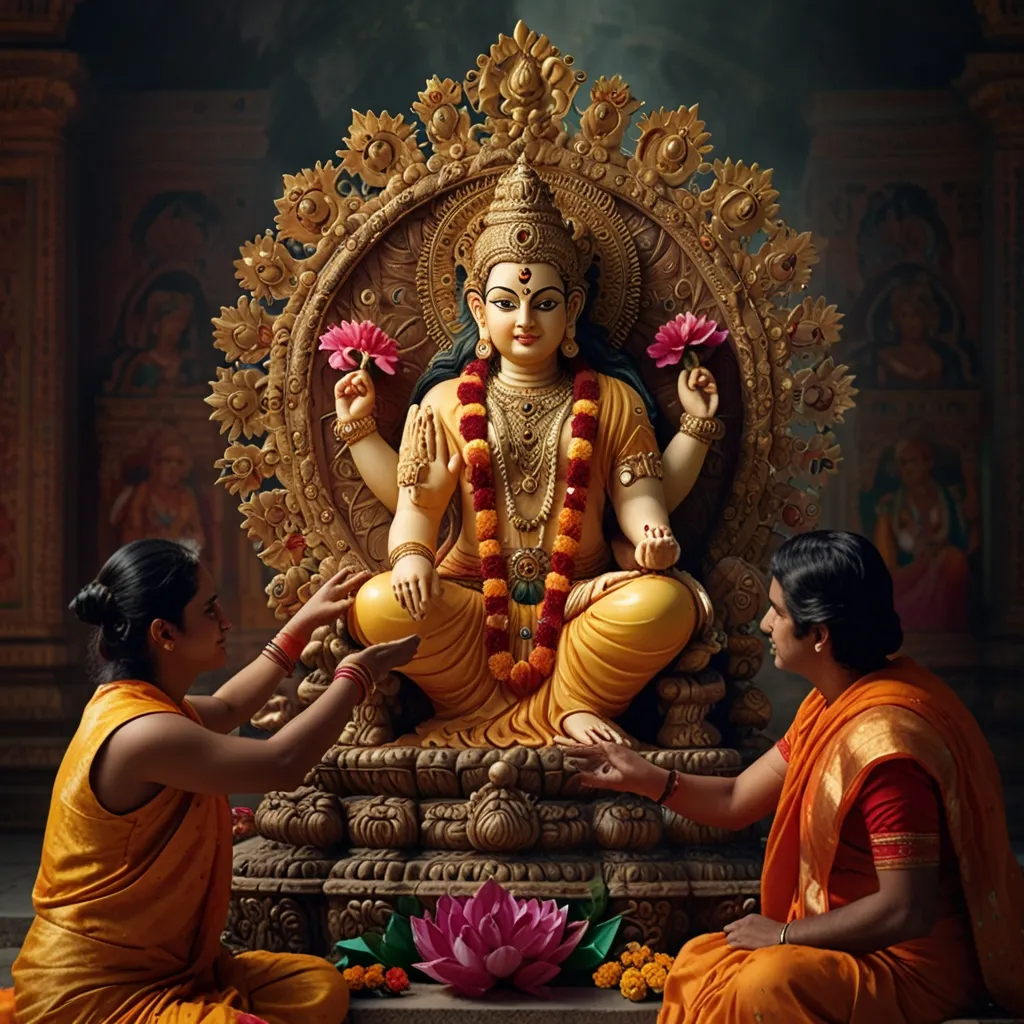
If you ever find yourself seeking answers to modern dilemmas in an ancient text, the Shiva Purana rewards you with its intricate tales and bold lessons. As I read through its stories, I’m often struck by how practical these teachings can be. We tend to imagine such works as distant or meant for a bygone era, when in fact, the core messages feel refreshingly current. Let’s walk through seven timeless virtues echoed by the Shiva Purana, and as we move along, I’ll pose a few questions for your own reflection.
Devotion is a theme that reappears constantly, but not in the way we sometimes think of it. Take the narrative of Kannappa Nayanar—the hunter who, knowing little of strict rituals, offered whatever he had to Shiva. Even his own eyes became offerings when nothing else sufficed. The heart of this tale isn’t about grandeur or perfection, but about giving yourself fully and honestly. It reminds me to ask: What if the sincerity behind our actions mattered more than the rituals we cling to?
“Where love and devotion flow, the divine is present.”
— Ramana Maharshi
The story of Samudra Manthan, the churning of the ocean, delivers a lesson in sacrifice with rare vividness. When poison threatened all creation, Shiva drank it, holding it in his throat, choosing to bear suffering so others could go on. In a world that prizes self-interest, this act stands out. Have you ever made a choice to shoulder trouble simply so that others wouldn’t have to? True courage sometimes means accepting burdens nobody else is willing to bear.
“Man becomes great exactly in the degree in which he works for the welfare of his fellow-men.”
— Mahatma Gandhi
Markandeya’s story brings grace and humility together. Markandeya, destined to die young, simply clung to the Shiva Linga and prayed with a pure, humble heart. Shiva himself intervened, saving him from death. What this shows me is how much humility amplifies prayer, and perhaps even our hope. It’s a vital reminder that you don’t always need to be the strongest to win the most difficult battles; sometimes, honest humility can move what feels immovable.
Balance emerges as an essential principle in the story of Ardhanarishvara, Shiva’s form united with Parvati. Half-male, half-female, this form disrupts the notion of fixed identity. It’s a striking way to illustrate that creation itself thrives on balance—between strength and gentleness, action and reflection, independence and connection. How often do we fight against parts of ourselves that, if allowed to harmonize, would bring us far greater peace?
“It is in the balance of opposites that the world exists; light and dark, joy and sorrow, creation and destruction.”
— Swami Vivekananda
Discipline, as shown in Ravana’s narrative, offers an unexpected twist. Ravana, through disciplined penance, earned tremendous powers. But discipline unchecked by humility turned into disaster. His ambition became hubris. This underscores a rarely stated fact: Virtues must temper each other. Discipline alone is dangerous unless paired with introspection. Do I seek growth for its own sake, or am I chasing recognition? Where does desire end and wisdom begin?
Sincerity rises up in the smaller acts, like the acceptance of a humble bilva leaf by Shiva. You see, the Purana repeatedly says: it’s not by the value of gifts but by the heart’s intent that the divine is reached. We often forget that what we offer—be it time, empathy, or care—carries the worth of our sincerity and nothing more. Imagine a world where all our actions were measured not by their size, but their genuineness.
“Purity of heart and sincerity in offering are the true treasures; all else is fleeting.”
— Rabindranath Tagore
Finally, there’s a persistent image of Shiva as the calm ascetic, separate from the hurly-burly, able to remain undisturbed regardless of external storm or celebration. This is the promise of inner peace—not an escape from the world, but the rare ability to find stillness inside it. Why do we so often look for calm outside ourselves, hoping the world quiets down, when the source is internal?
Each virtue, as told by the Shiva Purana, isn’t simply a moral ideal. Rather, these traits—devotion, sacrifice, humility, balance, discipline, sincerity, and inner peace—are lived and tested through challenges, mistakes, and even failures.
Here’s something many miss: the Purana does not flatter its heroes. They doubt, err, and suffer. Even gods are not immune to sorrow and confusion. Within these stories, I find comfort; perfection isn’t demanded. The virtues are ideals—reachable guides, but the journey is what matters.
Perhaps the most unconventional lesson the Shiva Purana offers is the dignifying of paradox. Shiva is both destroyer and benefactor, yogi and householder. In a culture so drawn to binary thinking, these stories encourage us to hold opposites together—messy, complicated, but real. Respect, it suggests, can exist even for those we don’t fully understand, and wholeness means owning the many facets of ourselves, even those seemingly at odds.
As I reflect on these narratives, a pattern emerges. The Purana doesn’t provide a linear path—there’s no single formula for a good life. Instead, every story feels more like a conversation, an invitation to reflect and grow. Its value lies as much in the questions it raises as in the answers it hints at. Why is devotion simple for some and impossible for others? What lets one person sacrifice everything while another clings to comfort?
I can’t help but see these virtues as a toolkit for life. Not the kind that sits on a shelf—these are lived skills, meant to be practiced. Each day brings new tests of devotion, sincerity, and calm. To embody them, even briefly, is success. To return to them, after wandering away, is wisdom.
When I read about Kannappa’s eye or Markandeya’s plea or Shiva’s silent stillness, I sometimes wonder how I would respond in their place. Would I have the sincerity to give, the humility to ask, the composure to withstand? The aim isn’t to match the acts of heroes, but to recognize the same capacity within ourselves, no matter our circumstances.
In the end, the message of the Shiva Purana is as bold as it is simple: greatness isn’t measured by power, wealth, or status, but by the depth and quality of one’s character. Every act—no matter how humble or grand—can carry the divine if it holds sincerity and love.
“Better to live your own destiny imperfectly than to live an imitation of somebody else’s life with perfection.”
— The Bhagavad Gita
Consider which of these virtues speaks most to you right now. Is it the courage to sacrifice, the discipline to temper ambition, or perhaps the quiet to find peace inside? The stories invite us not just to admire these ideals but to experiment with them in the laboratory of everyday life.
As you move through today, what would it look like to let sincerity guide a small act, or to look for balance where you find opposition? In a world quick to judge and divide, the wisdom of these tales offers a gentle nudge: strength lies not in the noise, but in the quality of one’s intent and the resilience of one’s heart.