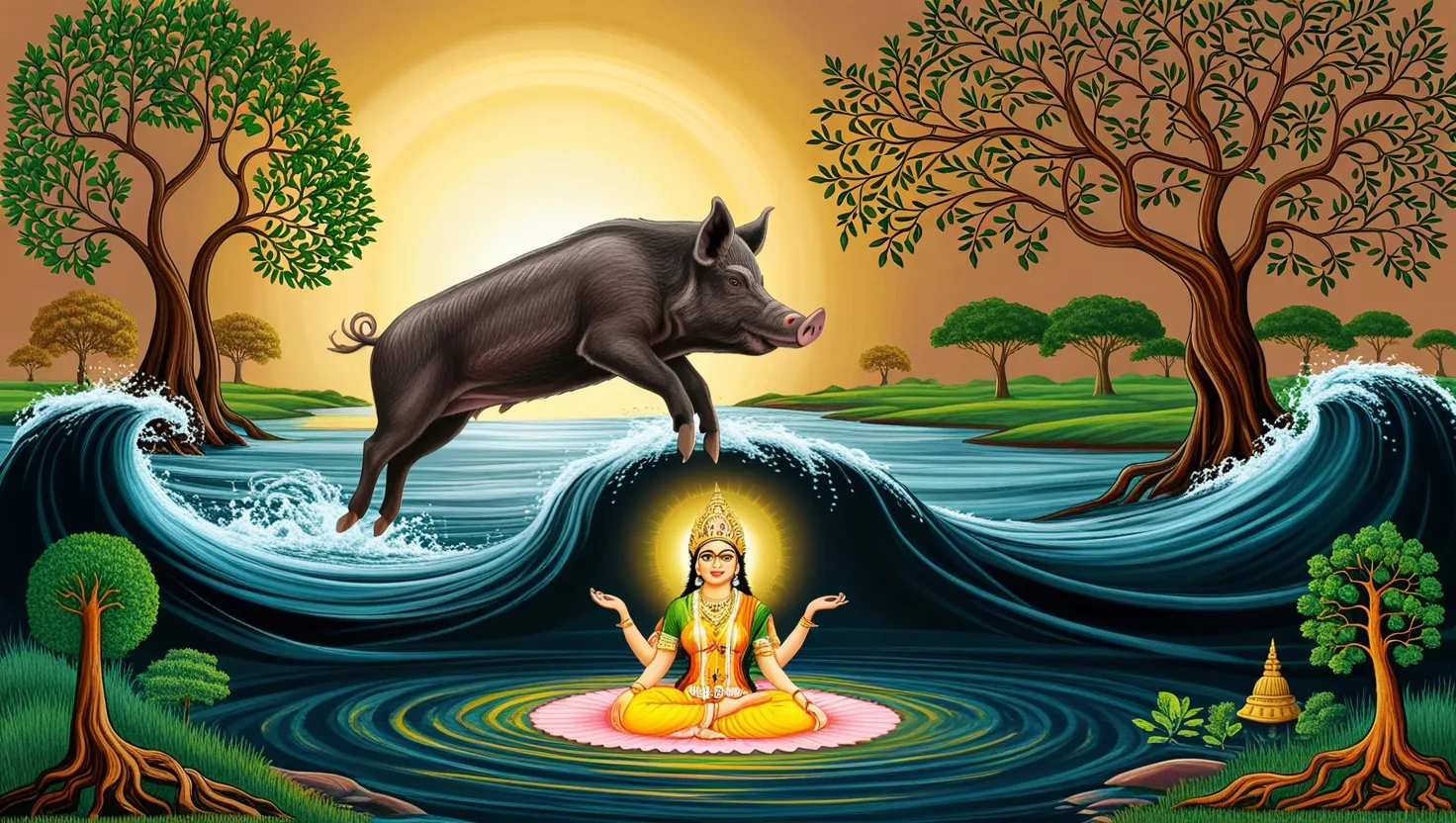
In the world of Hindu mythology, one of the most fascinating avatars of Lord Shiva is Ardhanarishvara. This form is unique and powerful, showing Shiva combined with his partner, Parvati, as a half-man, half-woman figure. The name even means “the half-female Lord,” which perfectly sums up the blend of male and female energies in the universe.
This concept is really old, going back to the Kushan period around the first century CE. Over the years, especially during the Gupta era, the imagery of Ardhanarishvara got refined. But this isn’t just about visuals—it’s a deep philosophical statement. It shows Shiva and Shakti, the male and female principles, as inseparable. Shiva’s right half stands for stillness and the unchanging nature of the universe, while Parvati’s left half represents the ever-changing, creative force.
The backstory is just as enchanting. According to legend, Parvati was so in love with Shiva that she wanted to be part of him in every way. Shiva, moved by her devotion, absorbed her into his left half. This became a symbol of ultimate unity and balance, transcending gender norms. It’s all about the cosmic energy that sparks when male and female forces merge.
Ardhanarishvara is a symbolic convergence of spirituality and material life. Shiva is the ascetic, while Parvati is the epitome of household duties. Together, they show that these opposing lifestyles can coexist harmoniously. This unity of opposites teaches that both sides are necessary for a balanced life.
Worship of Ardhanarishvara is common, but temples dedicated exclusively to this form are rare. One famous temple is in Thiruchengode, Tamil Nadu. Religious texts like the Linga Purana highlight that worshipping Ardhanarishvara can lead to union with Shiva and eventually, salvation. Hymns like the Ardhanarinateshvara Stotra by Adi Shankaracharya are popular, as well as praises sung by the Nayanar saints of Tamil Nadu.
Today, Ardhanarishvara’s message resonates more than ever. It talks about the male and female energies that exist in every person. This isn’t just a religious or philosophical idea—it’s backed by psychology and neuroscience. Modern studies show that everyone has the potential for both male and female traits.
Ardhanarishvara’s symbolism goes beyond gender. It’s about the unity of opposites in the universe. Creation and destruction, stability and change, are all part of the same cosmic energy. Shiva’s form reminds us that true balance involves embracing our dualities.
In the end, Ardhanarishvara symbolizes the unity of all things. It’s a reminder that distinctions like male and female, spiritual and material, are part of a larger, balanced whole. This form of Shiva continues to inspire us to understand ourselves and the world in a deeper way.