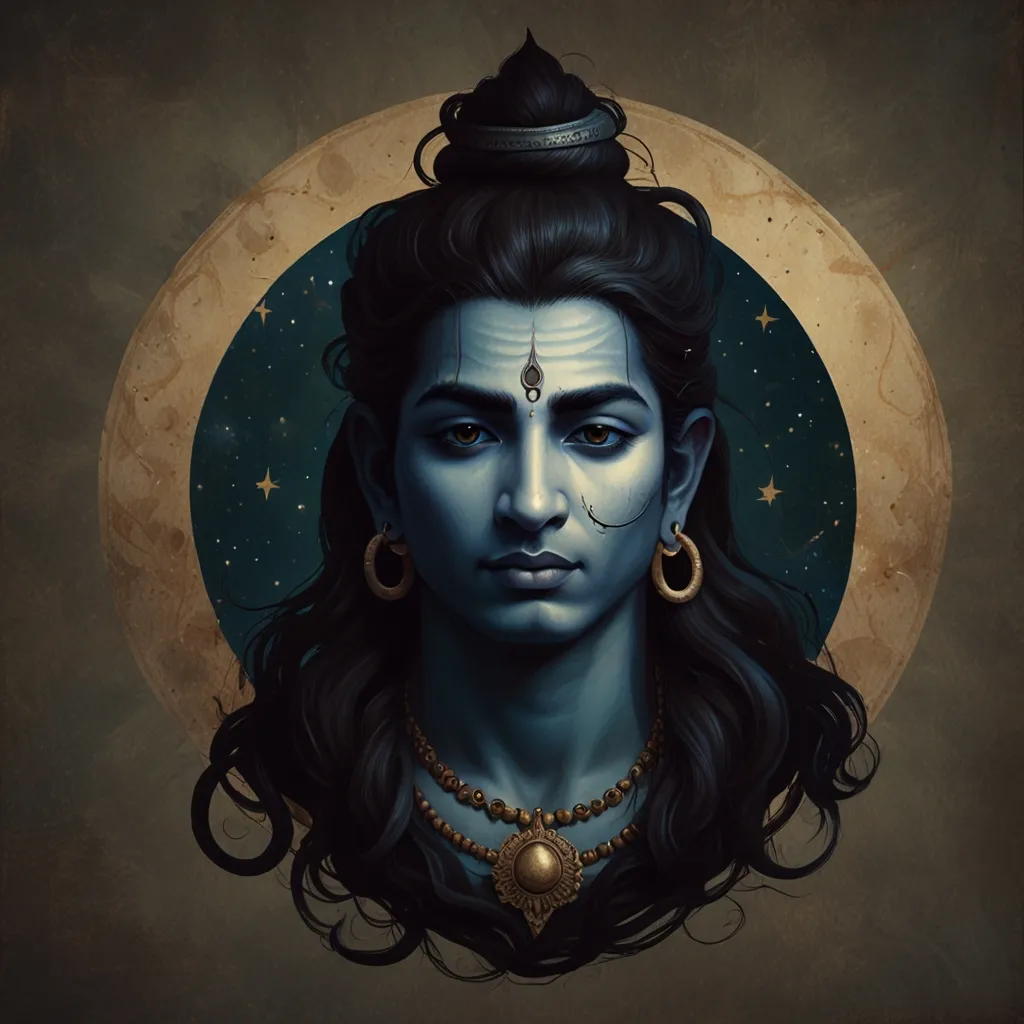
In Hindu mythology, there’s this cool story about a sage named Bhringi and his wild journey with Lord Shiva and Goddess Parvati. This tale showcases Bhringi’s deep devotion and the big lesson he learned about respecting the divine union of Shiva and Parvati.
Back in those ancient times, gods and goddesses were pretty accessible to humans. Bhringi was all about Shiva, spending his days meditating and doing rituals on Mount Kailash, Shiva’s home. Every day, he’d do this ritual called pradakshina, circling around Shiva to show his respect and devotion.
But, here’s where things got messy. Bhringi’s devotion was so one-sided. He completely ignored Parvati, Shiva’s other half, which obviously didn’t sit well with her. One day, when Bhringi showed up for his daily routine, Parvati was seated on Shiva’s lap. She wanted Bhringi to get that she and Shiva were a package deal, inseparable and equally important.
Bhringi, being stubborn, transformed into a snake, or a rat, depending on the version, to twist and turn between them, still aiming to only worship Shiva. This annoyed Parvati big time. So, Shiva and Parvati merged into Ardhanarishvara, a being that’s half Shiva and half Parvati, to drive home the point.
Still not getting it, Bhringi turned into a little bug and tried to bore through Ardhanarishvara’s navel to circle just Shiva’s half. That was the last straw for Parvati. She cursed him to lose all the parts of his body that came from his mother, leaving him just a skeleton with bones from his father.
Seeing Bhringi’s struggle, Shiva felt bad and gave him a third leg, like a tripod, to support him. This act finally made Bhringi understand his mistake. He learned to respect both Shiva and Parvati as equals, realizing true devotion should embrace both aspects of the divine.
Bhringi’s story shows the balance between masculine and feminine energies. It’s a lesson in recognizing and respecting that balance, represented by Shiva and Shakti. Bhringi eventually became a symbol of this understanding.
In art and literature, Bhringi is often depicted as a beetle or bee, sometimes with a monkey’s face, highlighting his humility and newfound respect for the divine union. He’s also linked with Nataraja, the cosmic dancer, which reflects his deep connection to the rhythms of creation and destruction.
Bhringi’s story isn’t just about him; it’s a reminder that true devotion includes all aspects of the divine. He became one of Shiva’s top commanders, showing his deep commitment. Guarding the doors to Shiva’s shrine alongside Nandi, he ensures only those with pure hearts can enter.
His tale underlines the necessity of balance and respect in our spirituality. It’s a powerful narrative about devotion, not just to one deity, but to the entirety of the cosmic dance, embracing both Shiva and Shakti as one.