Hindu mythology is literally bursting with tales that have been enchanting people for eons. One such gripping story is the battle with Gajasura. It’s not just about Lord Shiva flexing his divine muscles but also a deep dive into devotion, transformation, and the timeless fight between good and evil.
Gajasura, an asura or demon, got a boon from Lord Brahma that made him nearly unkillable—nobody could off him except him. With this new cheat code, Gajasura got all smug and started causing major chaos. No one was spared from his terror, be it gods or humans.
The gods were absolutely clueless about how to handle Gajasura because his boon made any direct confrontation a no-go. They turned to Lord Shiva, renowned for his wisdom and unbeatable strength, hoping he could crack the code on this dilemma.
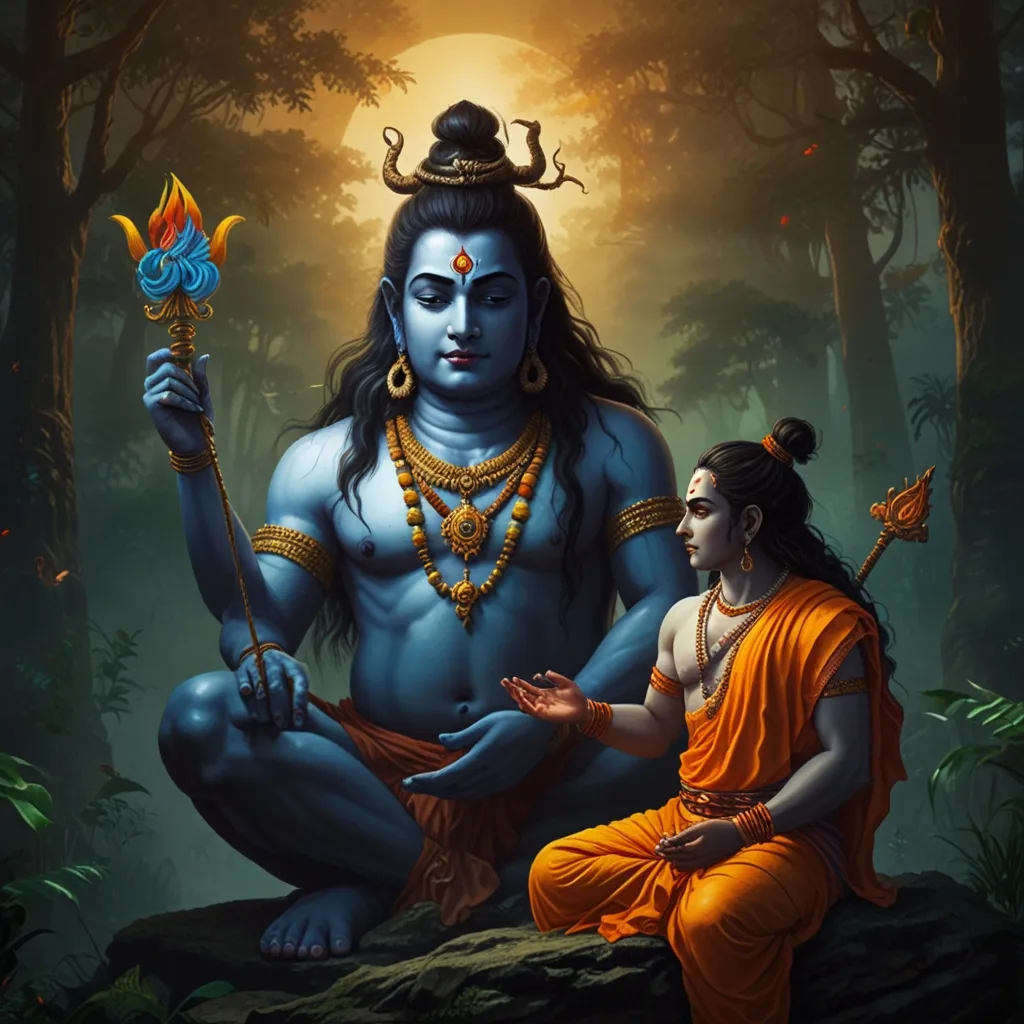
Shiva agreed to help but knew it wouldn’t be a walk in the park. Instead of taking the regular approach and simply squaring off against Gajasura, Shiva opted for something different. He disguised himself as a wandering monk and went to meet Gajasura. There he was, Gajasura in all his massive, elephant-headed glory. Despite the intimidating aura, Shiva kept his cool. He greeted the demon with a sense of calm and respect.
“Gajasura,” Shiva said smoothly, “you got a pretty cool boon from Lord Brahma. You’re almost untouchable.”
Gajasura, all pumped up, replied, “Heck yeah. No one can kill me except for myself.”
Shiva, with a knowing smile, responded, “True that. But have you ever thought about giving up your life willingly? If you do it out of love or devotion for something greater, maybe you could fulfill your boon without causing more havoc.”
Now that hit Gajasura right in the feels. No one had ever talked to him like that, suggesting such an out-of-the-box idea. The words resonated deeply with Gajasura, stirring some long-buried seeds of goodness overshadowed by arrogance and pride.
You see, Gajasura wasn’t always this nightmare on legs. With the right guidance, things might have turned out differently for him. But his journey had led him down this chaotic path, and now he stood face-to-face with Lord Shiva, who offered an alternative: salvation and peace over ongoing destruction and chaos.
Gajasura mulled over Shiva’s words. This wasn’t just some random chatter—it was a chance at redemption, a shot at breaking free from his destructive path. In that moment of introspection, his arrogance started to crack, and humility seeped in.
Shiva’s approach was genius. Instead of brute force, he used empathy and wisdom, nudging Gajasura to look inward and find salvation of his own accord. This wasn’t just a battle of strengths but a clash of ideals and a path to self-realization.
Gajasura decided to take the leap. In an act of transformation and devotion, he willingly gave up his life. This selfless act broke the cycle of violence and fulfilled his boon. The world sighed in relief as the devastating chaos came to a halt, all thanks to Gajasura’s newfound enlightenment and Shiva’s unparalleled wisdom.
The whole episode is a masterclass in understanding the layers of human nature, even if it’s wrapped up in a mythological package. It’s about knowing that there’s often good buried deep within, sometimes needing just the right nudge to surface. This story of Gajasura and Shiva isn’t just another myth; it’s a metaphor for our struggles, temptations, and ultimately, our capacity for transformation. It tells us that sometimes the greatest battles aren’t won with swords or boons but with insight, compassion, and a bit of soul-searching.
In the end, it’s a reminder that everyone has the potential for redemption, even the most far-gone souls. It’s about finding that spark of good within and letting it guide you back to a path of righteousness. Lord Shiva, with his infinite wisdom, understood this and used it not to conquer but to convert and redeem.
Hindu mythology is filled with such rich narratives that aren’t just stories but lessons wrapped in fantastical elements. This particular tale of Gajasura teaches us about humility, redemption, and the power of wisdom over brute force. It’s a timeless reminder that even in moments of darkness, the light of understanding and compassion can lead to transformation and triumph.
These tales remind us to look beyond the surface, seeking deeper meanings and personal growth. They inspire us to be better, kinder, and more empathetic, showcasing that even the mightiest warrior values wisdom over warfare. And honestly, in today’s fast-paced world, it’s a lesson we could all use a bit of.
Their simplicity and profoundness are what make these stories stand the test of time, continually resonating with each generation. So, while the battle with Gajasura may be set in the mystical realms of gods and demons, its lessons are all too human and ever-relevant.
Lord Shiva’s approach to defeating Gajasura wasn’t just smart; it was revolutionary. By engaging with empathy and understanding, he changed the course of a demon’s fate and brought peace back to the world. This is why Lord Shiva is not just a deity of destruction but also a beacon of wisdom and transformation.
And there you have it, another gem from the treasure trove of Hindu mythology—a tale that reminds us of the power of good, the possibility of change, and the ultimate triumph of wisdom over chaos. It’s not just a story; it’s a timeless lesson on the human condition, a beacon of hope and redemption.