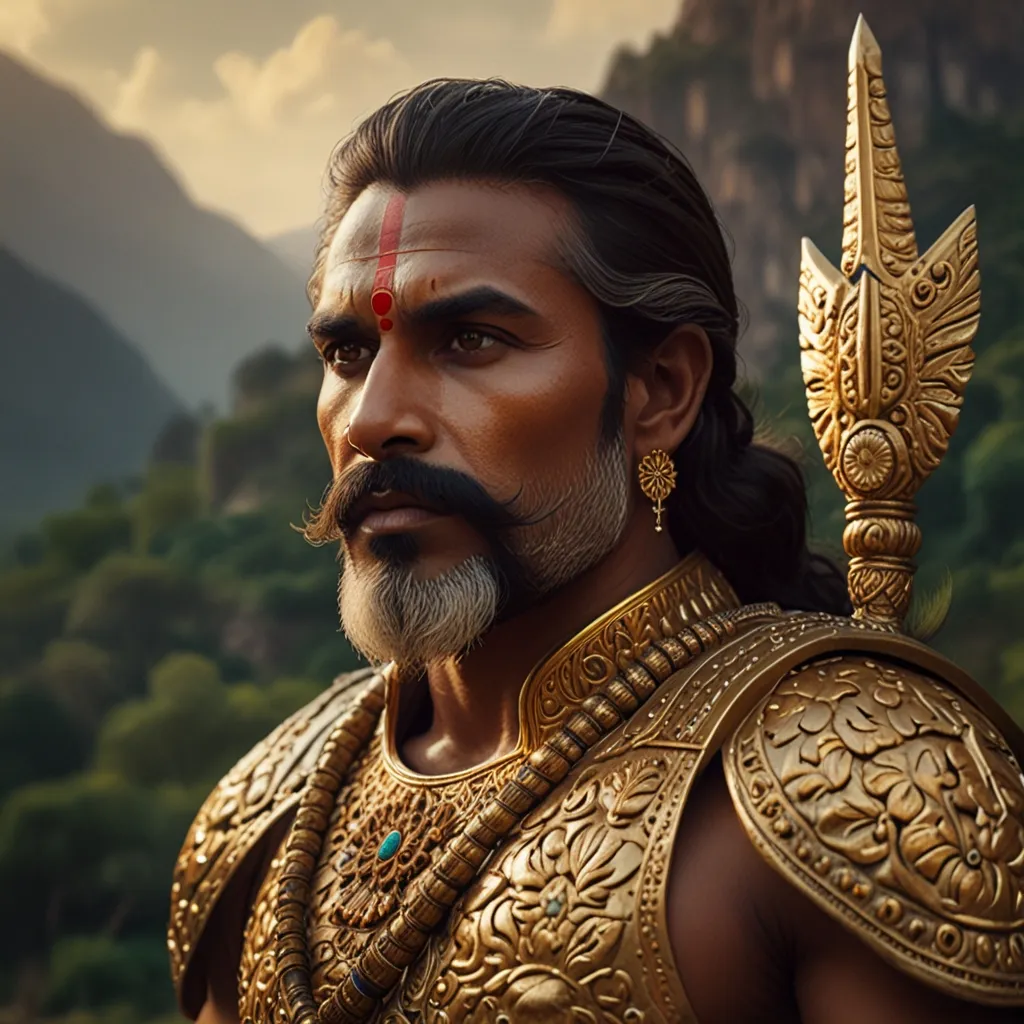
Alright, let’s dive into the epic tale of King Bharata, the guy after whom India itself is named. This dude isn’t just a blip in mythology; he’s a big deal in both the legends and the actual history of India. Bharata’s story is packed with drama, destiny, and some serious leadership skills.
Bharata’s story starts with his parents, King Dushyanta and Queen Shakuntala. It’s a tale that could easily be a blockbuster movie. King Dushyanta stumbles upon Shakuntala while out hunting. She’s living a peaceful life in a hermitage, which is basically a retreat for sages and their families. Picture this: a king, a beautiful maiden, and an instant attraction that leads to a Gandharva marriage (a private union without all the ceremonial hassle). But it’s not a happily ever after just yet. Dushyanta has to leave fast, with a promise to come back. Meanwhile, Shakuntala gives birth to their son, Bharata, and raises him solo until he’s ready to step up and claim his crown.
As Bharata takes the throne, it’s like hitting the jackpot for his kingdom. Imagine a reign where everything falls into place - peace, prosperity, unity. Bharata isn’t just a name; it’s synonymous with a golden era. He’s not content with ruling just a piece of land; he takes over the entire Indian subcontinent. Picture this vast kingdom stretching from the towering Himalayas in the north to the vast southern oceans. This entire expanse was called Bharatvarsha, the realm of Bharata.
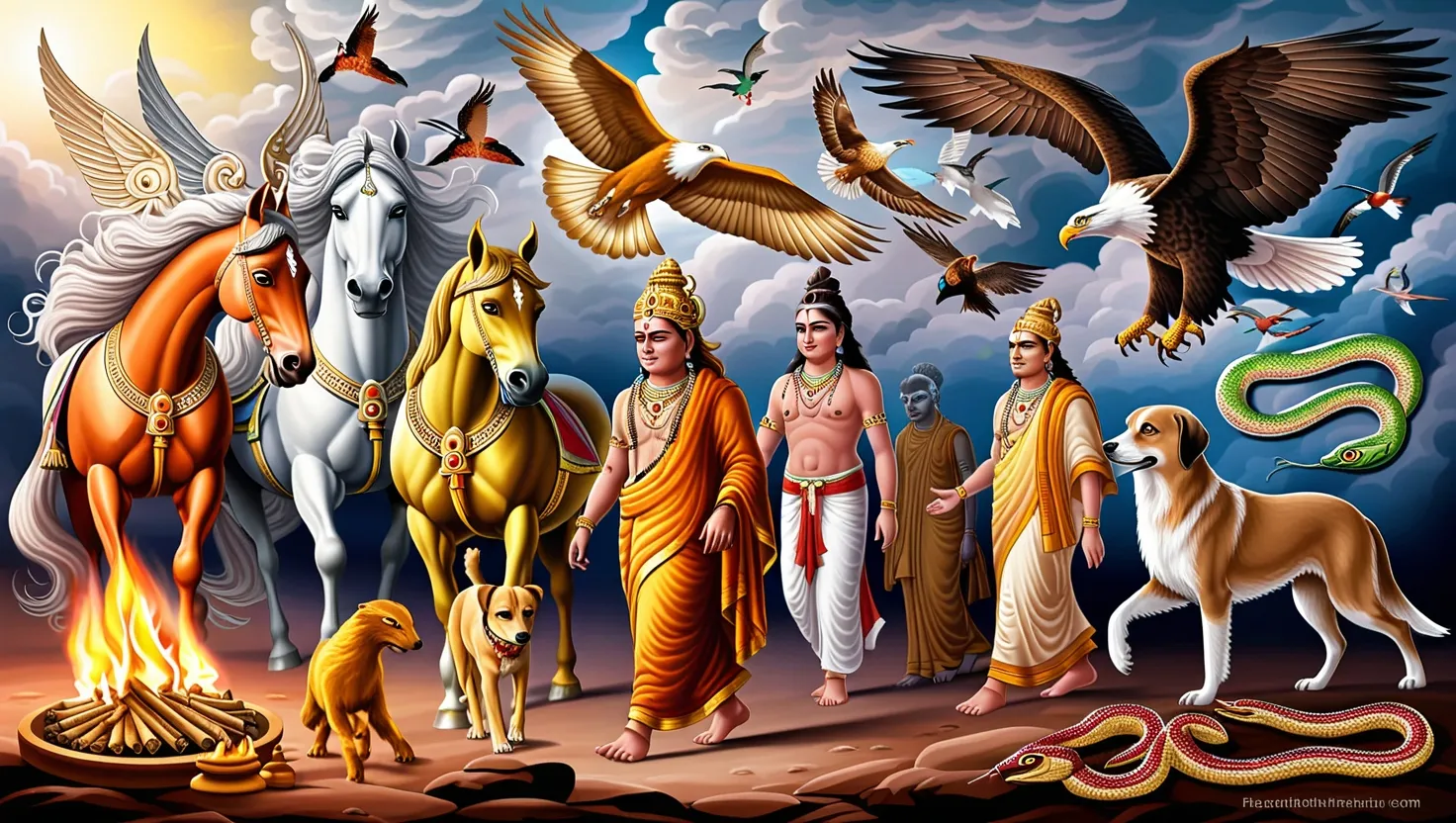
Bharata’s military skills were off the charts. He wasn’t just power-hungry; he aimed to spread his vision of peace and prosperity. Performing the Ashwamedha Yagna was one of his grand moves, a ritual that marked his supreme authority. It’s not just a ritual; it’s like throwing a massive festival with sacrificial horses and tons of wealth being shared among the people.
Even though he was a fierce warrior, Bharata had a soft heart. He genuinely cared about his people, always making sure their welfare was top-notch. This compassionate side of him is part of what cemented his legacy. Bharata’s kingdom was more than just a politically united region; it was a culturally rich and religiously significant land, a reflection of his values.
Bharata’s story leans heavily on mythology as well. He’s marked as a key figure in the Lunar Dynasty of the Kshatriya Varna, a lineage that boasts some other big names, like the Pandavas and the Kauravas from the Mahabharata. This alone places him smack in the center of Indian epic narratives, crossing the boundaries between history and mythology.
His personal life wasn’t smooth sailing. After marrying three princesses from Vidarbha, there were troubles with his offspring. His sons turned out to be cruel, meeting harsh ends. Eventually, seeking divine intervention, Bharata was blessed with a son named Vitatha, also known as Bharadvaja. This son was not just a continuation of his lineage but a blessing from the gods, adding a divine touch to his already legendary life.
The name Bharat itself has roots in the Sanskrit word “bhr,” meaning to bear or uphold. It’s a fitting name for an emperor whose realm was all about upholding righteousness and civilization. Ancient texts like the Puranas and the Rigveda refer to the Indian subcontinent as Bharatvarsha, emphasizing its deep cultural and historical roots.
The Rigveda gives us glimpses of the Bharatas as a mighty tribe led by King Sudasa. These warriors were central to the Dasharajnya, the battle of ten kings on the banks of the river Ravi in Punjab. Despite being outnumbered, King Sudasa’s victory left a lasting impression, reinforcing the Bharata tribe’s prominence in history.
Beyond his military might and governance, Bharata’s legacy is that of a protector and a nurturer. Bharatvarsha symbolizes a generous land that cares for its people, an idea deeply ingrained in Indian culture. This concept has persisted through time, symbolizing the unity and expansive cultural identity of the Indian subcontinent.
In more recent times, the name Bharat has played a crucial role in India’s nationalistic movements. It symbolized a collective identity and unity, especially during India’s independence struggle. The All India National Congress often referred to the country as Bharat, pushing for a sense of national pride and cohesion.
Bharata’s era is often romanticized as a golden age, thanks to his unwavering commitment to justice, peace, and the well-being of his subjects. His reign set a benchmark for good governance and left a ripple effect for future leaders to follow. The legacy of Bharatvarsha stretches beyond mere territory; it epitomizes a land that stands strong in its values and heritage.
In sum, King Bharata’s saga is a thrilling mix of historical events and mythical lore. His rule did not just unify a vast geographical expanse but also imprinted a set of values that India cherishes to this day. The name Bharat remains a glowing emblem, echoing the virtues and ethos of a ruler who made sure his land was not just a kingdom, but a nurturing haven for his people.