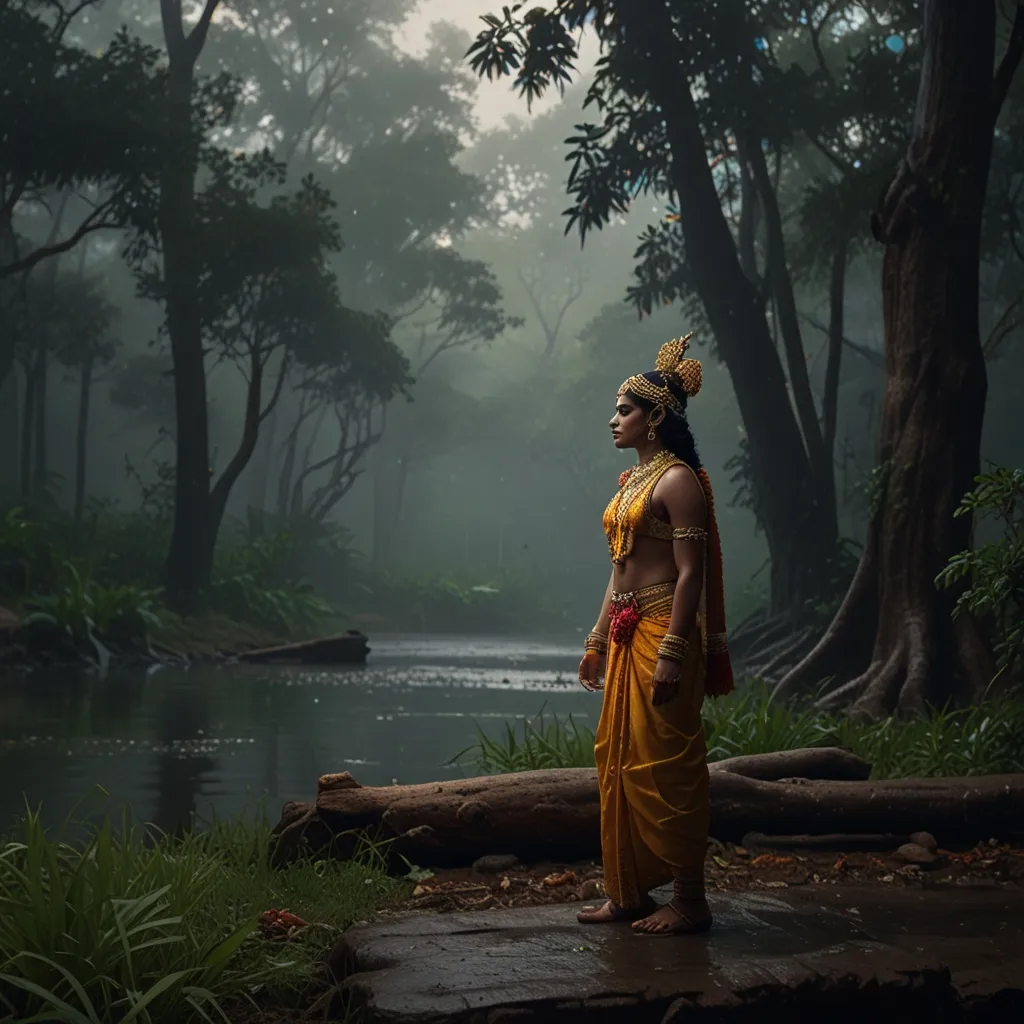
Once upon a time, way back in the ancient days, there lived a sage named Vibhandak. This guy was known far and wide for his intense spiritual energies. Vibhandak wasn’t just any sage; he was the offspring of the legendary sage Kashyapa. His life was all about deep meditation and penance, really keeping it old school in his forest abode.
One day, while Vibhandak was wandering through the forest, he stumbled upon Urvashi, a stunningly beautiful nymph. Now, Urvashi wasn’t there by chance. She was sent by Indra, the god of gods, with the grand mission to pull Vibhandak out of his deep meditative state. Vibhandak, not catching on to Urvashi’s actual game plan, was totally enchanted by her beauty. This infatuation led to him releasing his semen, which found its way into a river. Crazy twist – a doe, who was actually a cursed nymph, gulped down the semen and ended up pregnant. The doe later gave birth to a boy, liberating herself from the curse and heading back to her heavenly abode.
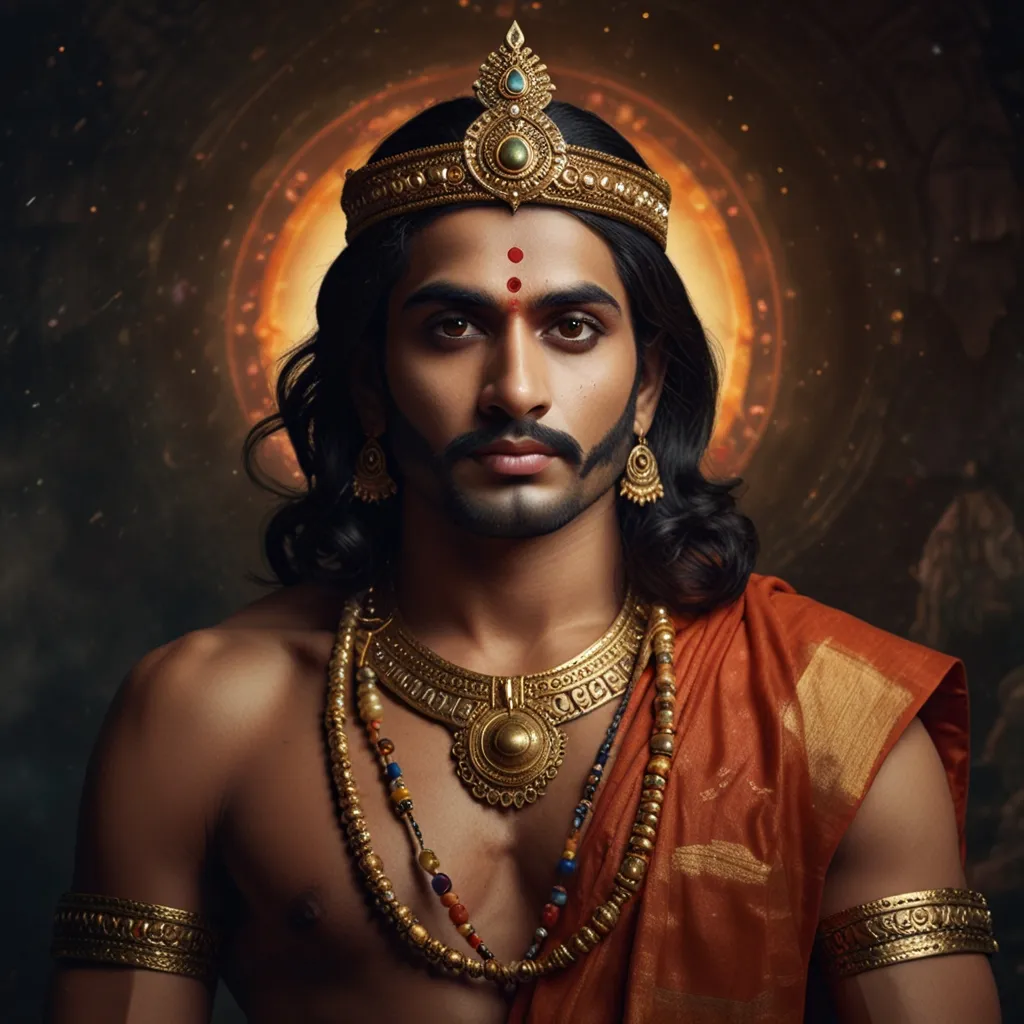
The boy born from this odd scenario came into the world sporting horns on his head, quite the unique look, right? He was named Rishyasringa. Vibhandak decided to raise Rishyasringa in total isolation, away from any female influence, hardcore. So, Rishyasringa grew up in his father’s ashram, sticking firmly to celibacy and picking up some hefty spiritual powers along the way. His life was so secluded that he didn’t even know women existed – seriously, not a clue.
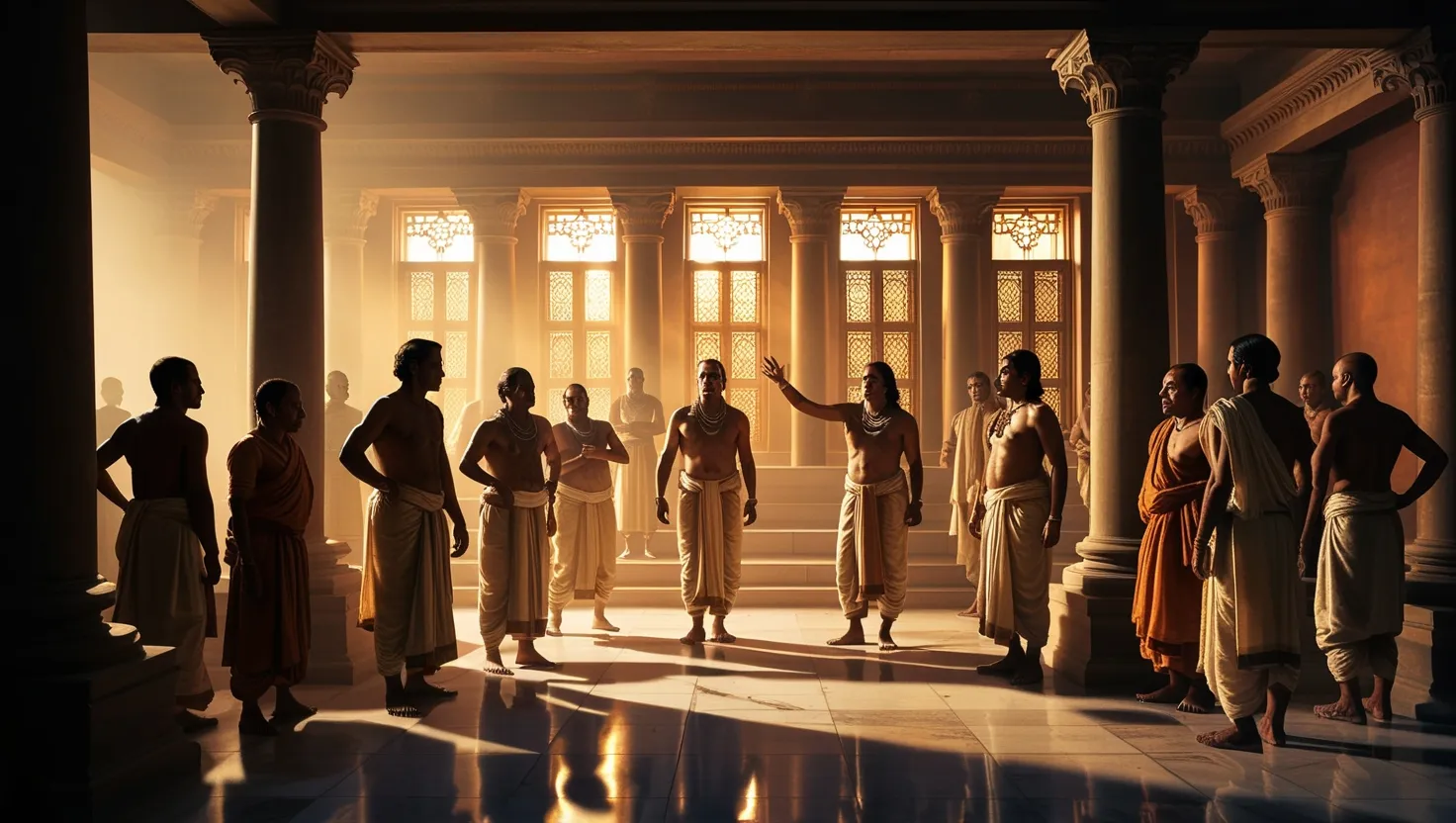
During this time, the kingdom of Anga was in a tight spot. King Rompada was dealing with a brutal drought that led to a famine. The king had ticked off a Brahmin, which angered Indra enough to shut down the rain. In a panic, Rompada turned to his wisemen for advice. They told him, “Hey, you need a man with perfect chastity to bring back the rain.” Enter Rishyasringa.
Rompada decided to lure Rishyasringa to his kingdom. He sent his best courtesans to the forest, despite their fear of Vibhandak’s possible anger. These courtesans built a fake hermitage in the forest and waited for their moment. When Vibhandak left the ashram, they approached Rishyasringa, introducing themselves as fellow hermits. Rishyasringa, never having seen women before, was completely taken by their beauty and charm. The courtesans treated him to sweets and all sorts of luxuries, slowly gaining his trust.
As time passed, Rishyasringa got really attached to these courtesans. They eventually convinced him to leave the forest and follow them back to Anga. The moment Rishyasringa stepped into the kingdom, guess what? The skies opened up, and it started raining cats and dogs, breaking the long drought. Rompada was thrilled, but he was also terrified of what Vibhandak might do when he found out. To keep the peace, Rompada offered his adopted daughter, Shanta, in marriage to Rishyasringa. Shanta, by the way, was the biological daughter of King Dasharath and Queen Kausalya, making her Lord Rama’s sister.
After their marriage, Rishyasringa and Shanta returned to the forest to continue their austere lives. Later on, King Dasharath invited Rishyasringa to Ayodhya to perform a special ritual called the Putra Kameshti Yajna, which was all about granting him children. Thanks to Rishyasringa’s presence and the success of the ritual, Dasharath was blessed with four divine sons: Rama, Bharat, Lakshman, and Shatrughan.
Rishyasringa’s story is really all about innocence and virtue triumphing over worldly distractions. His simple forest life, free from worldly desires, allowed him to tap into extraordinary spiritual powers. His journey to Anga and his marriage to Shanta not only brought prosperity to the drought-stricken kingdom but also reinforced the power of a virtuous, simple life. The tale of Rishyasringa is a reminder to live simply, respect nature, and value wisdom and purity over material wealth.