In the ancient epic of the Mahabharata, there’s this truly fascinating tale about a princess named Amba, whose life screams determination and justice like no other. Amba was one of the three daughters of the king of Kashi, a kingdom that was both gorgeous and bustling with prosperity. Together with her sisters Ambika and Ambalika, she was set to marry Vichitravirya, the prince of Hastinapura.
The drama kicks off at a grand swayamvara, a classic bride-chooses-groom ceremony. Amba had already set her heart on King Shalva of Saubha and was all jazzed up to place the varmala (a garland) around his neck. But, as stories often go, fate had other plans. Enter Bhishma, the main guy from the Kuru clan and one hell of a warrior. With a loud announcement that echoed through the hall, Bhishma declared he was there to take the three princesses to Hastinapura for his half-brother Vichitravirya.
Obviously, this wasn’t met with applause. The other suitors tried to oppose Bhishma, but he easily overpowered them in battle. Shalva also had a go but ended up defeated by Bhishma. And so, the three princesses were taken to Hastinapura. Ambika and Ambalika were cool with marrying Vichitravirya, but Amba had other ideas. She expressed her wish to marry Shalva and Bhishma, surprisingly, agreed and sent her back.
However, when Amba arrived back at Shalva’s place, he straight-up refused to marry her. He was too embarrassed about being beaten by Bhishma. Disheartened, Amba returned to Hastinapura, only to have Vichitravirya refuse her too, since she had already chosen Shalva. Heartbroken doesn’t even begin to describe how she felt.
Looking for any way out of her predicament, Amba turned to Bhishma, but he also refused to marry her because of his vow of celibacy—a promise made to ensure his stepmom’s kids would be future kings. This flat-out rejection from all sides left Amba in despair, driving her to wander off to the forest, hoping for some divine intervention.
And intervene, the divine did. In the forest, Amba came across a Yaksha named Sthunakarna who listened to her plight. Touched by her story, Sthunakarna decided to help her by exchanging his sex with hers. This transformation turned Amba into Shikhandi, marking the birth of her new identity and the start of her mission for revenge.
As Shikhandi, she grew up as the daughter of King Drupada but was raised as a boy. Fueled by the memories of her past life, Shikhandi trained to become a formidable warrior. When the big Kurukshetra battle—the climactic showdown between the Pandavas and Kauravas—rolled around, Shikhandi knew her moment had arrived.
In the heat of the war, on the tenth day, Shikhandi found herself riding alongside Arjuna, one of the Pandava brothers, on his chariot. Bhishma, sticking to his vow not to attack anyone born a woman, hesitated when he saw Shikhandi, which gave Arjuna the perfect window to unleash a storm of arrows. This precise strike led to Bhishma’s fall.
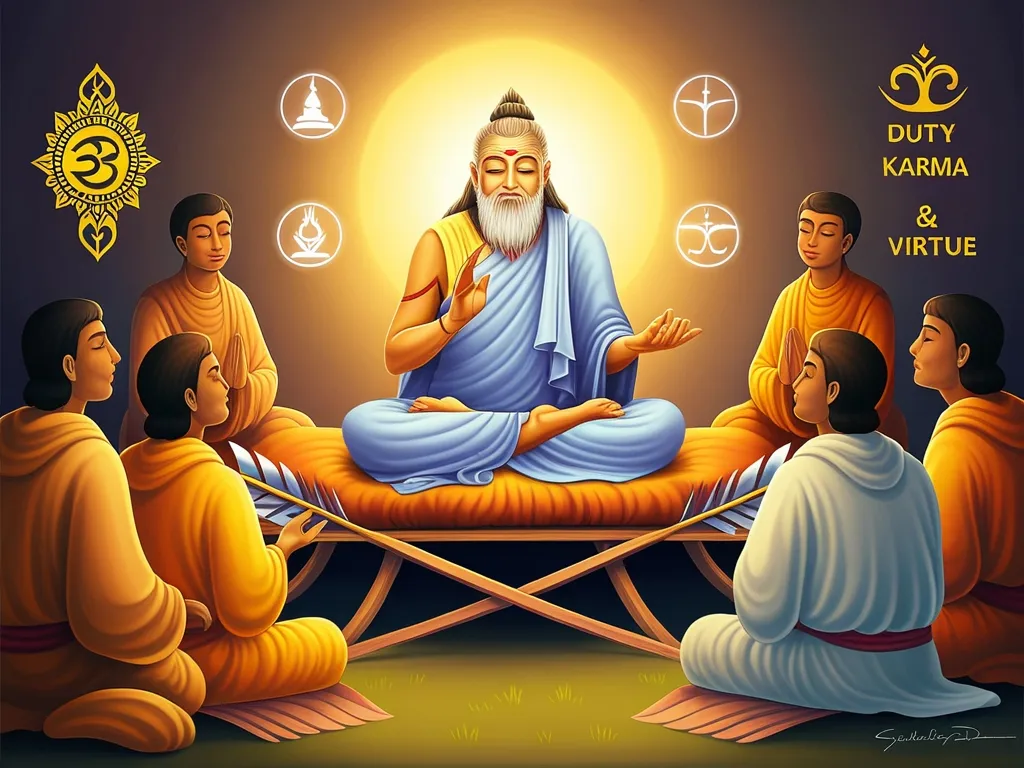
Bhishma’s death was the long-awaited fulfillment of Amba’s oath. He lay on a bed of arrows for days, enduring extreme pain, until he finally left his mortal coil on the sacred day of Uttarayana. This tale is a potent lesson about the consequences of mistreating women and the need to respect their dignity.
Shikhandi’s role in Bhishma’s downfall symbolized justice more than mere personal revenge. It exemplified Amba’s enduring spirit, showing she wouldn’t just roll over and accept her fate. Instead, she fought for her rights relentlessly. The story of Amba and Shikhandi is a testament to women’s strength and determination in the face of grave adversity.
Shikhandi’s life is riveting, marked by a unique gender identity and his pivotal role in the epic clash. He wasn’t fully man or woman but a warrior whose part in the Mahabharata was crucial. This story continues to inspire, teaching us the significance of treating everyone with respect, no matter their gender or history.
The tale of Amba and Shikhandi, woven into the rich fabric of the Mahabharata, brims with love, betrayal, and revenge. It offers profound lessons about integrity, honor, and the relentless pursuit of justice. Amba’s journey from being a rejected princess to a warrior seeking vengeance really highlights the human spirit’s incredible resilience and determination.