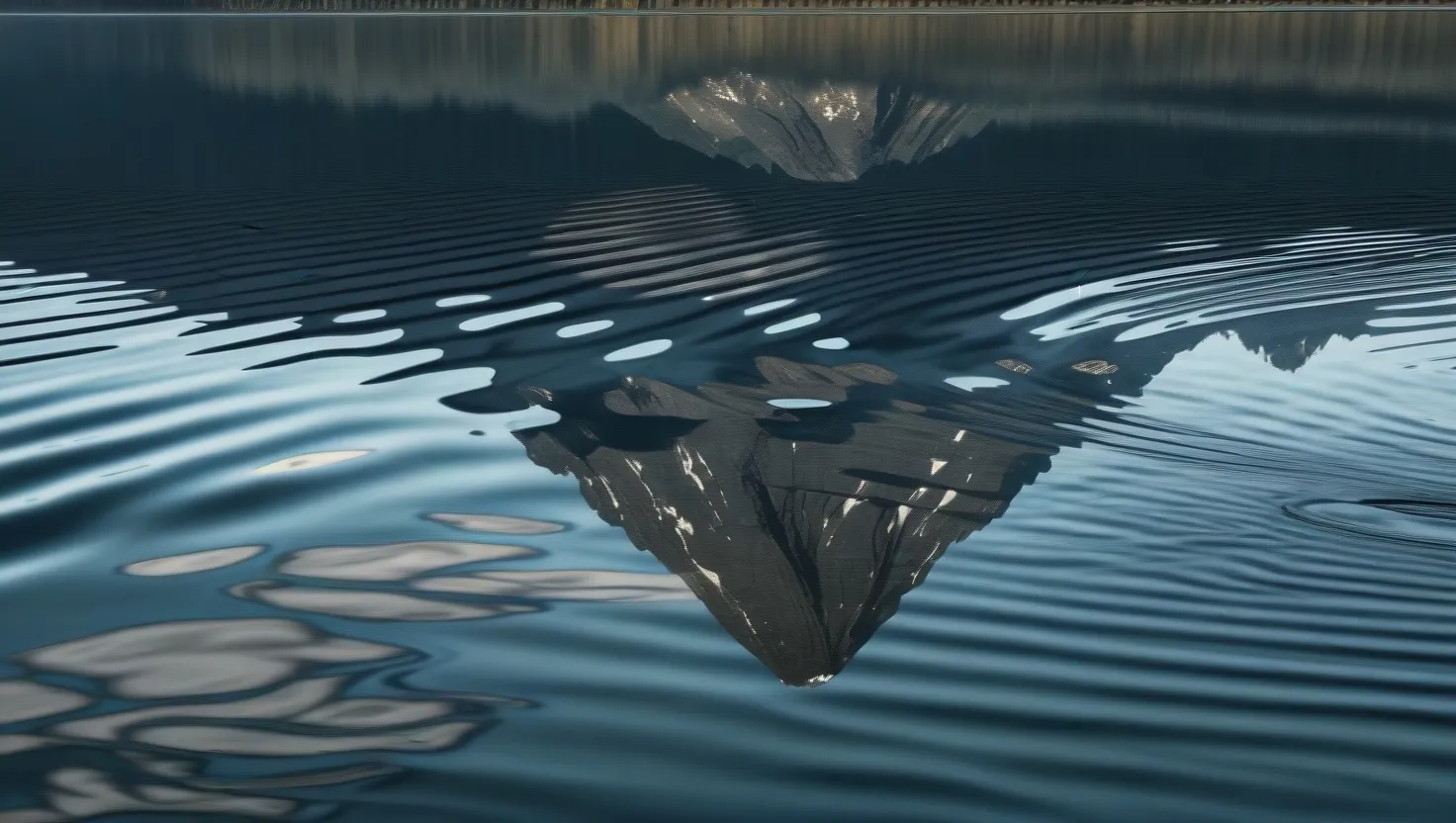
In the vast and intricate landscape of Advaita Vedanta, there exists a concept that offers a unique and profound perspective on the nature of reality and the self: Pratibimba, or the theory of reflection. This idea, while not as widely discussed as some other Vedantic principles, provides a rich tapestry for understanding the complex interplay between the absolute and the apparent world.
To begin with, let’s delve into the heart of Pratibimba. This theory posits that the individual self, or Jiva, is merely a reflection of the ultimate reality, Brahman. Imagine a mirror reflecting the sun’s image; the reflection is not the sun itself but a likeness that shares many of its properties. Similarly, in Pratibimba, the Jiva is seen as a reflection of Brahman, existing within the realm of consciousness but not independent of it.
This concept is rooted in the works of Padmapada, the founder of the Vivarna School of Advaita Vedanta. According to Padmapada, Brahman is the locus of Avidya, or nescience, which gives rise to the reflections that we perceive as individual selves. These reflections are not separate entities but rather manifestations of Brahman’s inscrutable power. This means that the Jiva, though it appears distinct, is essentially non-different from Brahman, much like a gold bangle or ring is not separate from the lump of gold it is made from.
One of the most compelling aspects of Pratibimba is its use of everyday analogies to explain complex philosophical ideas. For instance, consider the example of a mirror. When you look into a clean, polished mirror, you see a clear reflection of yourself. However, if the mirror is dirty or distorted, the reflection is marred. Similarly, in Pratibimba, the purity of the mind determines the quality of the reflection of Consciousness. A clear and pure mind reflects the true nature of Brahman more accurately, while a clouded or distorted mind results in a distorted reflection, leading to the illusion of a separate self.
This analogy extends further when we consider the nature of reflections in different mediums. Just as the sun’s reflection appears differently in various bodies of water, the Consciousness of Brahman is reflected differently in each individual’s mind. Yet, despite these variations, the essence of the reflection remains the same – it is still the sun, still Brahman. This underscores the non-dual nature of reality, where the apparent multiplicity of individual selves is merely a misperception of the single, unified Self.
The concept of Pratibimba also addresses the paradox of unity and diversity in Vedantic thought. How can there be one ultimate reality and yet so many seemingly distinct individuals? The reflection analogy provides a clear answer: just as multiple reflections of the sun in different waters do not change the sun itself, the multiple reflections of Brahman in individual minds do not alter the fundamental unity of Brahman. Each reflection is a manifestation of the same Consciousness, albeit with different attributes and experiences.
Another crucial aspect of Pratibimba is its treatment of Avidya, or nescience. According to this theory, Avidya is the medium through which Brahman’s reflections occur. It is the ignorance or nescience that superimposes limitations on Brahman, creating the illusion of separate selves. However, this Avidya is not a real entity but rather an indeterminate, illusory phenomenon. It is experienced but not ultimately real, much like the reflection in a mirror is not the actual object but merely its appearance.
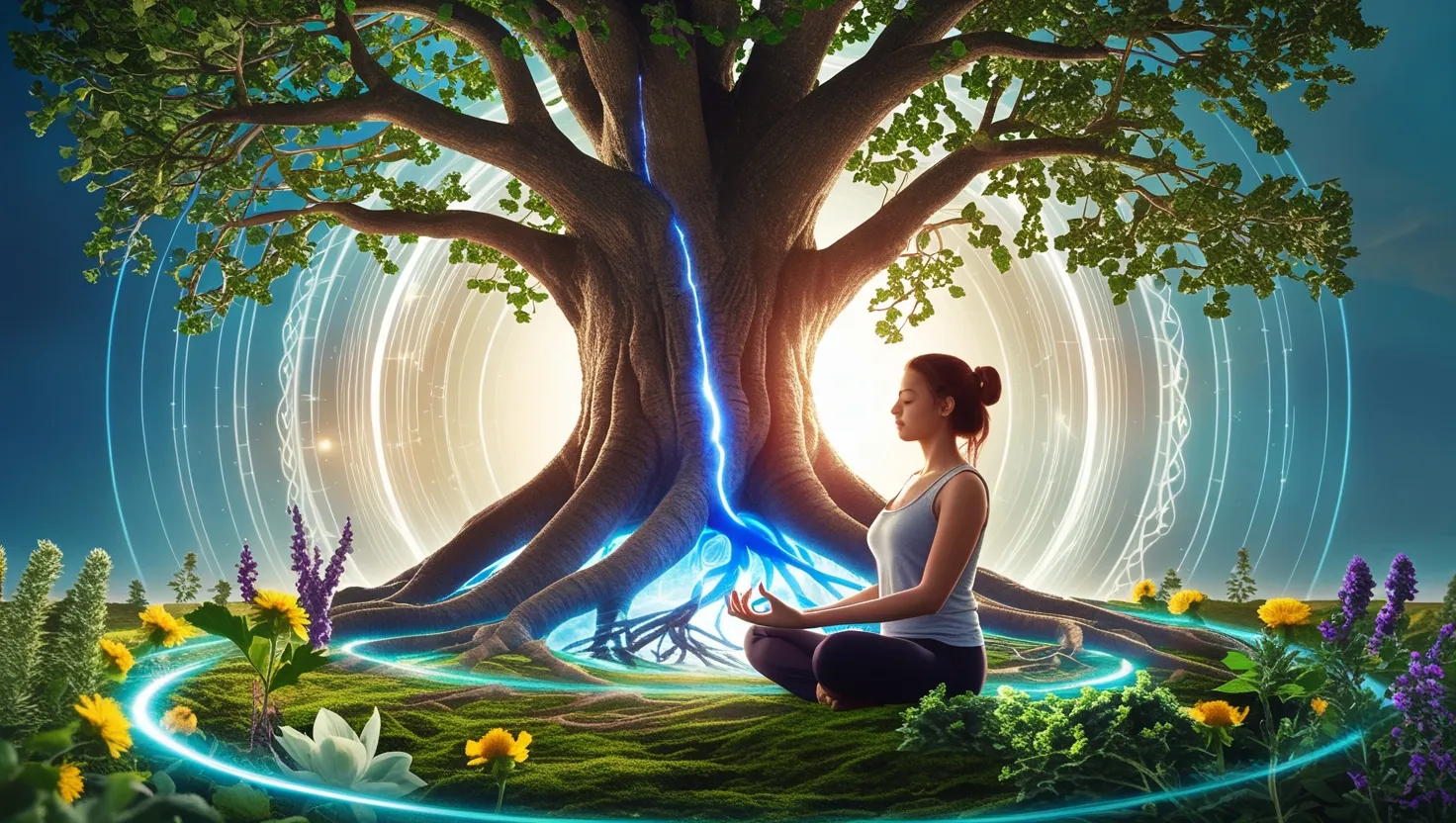
The practical implications of Pratibimba are profound. By understanding that our individual selves are reflections of the ultimate reality, we can begin to see through the veil of illusion that separates us from our true nature. This realization can lead to a deeper sense of unity and interconnectedness with all beings, as we recognize that we are all reflections of the same Consciousness.
In my own journey of self-inquiry, I have found the concept of Pratibimba to be both comforting and challenging. It comforts me to know that my true nature is not the limited, ephemeral self I experience in daily life but the eternal, unchanging Brahman. Yet, it challenges me to constantly reflect on my own mind and its purity, recognizing that the quality of my reflection is directly tied to the clarity of my consciousness.
For those seeking spiritual growth, Pratibimba offers valuable insights. It reminds us that our goal is not to achieve something external but to realize what is already within us. By focusing on the purity of our minds and the clarity of our reflections, we can move closer to the truth of our non-dual nature.
In conclusion, the concept of Pratibimba in Advaita Vedanta is a powerful tool for understanding the intricate dance between the absolute and the apparent. Through its use of everyday analogies and profound philosophical insights, it offers a fresh perspective on the nature of reality and the self. As we delve deeper into this concept, we may find that it reflects new light on our own journey of self-discovery and spiritual growth, guiding us toward the realization that everything, indeed, is Brahman.