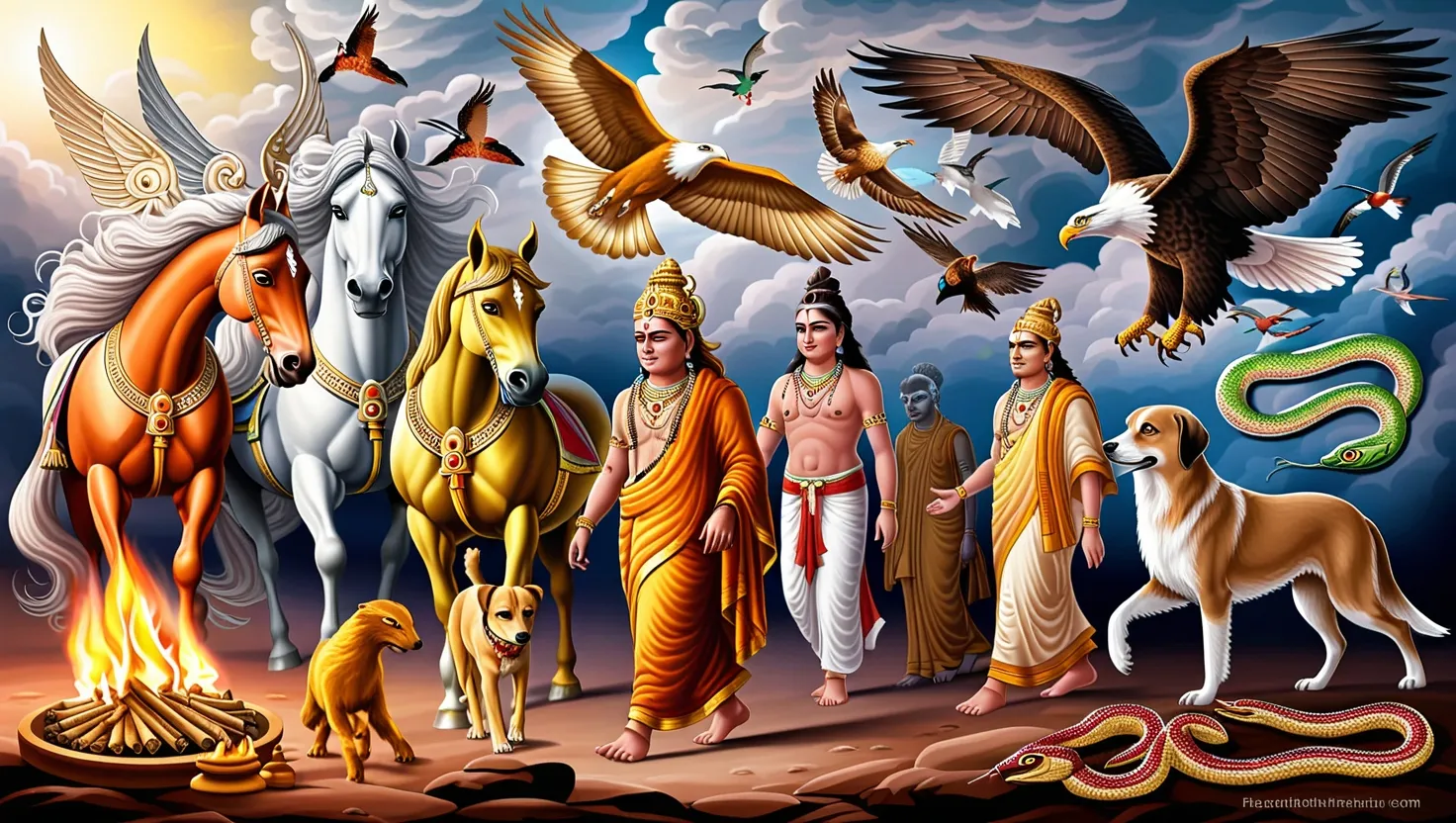
Ahalya, with her striking beauty, is a name etched deeply in Indian mythology. Created by Brahma from the most beautiful parts of every living being, she was a celestial masterpiece. Raised by Sage Gautama, who was almost like a father to her, Ahalya grew up to be the epitome of beauty, catching the eyes of gods, sages, and celestial beings alike. Yet, it was Gautama who won her hand in marriage, not because of luck, but because of his self-control and greatness that deeply impressed Brahma.
The story of Ahalya is a rollercoaster of emotions—betrayal, devotion, and redemption all wrapped into one compelling narrative. The drama kicks off with Indra, the king of the gods. Besotted by Ahalya’s beauty, he couldn’t resist. Indra, the trickster, disguised himself as Gautama and seduced Ahalya. Whether she knew she was being tricked or was a helpless victim remains a point of debate. Different versions paint her differently, but the aftermath was the same—Gautama’s rage and a curse that either turned her to stone or made her invisible.
This curse wasn’t just a slap on the wrist; it was a punishment of epic proportions. Ahalya was condemned to live in isolation, often depicted alone in a forest or beside a river, until her liberation by the touch of Lord Rama. It’s fascinating how this curse also symbolizes the earth-rain relationship, the eternal dance between night and day. Think of Ahalya as the night and Indra as the day—a poetic representation of nature’s cycles.
The turning point in Ahalya’s life comes when Lord Rama, en route to Sita’s Swayamvar in Janakpuri, accidentally touches her with his foot. This simple act breaks her curse, restoring her to her human form. Some tales even suggest she attained moksha, a liberation from the cycle of rebirth, right after being freed by Rama. Talk about a divine intervention!
Drawing parallels, Ahalya’s trials mirror those of Sita, another central figure in Indian mythology. Both women faced societal judgments related to their chastity—Ahalya was labeled for her supposed infidelity, while Sita was exiled due to doubts about her purity. These narratives underscore the critical pressures and expectations placed on women, specifically regarding their sexual purity.
Modern retellings have done justice to Ahalya’s character. No longer is she just an object of punishment; she has been afforded a voice, a personality. She is portrayed as a figure of resilience, defiance, and redemption, resonating strongly with contemporary themes of feminism. Ahalya’s story, once confined to ancient texts, has been reborn, making her not just a mythical figure but a vital symbol of strength and endurance.
In essence, the tale of Ahalya isn’t just about gods and curses; it’s a profound commentary on human nature, society’s norms, and the trials women have faced throughout history. Her story, while ancient, continues to capture the imagination, offering timeless insights into the human experience and the ever-relevant power of mythology.