In the colossal story of the Mahabharata, one of the most gripping and turning points happens during the dice game between Yudhishthira and Duryodhana. This seemingly small event, masterfully manipulated by the clever Shakuni, would flip history on its head and pave the way for the epic war that was bound to happen.
Duryodhana, brimming with jealousy and ambition, had a burning desire to topple Yudhishthira’s prosperity and power. He found the perfect ally in his uncle Shakuni, who had a sinister reputation for his exceptional command over the dice. These weren’t just any dice; they were allegedly crafted from his father’s bones and were magically manipulable to favor any number Shakuni wished for.
Yudhishthira got an invitation to this fateful dice game. Despite having a gut feeling that something was amiss, he felt obligated to accept due to his Kshatriya code of honor, which made it necessary to accept all challenges. He placed a lot of trust in Dhritarashtra, whom he viewed as a father figure, believing that fairness and justice would be upheld—yet, he was starkly unaware of the brewing deceit.
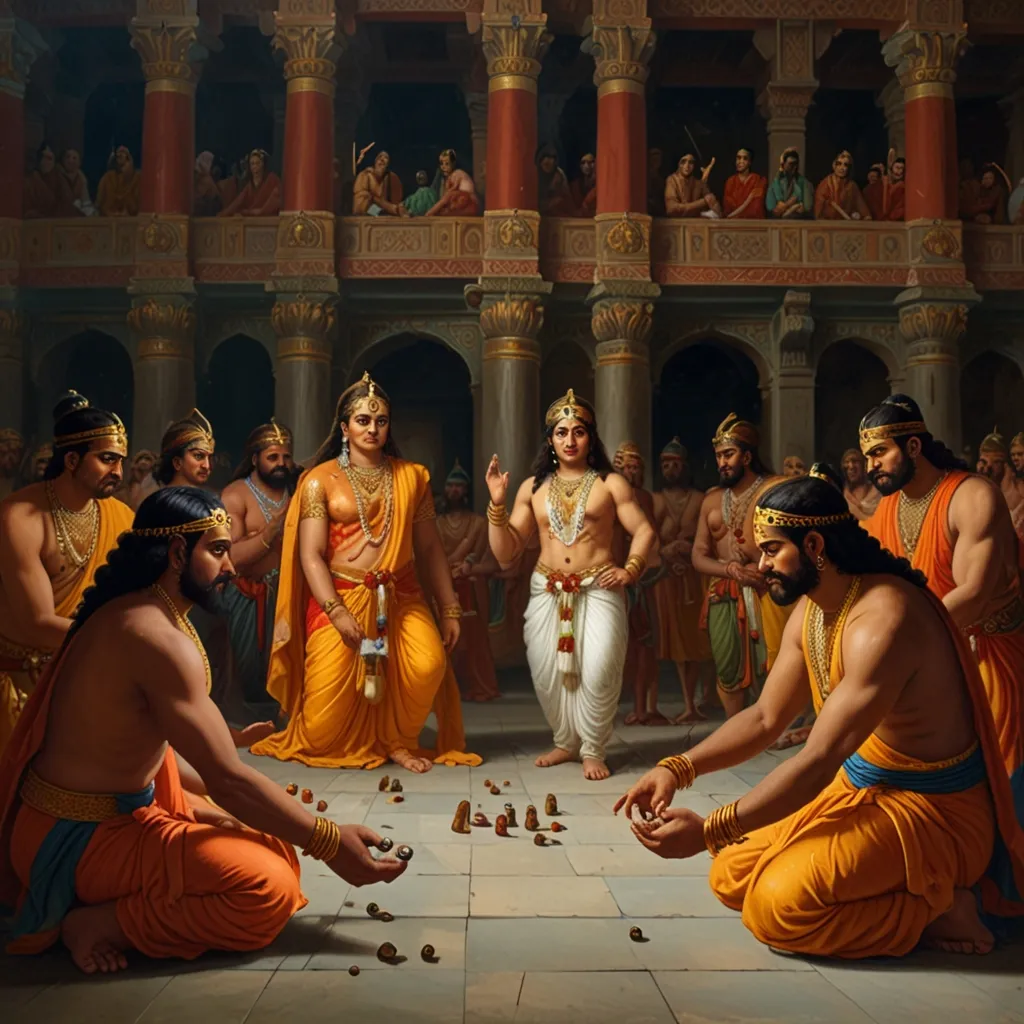
Imagine a grand assembly hall, bustling with Hastinapura’s nobility, set as the stage for this dangerous game. Shakuni took the seat opposite Yudhishthira, playing the game on behalf of Duryodhana. The tension was thick in the hall, with whispers among onlookers about the unfair advantage in the game. Yudhishthira, who was wary at first, got deeply absorbed and started wagering bigger stakes: his wealth, his kingdom, and eventually even his brothers.
No matter how the dice rolled, Yudhishthira kept losing, and as the stakes climbed higher and higher, desperation took over. In a shocking turn, he wagered his wife, Draupadi, shocking the entire assembly to silence. Draupadi was humiliated, dragged into the hall against her will, but thankfully, Krishna intervened to prevent her from further degradation.
By the end of this disastrous game, Yudhishthira and his brothers lost everything and were forced into a thirteen-year exile, with the last year spent in disguise. This exile was far from a vacation—it was a tough journey filled with hardships and continuous threats.
Now, what happened after their return was just as chaotic. A second game of dice was held, and shockingly, even after all that he’d been through, Yudhishthira couldn’t resist the pull of the dice game. He lost again, and back they went into exile. This time, it was twelve years in the forest with the thirteenth year spent in incognito mode.
The dice game was more than mere chance; it was an elaborate metaphor about the ongoing battle between good and evil. Yudhishthira’s gambling addiction and inability to resist the game symbolized human weaknesses leading to self-destruction. On the flip side, Shakuni’s manipulation paired with Duryodhana’s thirst for power painted a grim picture of deceit and ambition that could ruin even the noblest person.
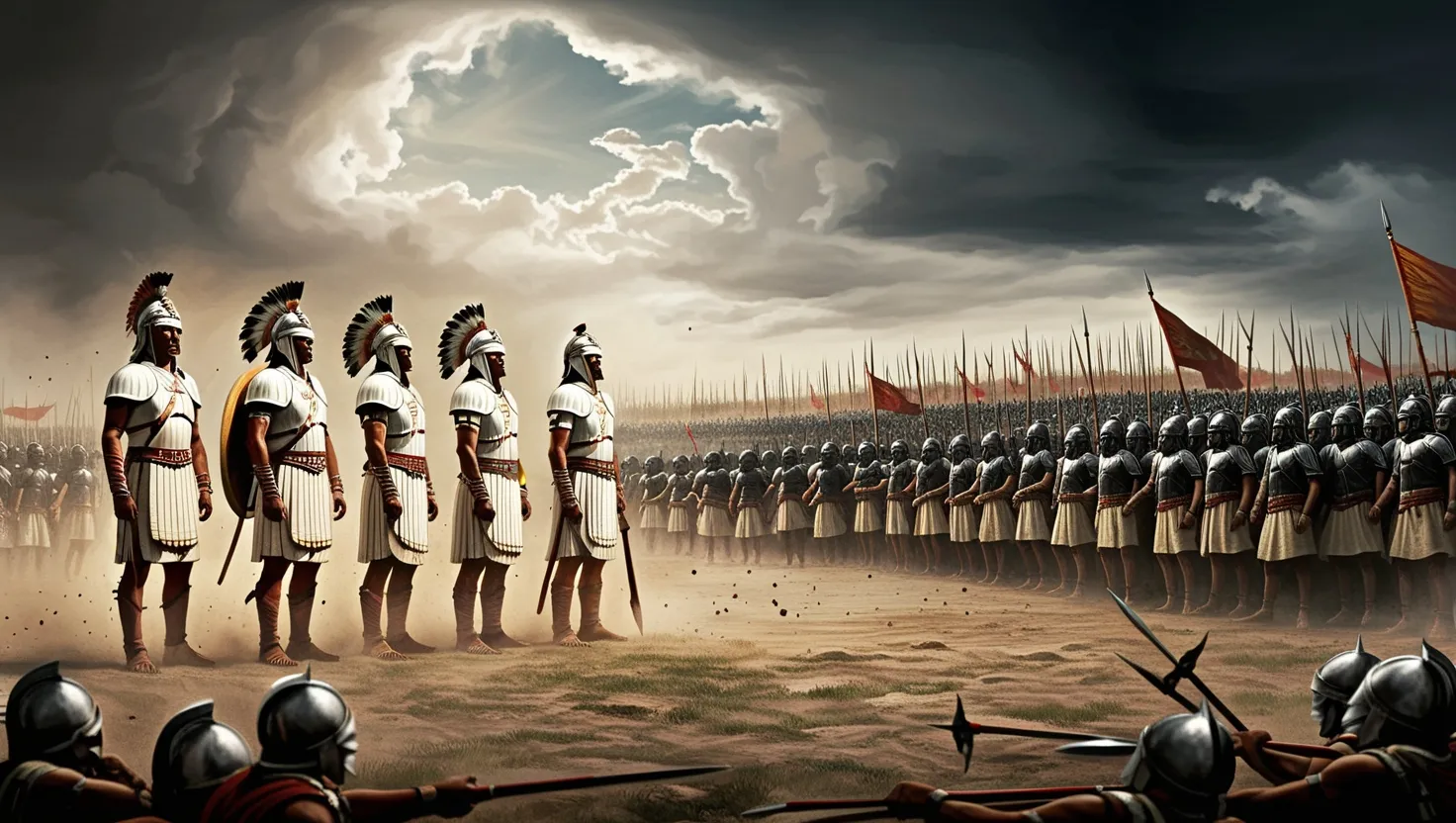
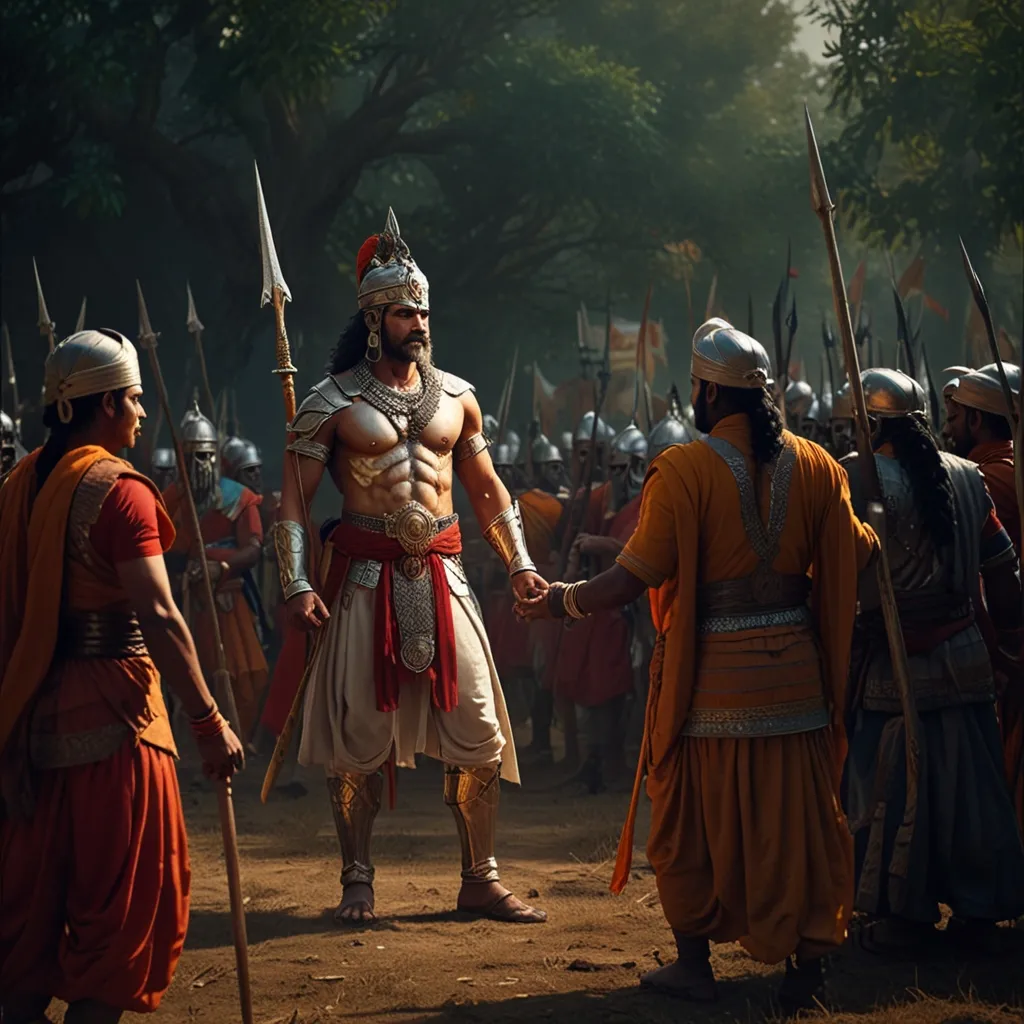
What followed after the dice game was nothing less than monumental. It set the stage for the great Mahabharata war. The Pandavas, fueled with a burning desire to reclaim their lost kingdom, prepped for the ultimate battle. The war was nothing short of apocalyptic—the culmination of all pent-up conflicts and betrayals over the years. It wasn’t just a battle of weapons and armies but a real showdown of strength, courage, and quest for justice.
Finally, though the Pandavas came out victorious, it wasn’t without a terrible cost. The war left the land in ruins and countless lives were lost. Reflecting back on everything that had happened, Yudhishthira understood the blunder of his ways. He realized that his weakness had brought massive suffering and concluded that true strength lay in wisdom and self-discipline, not in fleeting victories in a rigged game.
This entire saga from the Mahabharata—the dice game and its aftermath—delivers ageless messages about human fragility and the consequences of our choices. It serves as a potent reminder about the paramount importance of integrity and self-control. Through this dramatic episode, the Mahabharata offers deep insights into human nature and the perpetual battle between virtue and vice.