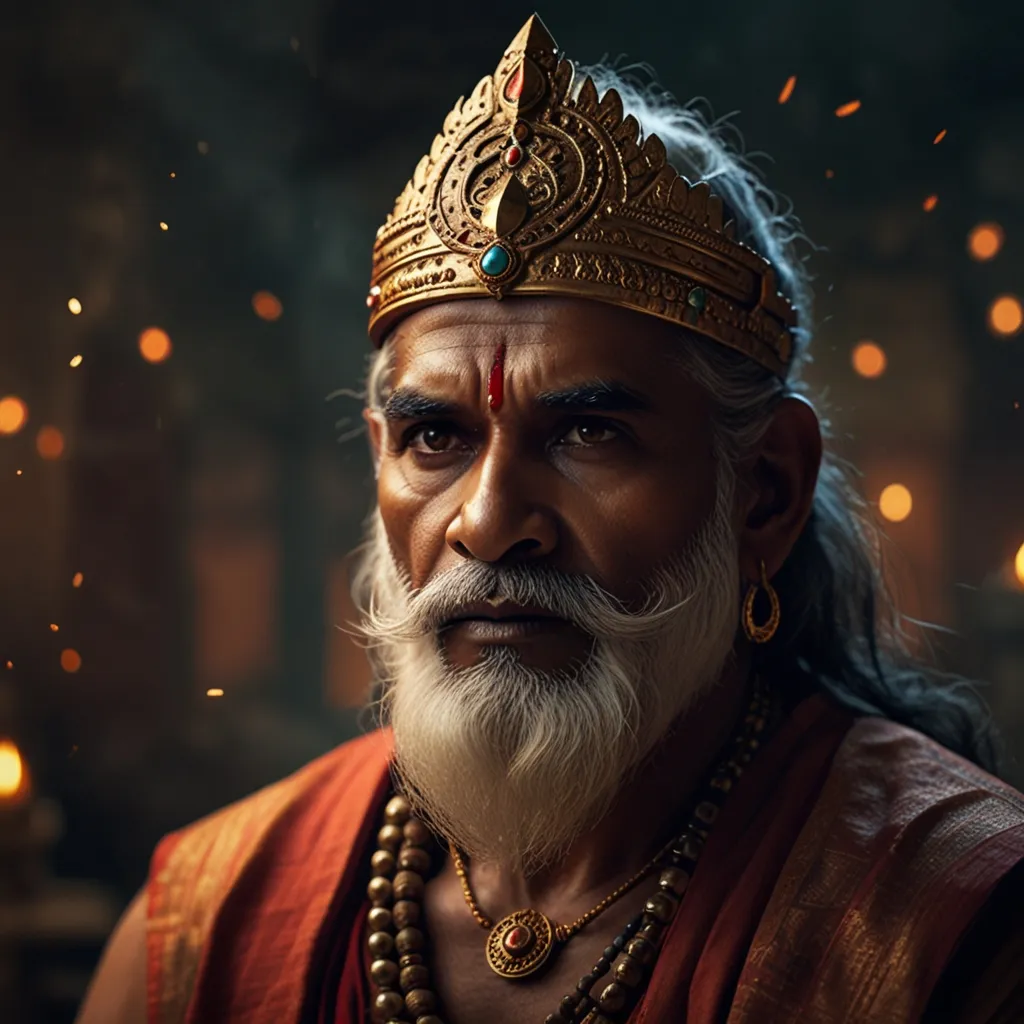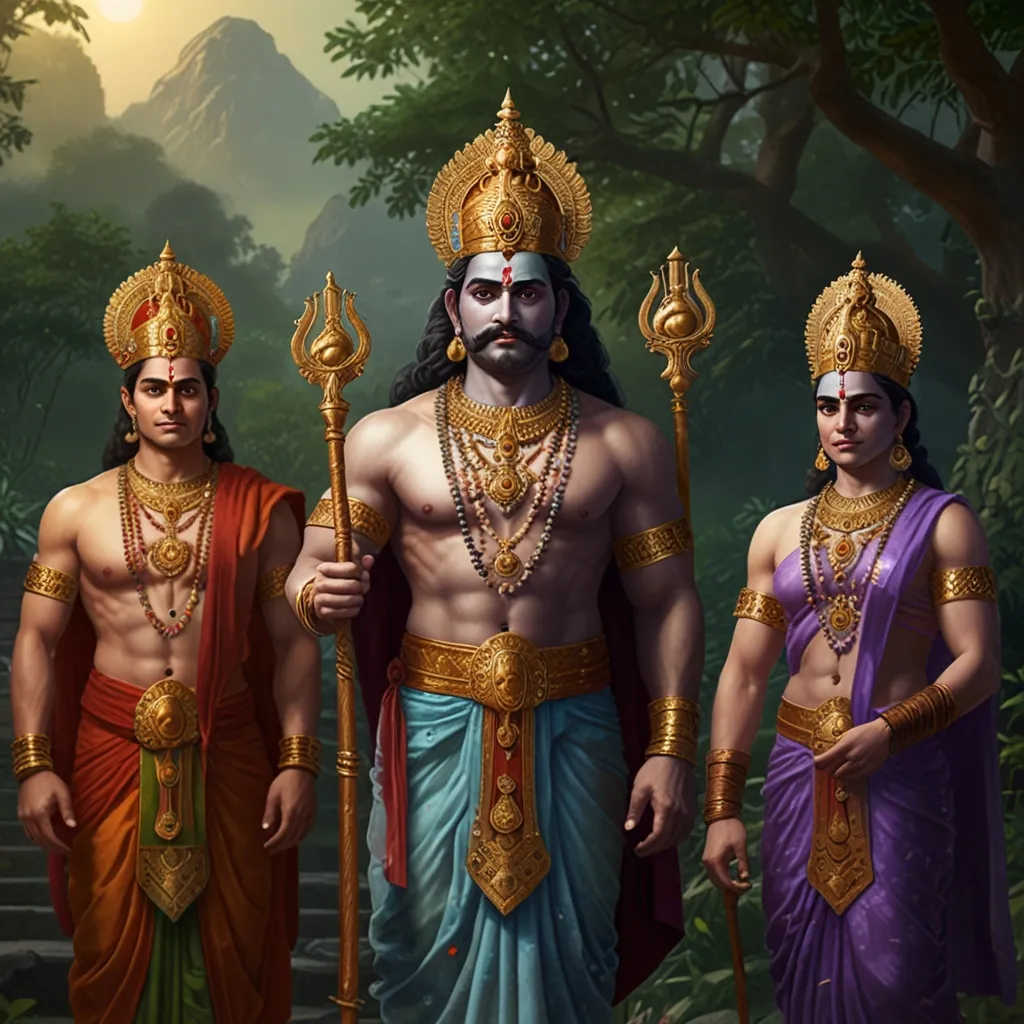
In the grand tapestry of the Mahabharata, Draupadi’s marriage stands out as one of the most riveting and intriguing narratives. It starts with a splendid swayamvara, which is basically a grand ceremony where a princess has the right to choose her future husband from a sea of eager suitors. Draupadi, the illustrious daughter of King Drupada, became the ultimate prize every royal bachelor wanted to win. Princes and kings from all corners of South Asia flocked to this event, each one trying to catch her eye and claim her hand.
The focal point of the ceremony was an archery contest that wasn’t a walk in the park. Each suitor had to string a mighty bow and shoot an arrow to hit a seemingly impossible target hanging high in the air. The kicker? The target was only visible through a reflection in a pool of water. It wasn’t merely about archery skills; it demanded intense concentration and unwavering focus. Despite numerous attempts by many, only one emerged victorious—Arjuna, the third Pandava brother, who cleverly disguised himself as a humble Brahmin.
Arjuna’s fluid skills with the bow captivated Draupadi. Without wasting a moment, she placed a garland around his neck, marking him as her chosen one. Little did she know, this was just the prologue to a far more extraordinary and controversial marriage saga.
When Arjuna took Draupadi back to his home, he playfully told his mother, Kunti, that he had brought home alms. Assuming it was food or some minor spoil, Kunti instructed Arjuna to share it equally with his brothers. Following a mother’s words was sacrosanct, and Kunti’s innocent command inadvertently became the seed for one of the most unconventional marriages of their era.
The Pandava brothers—Yudhisthira, Bhima, Arjuna, Nakula, and Sahadeva—had a tight bond, and they chose to respect their mother’s words. They decided that all five of them would share Draupadi as their common wife. Such a choice was mind-bending back then and stirred quite a bit of debate among the kingdom’s wise men. The sage Vyasa stepped in to offer some clarity. He explained that the marriage was foreseen by the gods, revealing that the Pandavas were reincarnations of Lord Indra’s parts and Draupadi was an avatar of Goddess Shree, symbolizing wealth and prosperity.
Even with divine backing, the practical aspects of such a unique marriage posed significant hurdles. Draupadi found herself at the intersection of novel marital dynamics. Each of the Pandava brothers had distinct personalities, needs, and desires, and she had to adeptly balance her time and energy among them. This arrangement demanded immense emotional intelligence and diplomacy, especially since their society viewed polyandry with an arched eyebrow.
Draupadi’s tale extends far beyond her convoluted marriage. It’s a testament to her vitality and her indomitable spirit. She faced trials like no other, most notably the notorious dice game. In that game, her husband Yudhisthira gambled away not just their wealth but Draupadi herself, leading to her public humiliation in a royal court. Yet, she refused to be cowed. Draupadi, with her head held high, voiced her distress, asserting her dignity and rights. She symbolized resilience, courage, and defiance and became an icon of resistance.
Her story doesn’t just stop at personal tribulations. It offers insight into the societal ethos of her time. The stringent patriarchal norms had women walking tightropes with limited choices and freedom. However, figures like Draupadi found ways to assert their influence, often subtly challenging and bending these norms to serve their agency. Through her fiery spirit, Draupadi manages to redefine her identity, moving beyond the simple labels of a wife or property to stand as a beacon of strength and independence.
The marriage of Draupadi with the five Pandavas remains a hotbed of interpretation and discussion to this day. Some view it as a divine orchestration, while others consider it a pragmatic approach to ensure that the formidable Pandava brothers remained united. Irrespective of one’s perspective, Draupadi’s story underscores her strength and the timeless power women possess, especially in adverse situations.
Ultimately, Draupadi’s narrative is a dense, multi-layered slice of mythology that blends personal strife, social commentary, and epic storytelling. It remains enthralling to audiences far and wide, offering nuggets of wisdom about human relationships, aspirations, and the societal fabric. Her story is a powerful reminder of the complexity of human bonds and the extraordinary resilience one can exhibit in the face of overwhelming challenges.