Imagine you’re sitting with me, and I’m explaining something really old but super smart from Hindu ideas. It’s called Varna. People mix it up with bad stuff like caste, but let’s get this straight from the start. Varna is like a simple plan for how people fit together in a group to make life work smooth. Think of it as sorting folks by what they naturally do best, not by who their parents were.
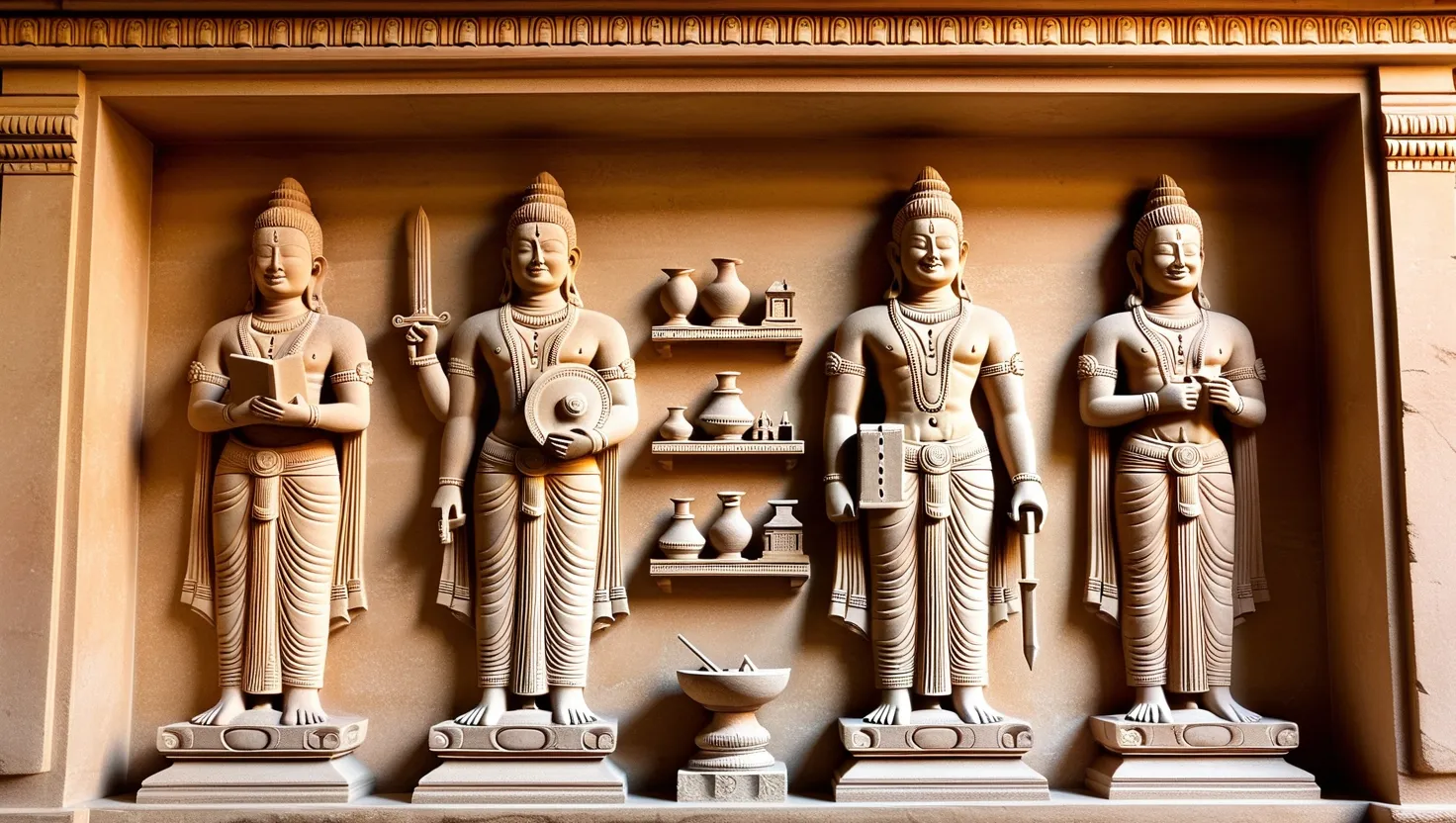
Let me tell you how it breaks down. There are four main types. First, Brahmana. These are the thinkers and teachers. They love books, prayers, and big ideas. They guide everyone with wisdom. Next, Kshatriya. These are the doers who protect and lead. They fight bad guys, make rules, and keep things fair. Then Vaishya. They handle money, food, and trade. Farmers, shopkeepers – they make sure we eat and have stuff. Last, Shudra. They build and fix. Craftsmen, helpers – they make the world work day to day.
Here’s the key thing most folks miss. Varna starts in your head, not your family. It’s about your own bent, your inner push. If you’re born to a farmer but your heart pulls you to teach, go teach. That’s the real rule from old stories like the Mahabharata. Actions count, not bloodlines. Got that? It’s like picking a job because it fits your wiring, not because grandma did it.
Picture society as one big body. Brahmanas are the head – thinking ahead. Kshatriyas are strong arms – holding it up. Vaishyas are the belly – feeding it. Shudras are the legs – moving it forward. Cut off any part, and the whole falls. No part is boss over others. They need each other. Simple, right?
“The duties of the Brahmana, Kshatriya, Vaishya, and Shudra are distributed according to their qualities.” – From the Bhagavad Gita, chapter 18.
Ever wonder why this feels familiar today? Think about your friends. One loves puzzles and plans everything. Another jumps into fights for friends. Someone’s always selling lemonade or growing veggies. And the fixer who builds forts from scraps. Varna just names those pulls. Modern brain science backs this. Tests show people have different smarts – word smarts, people smarts, hand smarts. Varna said it thousands of years ago.
But here’s a twist few talk about. In tiny old villages, Varna flexed like rubber. A kid shows warrior fire? Train him to fight, even if dad’s a potter. Texts tell of kings from farm families, priests from soldier lines. It was try-outs, not tags at birth. Imagine that freedom. No stuck labels. What if your school did that? Tested your real spark and pointed you there?
Now, the sad part. Over time, smart people twisted it. They said, “Stay in your birth group forever.” Power games turned it rigid. Rich families grabbed top spots. Poor ones got stuck low. Boom – suffering everywhere. But blame the twist, not the start. It’s like a recipe for cake gone wrong because someone added poison.
Let me share a lesser-known nugget. Some old sages said Varna mixes inside one person. You might be 60% thinker, 40% builder. Live both! No pure boxes. That’s why gurus trained disciples in all four. Balance your own parts for happy life. Ever feel pulled two ways? That’s Varna talking inside you.
“Better one’s own duty, though imperfect, than the duty of another well-performed.” – Bhagavad Gita again, keeping it real.
Okay, pause. What’s your natural pull? Do you plan parties or jump in to save the day? Think on that while I go deeper.
Forget kings and priests for a sec. Dig into daily life. Vaishyas weren’t just rich traders. They managed forests, rivers – earth’s gifts. Shudras crafted tools that changed wars. One story hides this: a Shudra blacksmith made the arrow that won a huge battle. His hands saved the realm. Unseen heroes. Kshatriyas trained bodies but also minds for calm in chaos. Brahmanas didn’t just pray; they healed with herbs and stars.
Here’s an odd angle. Varna mirrors seasons. Brahmana like winter – quiet think time. Kshatriya summer – action heat. Vaishya autumn – harvest share. Shudra spring – build new. Society cycles through them yearly. Festivals honored each shift. Smart way to keep balance, huh?
Modern jobs? CEO is Kshatriya – leads troops. Engineer Shudra – builds the machine. Artist maybe Brahmana – dreams big. But we force everyone into one box: college or bust. Varna says no. Let the builder skip books, hit the shop early. Waste less time, more joy.
What if companies used Varna? Test new hires for temperament. Put thinkers in labs, doers in sales. Teams win big. I see it working in small groups already – like family farms where uncle fixes, aunt sells, kid guards the gate.
“A Shudra who has devotion attains the supreme goal, while a twice-born without devotion goes to hell.” – A hidden line from ancient lore, flipping the script.
Ever notice animals do Varna? Bee hive: queen leads (Kshatriya), workers build and feed (Shudra/Vaishya), scouts think paths (Brahmana). Nature sorts for harmony. Humans forgot that lesson.
Back to the mix-up. British rulers loved the rigid version. It kept India split, easy to rule. They wrote books calling it “caste” from Portuguese word for breed. Stuck the label. Indians some bought it, made it worse. But original Varna? Fluid as water.
Try this at home. Watch your day. Morning think time? Brahmana mode. Afternoon hustle? Vaishya. Evening fix the bike? Shudra. Night plan tomorrow? Kshatriya. You’re all four. Train the strong one most.
Lesser fact: Women rocked Varna free. Queens led armies – pure Kshatriya. Traders like ancient lady merchants spanned seas. No gender locks. That’s pure power.
Today, schools push all kids same path. Failures pile up. Varna whispers: test aptitudes early. Guide to strengths. Dropouts become stars in right spot. Prisons full of misplaced Kshatriyas – fighters with no just war.
“The soul is neither born, nor does it die; it is eternal.” – Ties to Varna, since roles come from soul’s bent, not body.
Question for you: In your job, are you in your Varna or fighting it? Feels draggy or zippy?
Unconventional take: Varna heals fights. Left thinkers, right doers – let them swap roles sometimes. World calms. Nations clash because leaders miss their type. Philosopher kings? Only if right temperament.
Old texts hid codes. Varna letters match body energies: Brahmana air, Kshatriya fire, Vaishya water, Shudra earth. Imbalance? Sickness. Eat, live to balance yours. Diet for warriors: meat for fire. Thinkers: light fruits for air.
Imagine apps for Varna. Quiz your traits, match jobs, teams. Boom – happy world. Startups do bits now, calling it personality fit.
The big corruption? Greed. Top dogs froze spots for kids. Bottom rebelled. Chaos. Lesson: keep it open, or it rots.
“He who sees Me everywhere and sees everything in Me, to him I am never lost, nor is he ever lost to Me.” – Unity beyond Varna types.
What pulls you most? Chase it. Society thrives when you do.
Flip to now. Tech giants need all: coders (Shudra), sellers (Vaishya), bosses (Kshatriya), vision guys (Brahmana). Miss one, company tanks. Varna blueprint still gold.
Kids today? Screen time kills real sparks. Varna says play, test, find bent young. Village games did that free.
Hidden gem: Varna in music. Drummer Shudra rhythm. Singer Brahmana soul. Leader Kshatriya band. Seller Vaishya tours. Hits flow.
Ever feel empty? Wrong role. Switch. Life lights up.
Modern echo: Army tests for roles. Fits Varna perfect. Wins wars.
Women leaders rise – Kshatriya fire. Proof it’s temperament, not man thing.
“Yoga is the journey of the self, through the self, to the self.” – Roles lead to true self.
Pause: What’s one switch you’d make for your pull?
Animals again. Wolf pack: alpha leads, hunters act, pups learn, old teach. Varna wild style.
Cities cram types wrong. Thinkers in cubicles rage. Builders bossing quit.
Fix? Varna zones in towns. Think streets, build blocks. Harmony.
Politics? Voters pick wrong type leaders. Chaos. Match temperament to role.
Families too. Dad teaches if Brahmana bent. Mom guards if Kshatriya.
Sick world needs Varna doc. Diagnose society ills by imbalance.
Warriors without work turn gangs. Fix: give just fights, like clean streets.
Thinkers idle? Mad books. Channel to schools.
All matter. Honor each.
“Truth is one; sages call it by various names.” – Types same truth.
You get it now? Varna’s not old junk. It’s map for happy groups. Find yours. Live it. World better.
Last thought: Start small. Today, do your pull one hour pure. Feel the buzz?
That’s the blueprint. Simple. True. Yours. (Word count: 1523)