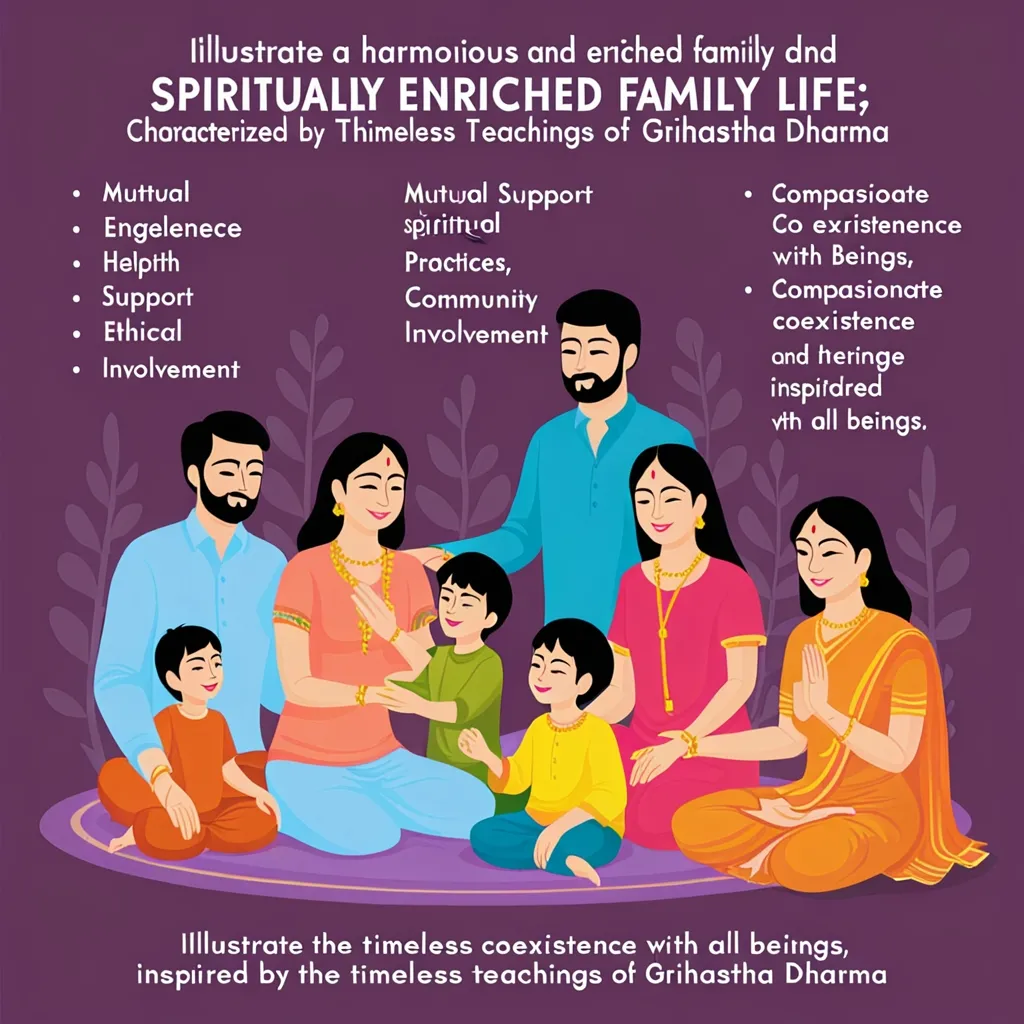
In the colorful mosaic of life stages in Hinduism, the Grihastha stage, or householder phase, stands out with profound significance. It’s not just a step toward mundane family responsibilities but a deeply spiritual journey laced with duties that transcend the ordinary family chores we might be accustomed to. Let’s dive into the essence of Grihastha Dharma and see how these timeless teachings can guide modern families toward a more fulfilling and spiritually enriched life.
When stepping into the Grihastha life, it all begins with marriage, a sacred commitment far beyond the societal norm of two people tying the knot. It’s a delicate bonding of souls, carefully chosen for compatibility and shared values. This phase invites two individuals to embark on a lifelong journey of mutual support, both in spiritual endeavors and worldly tasks. Marriage, in this context, is not about the wedding bells or glittering ceremonies; it’s a union woven with endless support, spiritual growth, and a shared commitment to the cultural and religious pursuits of life.
At the core of Grihastha life is the responsibility to one’s family. It’s more than providing bread on the table; it is about nurturing and educating the children, assisting kinsfolk, and ensuring the happiness and well-being of everyone involved, especially one’s spouse. The wife, in this setting, isn’t just a partner in chores but an equal in spiritual practices and religious observances, making her well-being paramount for the household’s harmony.
Balancing life’s spiritual and worldly aspects, householders often engage in everyday spiritual practices. These include rituals like Tarpana and Vaiśvadeva, alongside the recitation of Vedic scriptures. Such routines keep their inner selves tethered to the divine, affirming their duties toward gods and ancestors. In these practices, one finds a unique blend of seeking spiritual enlightenment while engaging in worldly duties.
Service to society also forms a significant part of the householder’s life. To be a good neighbor, to contribute graciously to the community’s well-being by helping others, welcoming guests, and participating in community events is highly revered. It’s a reminder that, while managing personal affairs, contributing to the larger social fabric remains crucial.
Living ethically and exercising self-control anchor the life of a householder. The call here is to avoid deceit, manage desire for material goods, and maintain honest dealings at all times. Simplicity, modesty, and humility are the virtues to cherish. Whether it’s about speaking the truth or resisting unnecessary indulgences, these ethical guideposts ensure a balanced life.
Earning a livelihood through righteous means sits at the heart of Grihastha Dharma. Occupations like agriculture, trade, and other noble professions align with dharma, aimed not just at family support but also at performing good acts with the righteous earnings. It’s about ensuring that wealth is not accumulated for self-indulgence but used to benefit others and fulfill one’s duty.
Interestingly, a householder’s responsibilities extend beyond human relations to include coexistence with animals and all sentient beings. Treating animals with compassion and kindness speaks volumes about the inner spiritual growth of a person following Grihastha Dharma. This respect for all life forms is a testament to the universal love and empathy taught in these guiding principles.
Respect for elders and ancestors remains a foundation of the life stage. Looking after parents with utmost care and reverence, while engaging with them gently and supportively, holds immense value. This respect is a tangible way to honor the higher power, acknowledging the family lineage and its continuing legacy.
Striking a balance between earthly pursuits and spiritual aims is a subtle art in the householder’s journey. While earning and family care take precedence, ensuring they don’t eclipse spiritual growth is vital. A life embraced with internal detachment from worldly gains, keeping focus on devotional service, and guidance sought from spiritual teachings is the true essence here.
Community engagement enriches the householder’s life. Being involved in religious gatherings and social occasions, nurturing bonds with neighbors, and extending a helpful hand to fellow villagers create a sense of harmony and strengthens community ties, allowing everyone to thrive in a collective spirit of togetherness.
The rhythm of a householder’s day begins and ends with rituals, framing their existence with spiritual devotion. Mornings commence with sacred baths followed by reading revered texts like the Gita, Ramayana, or Bhagavata. As evening dawns, family gatherings for Kirtan and reading spiritual texts are commonplace. Such practices foster an enriching spiritual atmosphere, serving as a gentle reminder amidst daily chaos of the divine presence.
As life progresses and children grow to assume household responsibilities, a householder eventually transitions to Vanaprastha, a stage marked by withdrawing from active worldly duties and embracing spiritual contemplation. This shift, ideally gradual, confirms family well-being while embracing a deeper focus on spirituality.
In essence, Grihastha Dharma offers a blueprint for a meaningful life interwoven with both familial and spiritual dimensions. It’s a gentle yet firm reminder that even amidst the hustle of everyday responsibilities, virtues can be cultivated, helping individuals connect deeply with the divine. Applying these time-tested principles enables modern families to craft a rich, balanced life full of harmony, devotion, and fulfillment.