Dive into the Enchanting World of Hindu Gods and Goddesses
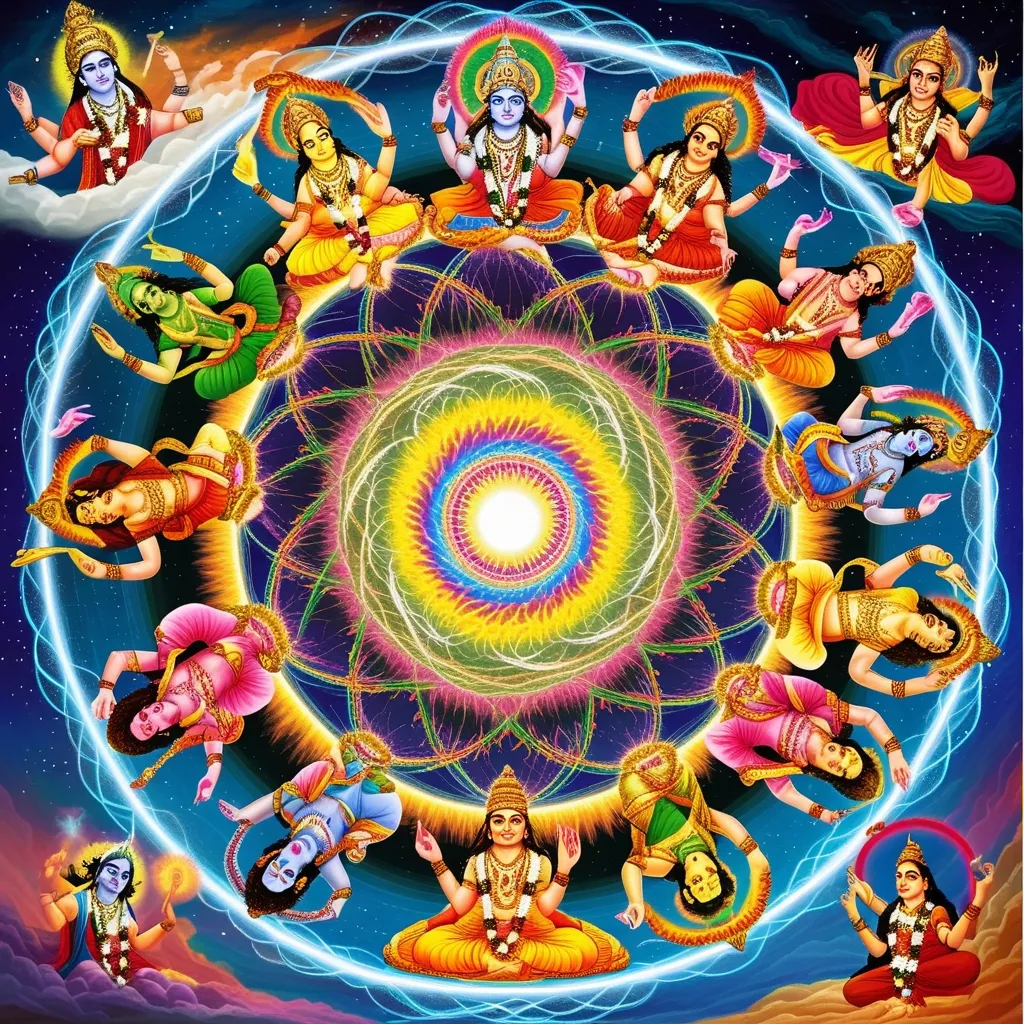
Hindu mythology is like a vibrant tapestry, woven with countless threads of divine beings, each with their own unique stories and powers. It’s a realm where the line between myth and philosophy blurs, creating a rich landscape of spiritual wisdom and cultural heritage.
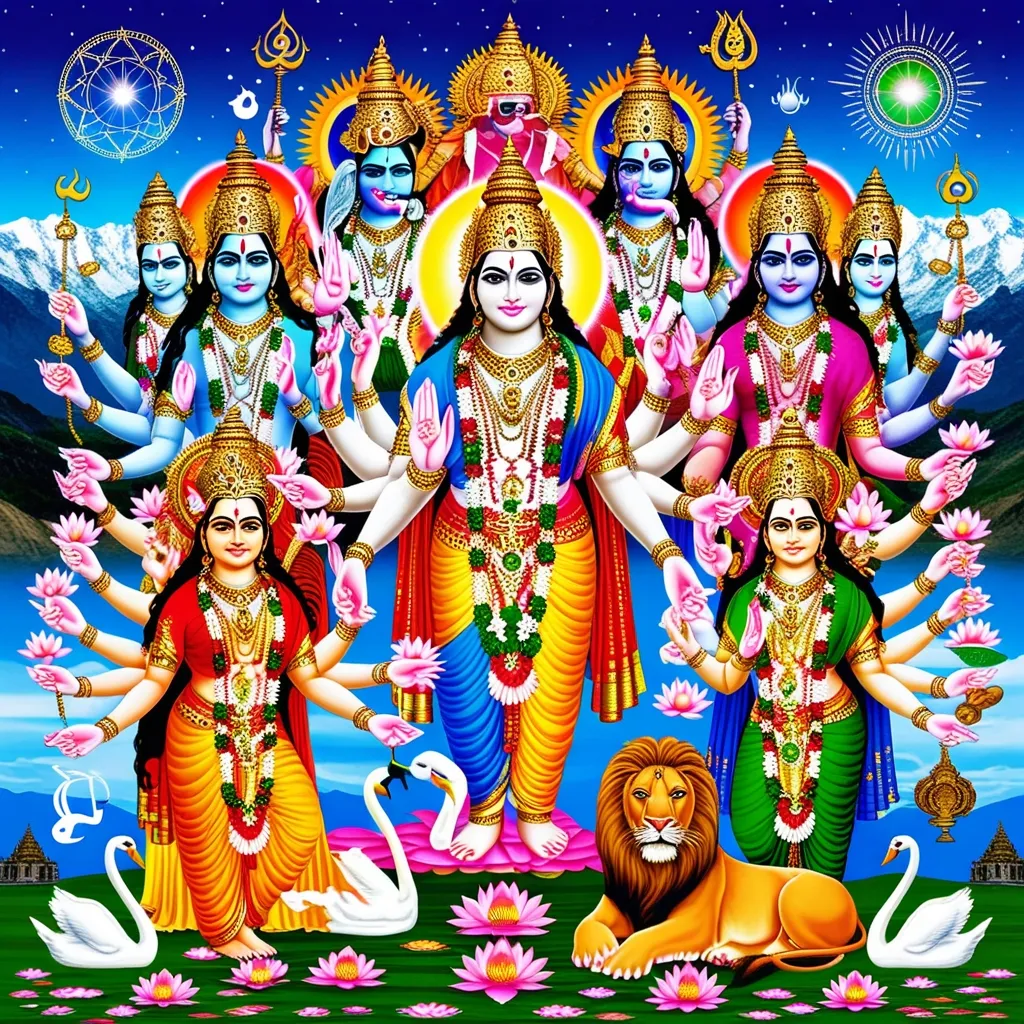
Let’s start with the ladies, shall we? In Hinduism, goddesses aren’t just playing second fiddle to their male counterparts. They’re often the real stars of the show. Take Lakshmi, for instance. She’s the goddess of wealth and fortune, and boy, does she know how to make an entrance! Picture a stunning golden woman with four arms, sitting on a lotus flower. She’s usually flanked by two elephants showering her with water - talk about a grand entrance!
Lakshmi isn’t just about the bling, though. Her four hands represent the four big goals in Hindu life: doing the right thing, pursuing your desires, building wealth, and ultimately breaking free from the cycle of rebirth. No wonder she’s such a popular goddess during Diwali. Who wouldn’t want a bit of prosperity and good luck in their lives?
Now, if you’re more of a bookworm, Saraswati might be your go-to goddess. She’s all about knowledge, arts, and music. Imagine a graceful figure riding a swan (because why not?), sometimes perched on a stone to show that learning isn’t always a walk in the park. With her four hands, she’s juggling the different aspects of learning: mind, intellect, alertness, and ego. Next time you’re cramming for an exam, you might want to give Saraswati a little shout-out.
But wait, there’s more! Let’s talk about Parvati, the ultimate mother goddess. She’s like the Swiss Army knife of goddesses - associated with energy, beauty, nourishment, harmony, and fertility. Born as the daughter of the Himalayas (talk about a cool origin story!), she won the heart of Shiva through sheer determination and asceticism. Parvati’s not just a pretty face, though. She’s got a fierce side too, transforming into Durga or Kali when the situation calls for some serious demon-busting.
Speaking of Shiva, he’s part of the big three in Hinduism - the Trimurti. Along with Brahma the creator and Vishnu the preserver, Shiva’s the destroyer. But don’t let that title fool you. Shiva’s destruction is more about making way for new beginnings. He’s like that friend who tells you to clean out your closet - sometimes you need to get rid of the old to make room for the new.
Shiva’s got a pretty cool family life too. His wife is Parvati (remember her?), and they have two sons - Ganesha and Skanda. Ganesha’s the elephant-headed god who’s all about removing obstacles and bringing good luck. He’s usually the first god people pray to when starting something new. And let’s be honest, who doesn’t love a god with a sweet tooth?
Now, if you’re into more intense deities, Kali might be up your alley. She’s a form of Parvati, but she’s definitely not your average mom. Kali’s the goddess of death, time, and doomsday. She’s got a necklace of skulls and a skirt made of demon hands - not exactly your typical motherly attire. But here’s the twist: despite her fierce appearance, Kali’s actually a symbol of compassionate love. She’s all about destroying evil and ignorance, helping people break free from their egos.
Let’s not forget about Durga, another form of Parvati. She’s like the ultimate superhero goddess, created by the gods to defeat a demon that none of them could handle alone. Durga’s often shown riding a lion or tiger, wielding an arsenal of weapons. She’s a protector of women and the weak, showing that feminine power is a force to be reckoned with.
Now, not all Hindu gods are human-like. Take Hanuman, for example. He’s a monkey god, known for his incredible strength, courage, and unwavering devotion. Hanuman’s story is part of the epic Ramayana, where he helps Rama rescue his wife Sita from the demon king Ravana. He’s the kind of friend we all wish we had - loyal, brave, and able to lift entire mountains when needed.
One of the coolest things about Hinduism is how it celebrates the divine feminine. This aspect, known as Shaktism, sees the goddess as the World Mother, the energy behind all creation. It’s a reminder that in Hinduism, female power and energy are not just respected, but revered.
But wait, there’s more! Hinduism isn’t just about these major players. There’s a whole world of local deities and demigods out there. These are often regional forms of the major gods or goddesses, each with their own unique stories and traditions. It’s like each part of India has its own special flavor of divinity.
So, what’s the takeaway from all this? Hindu gods and goddesses aren’t just mythological figures - they’re embodiments of life’s big themes. Love, death, creation, destruction, knowledge, wealth - it’s all there in these divine stories. Each god or goddess offers a different perspective on life and the universe, making Hindu mythology a treasure trove of wisdom and inspiration.
Whether you’re drawn to Lakshmi’s promise of prosperity, Saraswati’s pursuit of knowledge, Shiva’s transformative power, or Kali’s fierce protection, there’s something for everyone in this pantheon. These stories remind us of the infinite possibilities within ourselves and the world around us.
In the end, Hindu mythology isn’t just about worship - it’s about understanding life in all its complexity. It’s a reminder that divinity can be found in the gentle and the fierce, the creative and the destructive, the masculine and the feminine. It’s a celebration of life in all its forms, inviting us to see the sacred in everything around us.
So next time you come across a story about a Hindu god or goddess, take a moment to look beyond the fantastical elements. You might just find a nugget of wisdom that speaks to your own life journey. After all, these age-old stories have survived for thousands of years for a reason - they touch on something fundamental about what it means to be human, to struggle, to love, and to seek meaning in this vast, mysterious universe.